Exact swaps for eggs, butter, and milk in your favorite baked goods, plus tips for cookies, cakes, brownies, and quick breads so nothing turns out gummy or dry.
recipes
Updated September 21, 2026
Perfect Chocolate Chip Cookies: Crispy, Chewy, or Cakey

Maya Chen
Maya Chen is a passionate home cook, recipe developer, and mother of two who believes that great food doesn't have to be complicated. Drawing from her multicultural upbringing and time spent in professional test kitchens, she creates approachable, flavor-packed recipes designed for real life.
Sizzlea
recipes
Chocolate chip cookies are basically edible mood. Some nights I want that shattery, crispy edge. Other nights I need a thick, chewy center that feels like a hug. And occasionally, I want a soft, cakey cookie that pairs perfectly with a big glass of milk and zero regrets.
The good news: you do not need a new recipe for each one. You need a few smart tweaks and a little understanding of what is happening in the oven.
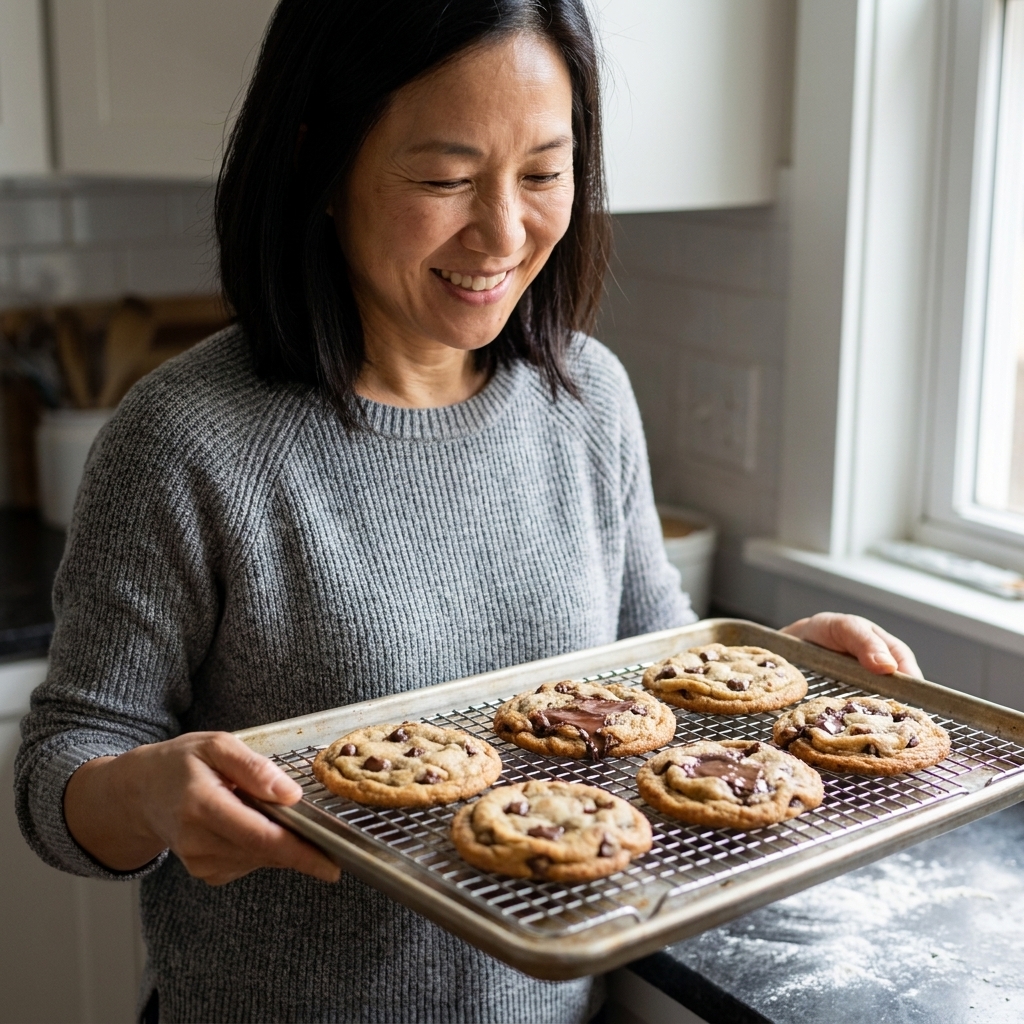
The cookie texture triangle
Most chocolate chip cookie outcomes live on a triangle:
- Crispy: thin, caramelized, snappy once cool
- Chewy: bendy edges, dense and moist center
- Cakey: thicker, fluffy crumb, more like a tiny muffin top
Your job is to push the dough toward the corner you love by adjusting three big levers: spread (how much the cookie flows), moisture (how long it stays soft), and structure (how much it puffs and holds).
Kitchen-friendly cookie science
Butter: spread and flavor
Melted butter often encourages more spread and chew because the dough starts looser. Softened butter (cool to the touch, not greasy) gives you a balanced cookie. If you want thicker cookies, start with cool, pliable butter (not rock-hard fridge butter) and/or chill the dough so the fat stays solid longer in the oven.
Butter also brings water. That water turns to steam in the oven and can help with early lift, but warm dough plus lots of sugar and fat will still tend to spread.
Sugar: crispness vs chew
Here is the simplest way to think about it:
- White sugar = more crisp and spread, cleaner sweetness
- Brown sugar = more moisture and chew, deeper caramel notes
Brown sugar contains molasses, which is hygroscopic. It hangs onto water, keeping cookies softer longer.
Flour: structure and thickness
More flour generally means less spread and more structure. But too much flour can taste dry and a little bready. The type matters too:
- All-purpose: classic, balanced
- Bread flour: more protein, more chew and height
- Cake flour: lower protein, more tenderness and cakiness
Eggs: bind, lift, and moisture
Egg whites add protein and can make cookies a bit drier and firmer. Egg yolks add fat and emulsifiers, which boosts richness and chew.
A classic trick for extra chew: use one whole egg plus one extra yolk.
Leavening: baking soda vs baking powder
- Baking soda: helps with browning and that classic crinkly edge. Depending on the dough (especially sugar, fat, and moisture), it can also often contribute to more spread.
- Baking powder: more lift, tends to push cookies toward thicker and cakier
Many recipes use both. If you want a clear direction, lean into the one that matches your goal.
Temperature and time: where texture is decided
Hotter ovens set edges faster and brown more (think 375 to 400°F or 190 to 205°C). Lower ovens (often 325 to 350°F or 165 to 175°C) set the cookie more slowly overall, which in many doughs gives it more time to spread before it firms up.
Also, cookies keep baking from residual heat after you pull them. If you want chewy centers, you want to take them out when the edges look set and the center still looks a little glossy (it will turn more matte as it cools).
Choose-your-texture blueprint
Use these as reliable starting points. You can combine ideas if you like a hybrid cookie (my personal favorite is crispy edge plus chewy center).
Crispy cookies
- Sugar: Increase white sugar and reduce brown sugar.
- Butter: Use melted butter, or very soft butter for more spread.
- Flour: Slightly reduce flour (carefully, small changes).
- Egg: Use whole eggs only, avoid extra yolks.
- Chill: Short chill or none if you want thin and lacy.
- Oven: Bake a touch longer for deeper golden edges.
My tip: For true crisp, let cookies cool completely on a rack. If they sit on a hot pan, steam softens them.
Chewy cookies
- Sugar: Increase brown sugar relative to white.
- Butter: Softened butter, or browned butter cooled to a thick, spoonable texture.
- Flour: All-purpose, or swap in a little bread flour for extra chew.
- Egg: Add one extra yolk for richness and chew.
- Chill: Chill 12 to 24 hours if you can for thicker cookies and deeper flavor.
- Oven: Pull when centers still look slightly glossy.
My tip: Bigger dough balls (2 to 3 tablespoons) help you get that crisp edge and chewy center combo.
Cakey cookies
- Sugar: Slightly reduce total sugar (less melt and spread).
- Butter: Use softened butter, not melted.
- Flour: Add a bit more flour, or use some cake flour for tenderness.
- Egg: Use an extra whole egg (more structure and lift).
- Leavening: Increase baking powder or use a mix that favors baking powder.
- Chill: Chilling helps thickness, but cakey is mostly flour plus leavening and mixing.
- Oven: Slightly lower temp can help prevent over-browning before the inside sets.
My tip: Do not flatten the dough. Let it be tall and a little lumpy going onto the sheet.
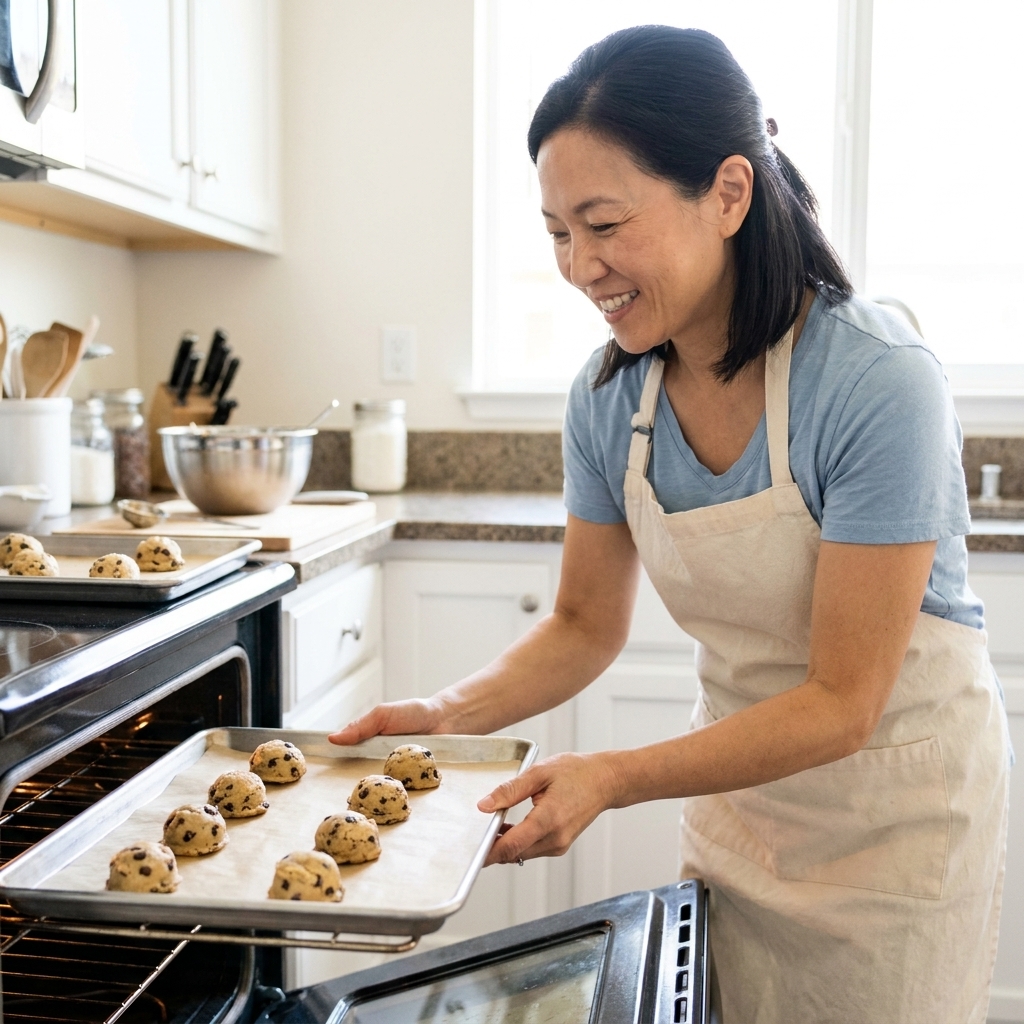
6 factors you can control
1) Dough temperature
Warm dough spreads fast. Cold dough spreads slower. If your kitchen is warm or you mixed longer than usual, chilling is your best friend.
2) Chill time
Chilling does two things: it solidifies fat (less spread) and it lets flour hydrate (better structure). Even 30 minutes helps. Overnight is magic for chewy, thicker cookies with deeper caramel flavor.
3) Mixing method
Creaming butter and sugar adds air, which can help cookies puff (more cake-like). But overcreaming can sometimes lead to cookies that puff and then settle and spread more than you wanted. Melted butter recipes skip that aeration and often bake up denser and chewier.
Also: once flour goes in, mix just until it disappears. Overmixing builds gluten and can make cookies tough.
4) Pan and lining
- Light-colored metal sheet: more even bake, less over-browning
- Dark sheet: faster browning, crispier bottoms, watch closely
- Parchment: easy release and, depending on the brand and dough, it can encourage a bit more spread
- Silicone mat: can change spread in either direction (it insulates and grips differently). If you are dialing in a recipe, do a quick A/B test: one tray parchment, one tray silicone.
5) Cookie size and spacing
Small cookies crisp faster. Large cookies stay softer in the center. Give them room, or they will bake into each other and steam a bit, which can soften edges.
6) Bake time and carryover
For chewy centers, remove cookies when edges are set and the centers still look slightly soft and glossy. Let them finish on the hot pan for 5 minutes, then move to a rack.
Chocolate and add-ins
Yes, the chips matter, but they are more of a supporting actor than the main character.
- Chocolate chips hold their shape and keep distinct pockets of chocolate, which can make the cookie feel a little more structured.
- Chocolate chunks melt more, which can create gooier pockets and a softer bite.
- Finely chopped chocolate melts into the dough and can increase spread a bit.
If you want crisp, choose chips. If you want gooey chew, go chunks and a little chopped chocolate mixed together.
Also, mix-ins change spread and chew: nuts and oats add bulk and can reduce spread a bit; dried fruit adds moisture; extra add-ins can make cookies bake up thicker simply because the dough is more packed.
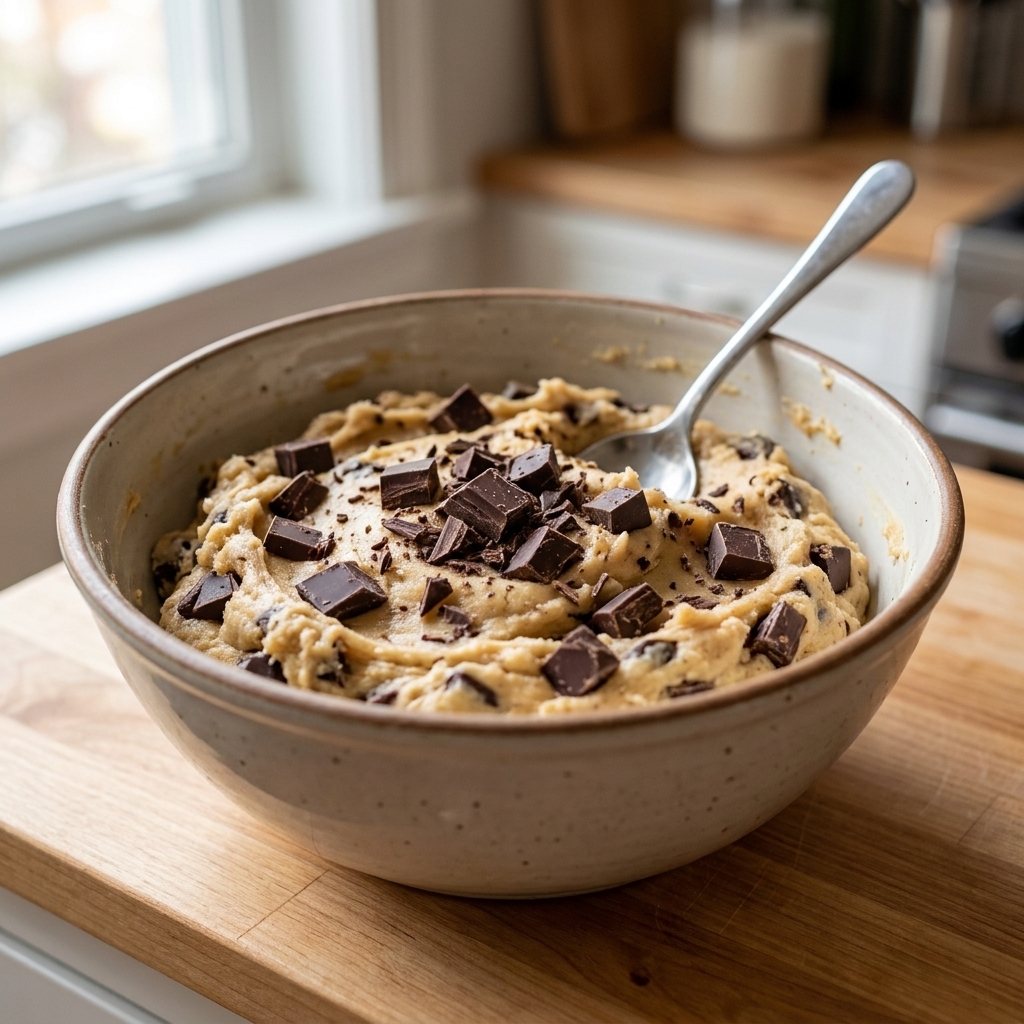
Quick fixes
My cookies spread into one giant puddle
- Chill the dough 1 to 2 hours (or scoop and chill the dough balls).
- Check butter temperature (too warm or melted when you did not mean to will do it).
- Use a scale for flour, or spoon and level (do not pack).
- Make sure your pan is not hot when the dough hits it.
- Make sure your baking soda is measured correctly. Too much usually shows up as soapy flavor and over-browning, but it can also throw off structure.
My cookies are puffy but dry
- Reduce flour slightly or switch a portion to all-purpose if you used bread flour.
- Use more brown sugar or add an extra yolk.
- Pull them earlier. Overbaking dries cookies fast.
My cookies are cakey and I wanted chewy
- Use baking soda (not just baking powder).
- Use more brown sugar, and consider one extra yolk.
- Do not overcream butter and sugar.
My cookies are crisp on day one but soft on day two
- Cool fully on a rack before storing.
- For crisp cookies, store in a container with the lid slightly ajar, or in a paper bag for short-term storage.
- For soft cookies, store airtight.
- Humidity matters. On a humid day, crisp cookies will soften faster because sugar pulls in moisture.
A simple base ratio
If you like having a mental starting point, here is a classic home-kitchen baseline for a medium-thick cookie:
- 1 cup (226 g) butter
- 3/4 cup (150 g) white sugar
- 3/4 cup (165 g) brown sugar
- 2 large eggs
- 2 1/4 cups (270 g) all-purpose flour
- 1 tsp baking soda
- 1 tsp salt
- 2 tsp vanilla
- 2 cups (340 g) chocolate chips or chunks
From there, make one change at a time. Your future self will thank you when you land on “the one” and can repeat it.
One more tiny lever that matters: salt and vanilla. They do not just add flavor. They make sweetness taste more balanced, which can change how rich and chewy a cookie feels even when the texture is the same.
Cookie texture FAQ
Does chilling dough really matter?
Yes. It controls spread and improves flavor. If you only do one “extra” step, make it a chill.
Should I use baking soda or baking powder?
For classic chocolate chip cookies with caramelized edges, baking soda is key. For more lift and a cakier bite, baking powder helps. Many great cookies use both.
Why do my cookies get hard after they cool?
Usually overbaking or too much white sugar relative to brown. Try pulling them earlier and increasing brown sugar a bit for more moisture retention.
How do I get bakery-style thick cookies?
Chill the dough, scoop larger portions, consider a little bread flour, and bake until edges set but centers still look soft. Also, do not put dough on a hot pan.
Your next batch, less stress
Here is my favorite no-fuss approach: pick your target texture, make two small tweaks, and take notes right on a sticky note while the cookies bake. (I have flour fingerprints on half my sticky notes. It is fine.)
And remember: even a “wrong” chocolate chip cookie is still a chocolate chip cookie. Pour the milk, call it a win, and we will dial it in next time.