A home baker-friendly comparison of stevia and monk fruit: taste, conversion ratios, best uses, and how to get tender, delicious results with sugar alternati...
recipes
Updated September 21, 2026
Vegan Baking Substitutions for Eggs, Butter, and Milk

Maya Chen
Maya Chen is a passionate home cook, recipe developer, and mother of two who believes that great food doesn't have to be complicated. Drawing from her multicultural upbringing and time spent in professional test kitchens, she creates approachable, flavor-packed recipes designed for real life.
Sizzlea
recipes
I love a from-scratch bake moment. I do not love realizing halfway through that I’m out of eggs, or that a friend is coming over who can’t do dairy. The good news: vegan baking is not a mysterious art reserved for people with a pantry full of powders you’ve never heard of. With a few smart swaps, your everyday cookies, muffins, pancakes, and cakes can stay just as cozy and craveable.
This guide is built for real life baking: clear ratios, what each substitute is best for, and the little tweaks that prevent the classic vegan-baking pitfalls like gummy centers or dry crumb.
Quick note: Vegan and gluten-free are not the same thing. This guide is for swapping animal products, not changing flour structure.
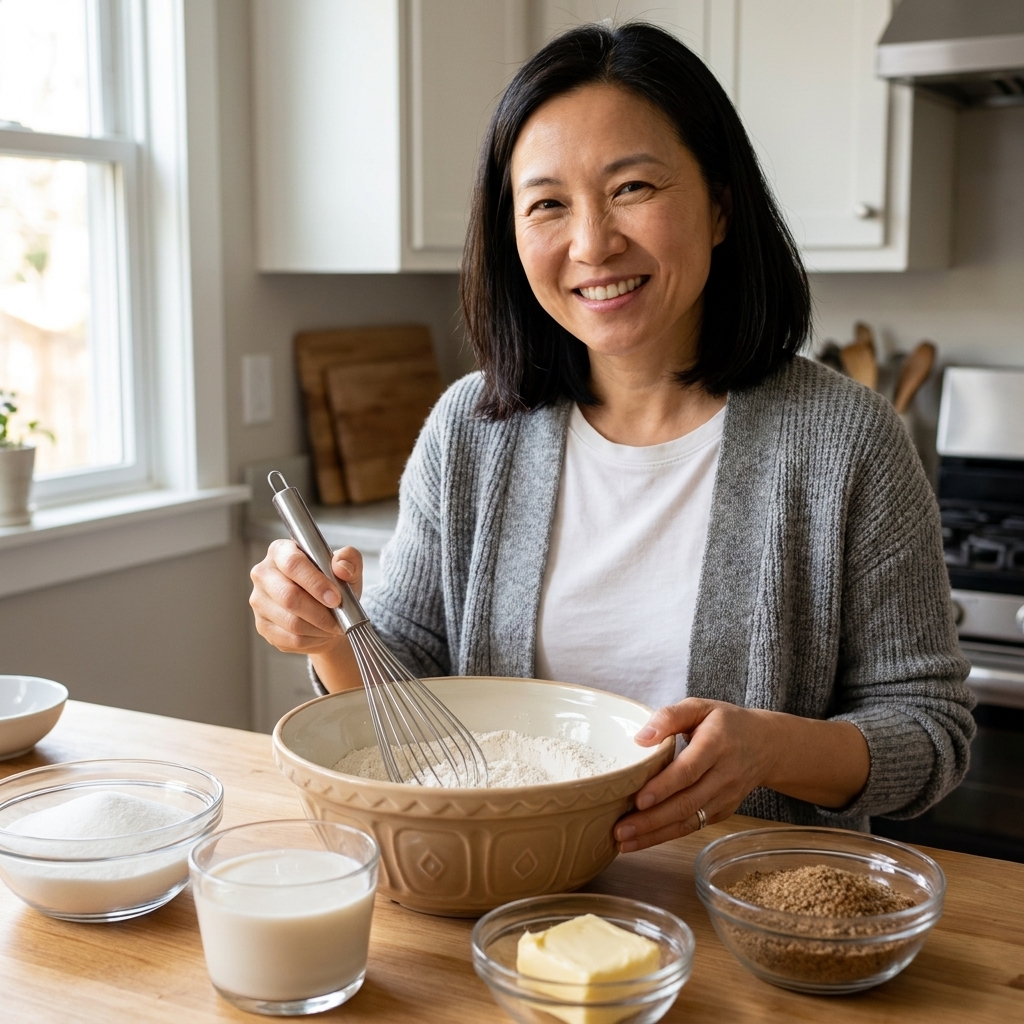
Before you swap: what eggs, butter, and milk do
When you understand the job an ingredient is doing, substitutions get way easier.
- Eggs can bind, add moisture, help leaven (lift), and create structure that sets as it bakes.
- Butter brings fat (tenderness), flavor, and sometimes structure through creaming (beating butter with sugar to trap air).
- Milk adds moisture, dissolves sugar, contributes to browning, and helps batter flow so it bakes evenly.
Most “vegan fails” happen when we use one substitute for every situation. A flax egg can be amazing in a chewy cookie, but it is not always the move for a fluffy cake. Let’s match the swap to the bake.
Also: Some desserts are just not swap-and-go. Think angel food cake, classic custards/pastry cream, and soufflés. Those usually need a tested vegan recipe, not a quick substitution.
Egg substitutes (with exact ratios)
Use these measurements per 1 large egg unless noted. If a recipe calls for 3 or more eggs, it’s often a sign the eggs are doing heavy lifting. That’s when purpose-built options like aquafaba or commercial egg replacer shine.
Flax egg
Ratio: 1 tbsp ground flaxseed + 3 tbsp water. Stir and rest 5 to 10 minutes until gelled.
Best for: cookies, brownies, muffins, pancakes, quick breads.
What it does: strong binding and moisture. Adds a subtle nutty note (usually pleasant and mild).
Maya tip: Use ground flax, not whole seeds. If you only have whole, blitz in a spice grinder.
Chia egg
Ratio: 1 tbsp chia seeds (ground or whole) + 3 tbsp water. Rest 10 minutes.
Best for: hearty bakes like banana bread, oatmeal muffins, thick cookies.
What it does: binding and moisture, slightly more “seedy” texture if left whole.
Unsweetened applesauce
Ratio: 1/4 cup applesauce.
Best for: cakes, muffins, snack breads.
What it does: moisture and a bit of binding.
Watch out: Too much can make things dense or a little gummy. If replacing more than 2 eggs, consider mixing methods (example: 1 flax egg + 1 applesauce swap).
Mashed ripe banana
Ratio: 1/4 cup mashed banana.
Best for: banana-forward bakes, pancakes, muffins, some brownies.
What it does: moisture, sweetness, and binding.
Watch out: It tastes like banana. Sometimes that is a feature, sometimes it is a surprise.
Commercial egg replacer (powder)
Ratio: Follow package directions (commonly 1 to 1 1/2 tsp powder + 2 tbsp water).
What it is: Usually a blend of starches (for binding) plus leaveners (for lift). Different brands behave a little differently, but the vibe is consistent: neutral, dependable, low drama.
Best for: cakes, cupcakes, cookies, and recipes where you want neutral flavor.
What it does: consistent binding and lift depending on brand.
Maya tip: Keep a box in the pantry for “I forgot to buy eggs” baking days. It’s the calmest swap.
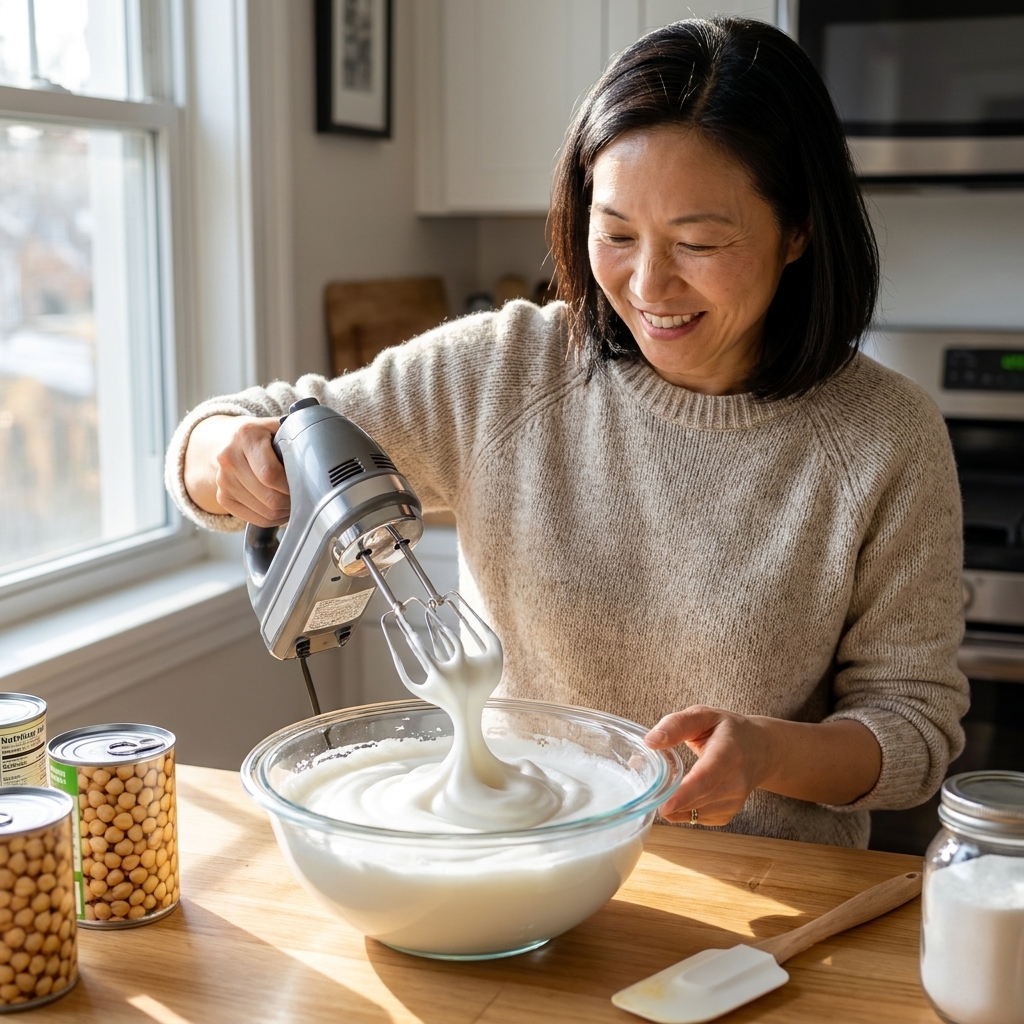
Aquafaba (the magic from chickpeas)
Ratio (starting point): 3 tbsp aquafaba = 1 egg. For egg whites: 2 tbsp aquafaba = 1 egg white.
Reality check: Cans vary. If yours seems very watery, simmer it for a few minutes to reduce, cool fully, then use. If you have a kitchen scale, weighing your aquafaba and using the same amount each time can make results more consistent.
Best for: meringue-based bakes, mousse, marshmallowy toppings, and some cakes that need lift.
What it does: whips like egg whites and adds air.
How to use: Drain a can of chickpeas, measure the liquid, then whip with a stand mixer or hand mixer. Expect 5 to 10 minutes for soft peaks and 10 to 15 for stiff peaks, depending on your mixer and the aquafaba thickness. Add sugar gradually if making meringue.
Butter substitutes (with exact ratios)
Butter is mostly fat, plus a little water and milk solids. In baking, that fat equals tenderness and flavor. Your best vegan option depends on whether the recipe needs solid fat (like cookies and pie dough) or simply fat (like some muffins or snack cakes).
Vegan butter (stick or block style)
Ratio: 1:1 swap for butter.
Best for: cookies, cakes, buttercream, frosting, shortbread, pie crust.
What to buy: Look for a stick or block that’s meant for baking. Tub spreads often have more water, which can make cookies spread too much.
Maya tip: If a recipe says “room temperature butter,” your vegan butter should be softly pliable, not greasy or melting. If it gets too soft, chill it for 10 minutes before creaming.
Coconut oil
Ratio (starting point): 1:1 for butter by volume. Use refined for less coconut flavor.
Best for: cookies, brownies, crisp toppings, some cakes.
Watch out: Coconut oil is 100 percent fat, while butter has water. In recipes that rely on butter’s water content (some cakes and cookies), coconut oil can bake up a bit greasier or a touch drier. If your batter looks thick or your crumb tends to run dry, add 1 to 2 tsp of plant milk or water per 1/2 cup coconut oil.
Also: Coconut oil melts fast. Your dough can go from perfect to puddly if the kitchen is warm. Chill cookie dough before baking.
Neutral oil (canola, avocado, light olive oil)
Ratio (starting point): Often replace butter with 3/4 the amount of oil (example: 1 cup butter to 3/4 cup oil).
Best for: muffins, quick breads, snack cakes, pancakes.
Watch out: Oil cannot be creamed like butter, so it’s not ideal for recipes that rely on creaming for lift and texture (think classic sugar cookies). Also, if the original recipe uses melted butter, this swap tends to be more straightforward than if it uses softened butter and creaming.
Vegan shortening
Ratio: 1:1 swap for butter (texture will differ).
Best for: super flaky pie crust, frosting stability, cookies where you want less spread.
What it does: creates tenderness and structure, but less buttery flavor. Pair with vanilla and a pinch more salt for a more rounded taste.
Nut or seed butter (peanut, almond, tahini)
Ratio: Replace up to 1/2 of the butter in some recipes (start small).
Best for: brownies, bars, cookies with a nutty vibe.
Watch out: Strong flavor, and it can dry out bakes if used as a full replacement.
Milk substitutes (with exact ratios)
This is the easiest swap of the bunch. In most recipes you can use plant milk 1:1 for dairy milk.
Best plant milks for baking
- Soy milk: higher protein, great structure, browns nicely.
- Oat milk: naturally sweet and creamy, lovely in cakes and muffins.
- Almond milk: light and neutral, good in most bakes (a bit thinner).
Ratio: 1:1 swap.
Choose unsweetened when possible so you control the sugar.
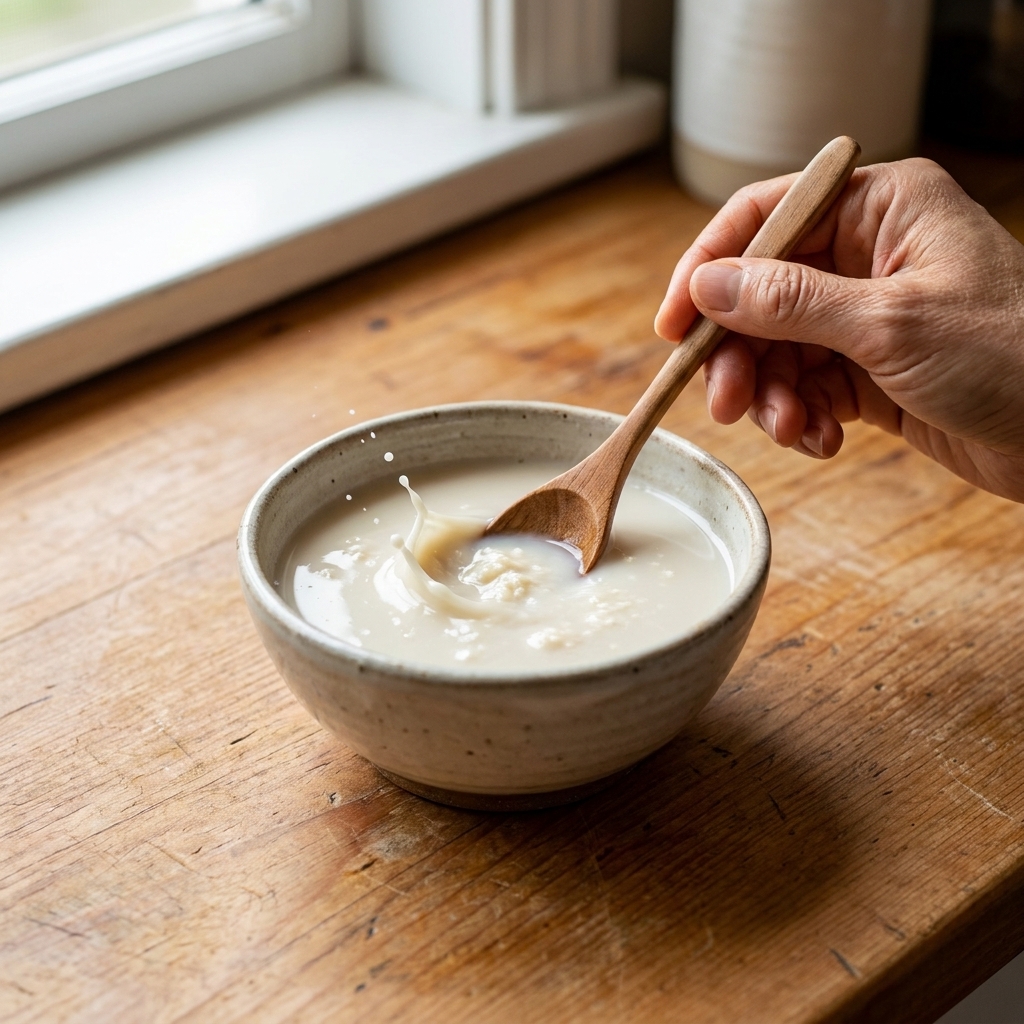
Buttermilk substitute (plant-based)
Some recipes call for buttermilk for tang and tenderness. You can make that at home in 2 minutes.
Ratio: Add 1 tbsp lemon juice or apple cider vinegar to 1 cup plant milk. Stir and rest 5 to 10 minutes until slightly thickened.
Best for: pancakes, biscuits, chocolate cake, quick breads.
Leavener note: If you swap in DIY vegan buttermilk in a recipe that originally used plain milk (so you just added acid), you might need a small pinch of baking soda for balance and lift. Start with 1/8 tsp per cup of DIY buttermilk and only adjust if the recipe does not already include baking soda. If it already has baking soda, usually do not change a thing.
Yogurt and sour cream swaps
If your recipe uses yogurt or sour cream, you can absolutely keep that moist, tender crumb without dairy.
- Plant yogurt: Swap 1:1 for yogurt. Use unsweetened, unflavored when possible.
- Vegan sour cream: Swap 1:1 for sour cream.
- DIY option: For 1 cup, mix 3/4 cup plant yogurt + 1/4 cup plant milk + 1 tsp lemon juice. Let it sit 5 minutes.
Best for: coffee cake, muffins, pound cake-style loaves, quick breads.
Quick swap cheat sheet
- 1 egg: 1 tbsp ground flax + 3 tbsp water (rest) OR 1/4 cup applesauce OR about 3 tbsp aquafaba (see note above)
- 1 cup dairy milk: 1 cup soy, oat, or almond milk
- 1 cup buttermilk: 1 cup plant milk + 1 tbsp lemon juice or vinegar (rest)
- 1 cup butter: 1 cup vegan butter (stick) OR start with 3/4 cup neutral oil (for quick breads and muffins)
Best swaps by bake
Chocolate chip cookies
- Egg: flax egg for chewy cookies, or commercial egg replacer for a cleaner flavor.
- Butter: vegan butter sticks for classic texture.
- Pro move: Chill the dough 30 to 60 minutes. Vegan butter can soften fast, and chilling helps control spread.
Brownies
- Egg: flax egg, applesauce, or mashed banana (only if banana flavor fits).
- Butter: vegan butter or coconut oil.
- Pro move: Underbake slightly, then cool fully. Vegan brownies set up as they cool.
Layer cakes and cupcakes
- Egg: commercial egg replacer for predictable lift, or applesauce for moist snack-style cakes.
- Butter: vegan butter for creaming method cakes.
- Milk: soy or oat milk for structure.
- Pro move: If your cake is coming out a bit tight, check your mixing (overmixing is sneaky) and consider using commercial egg replacer for at least one of the eggs. Save the purees for when you want a denser, cozy crumb on purpose.
Muffins and quick breads
- Egg: applesauce, flax egg, or chia egg.
- Butter: neutral oil works beautifully here.
- Pro move: Do not overmix. Vegan batters can get tough if you stir like you’re mad at them.
Pancakes and waffles
- Egg: applesauce or flax egg.
- Milk: any plant milk, or vegan buttermilk for fluffiness.
- Pro move: Let batter rest 5 minutes. It thickens and cooks more evenly.
Pie crust and biscuits
- Butter: vegan butter sticks or a mix of vegan butter and shortening.
- Milk: plant milk or cold water as the recipe calls for.
- Pro move: Keep everything cold. If the “butter” melts before baking, you lose flakes.
Troubleshooting
My cake is dense
- Too much fruit puree can weigh batter down. Try commercial egg replacer for one of the eggs.
- Check your leaveners. Baking powder and baking soda lose power over time.
- Overmixing develops gluten and makes cakes tight. Mix just until you no longer see dry flour.
My cookies spread too much
- Your fat may be too soft. Use vegan butter sticks and chill dough before baking.
- Measure flour with care. If you scoop straight from the bag, you can end up with less flour than intended. Spoon into the cup and level it off.
My muffins are gummy
- Common culprit: too much applesauce or banana. Use a flax egg instead for one of the eggs.
- Make sure the center reaches doneness. Use a toothpick test and look for moist crumbs, not wet batter.
My bake tastes flat
- Add a pinch more salt (seriously, it wakes everything up).
- Use vanilla, citrus zest, cinnamon, espresso powder, or a touch more brown sugar for depth.
- If using coconut oil and you do not want coconut flavor, choose refined.
Ingredient notes
- Choose unsweetened plant milk unless a recipe is specifically designed for sweetened.
- Different vegan butters behave differently. If one brand makes your cookies spread, try another. Baking with vegan butter is a tiny bit like dating. Sometimes you have to meet a few before you commit.
- Acid + baking soda = lift. Vegan buttermilk works because it brings the acid. Just do not automatically add extra baking soda if the recipe already includes it.
- Do not replace more than 2 eggs with purees in a standard cake recipe unless you want a denser, snack-cake vibe.
- Optional vegan note: In some regions, certain white sugars are processed with bone char. If that matters to you, look for sugar labeled vegan, or use organic cane sugar.
FAQ
Can I make any recipe vegan by swapping eggs, butter, and milk?
Most everyday home baking, yes. Recipes that rely heavily on eggs for structure, like angel food cake or classic custards, need more specialized vegan versions.
What is the closest substitute to eggs in baking?
For general binding, flax eggs and commercial egg replacers are the most dependable. For whipped egg whites, aquafaba is the closest match.
What plant milk is best for baking?
Soy milk is my most reliable for structure and browning. Oat milk is a close second for tenderness and a subtle sweetness. Almond milk works too, just a bit lighter.
Do vegan substitutions change baking time?
Sometimes. Fruit-based egg swaps can increase moisture, which may add a few minutes. Start checking at the earliest bake time and use visual cues: set edges, slight spring-back, and a toothpick with moist crumbs.
My vegan baking starter kit
If you want to be ready for spontaneous vegan baking without overhauling your pantry, this is the short list I keep coming back to:
- Ground flaxseed
- Unsweetened soy or oat milk
- Vegan butter sticks (baking-focused)
- Lemons or apple cider vinegar (for quick vegan buttermilk)
- Vanilla extract and a good salt
- Optional but handy: commercial egg replacer
And that’s it. No intimidation, no weird vibes. Just the freedom to say, “Yes, I can bring dessert,” even when life is chaotic and the laundry is definitely not folded.