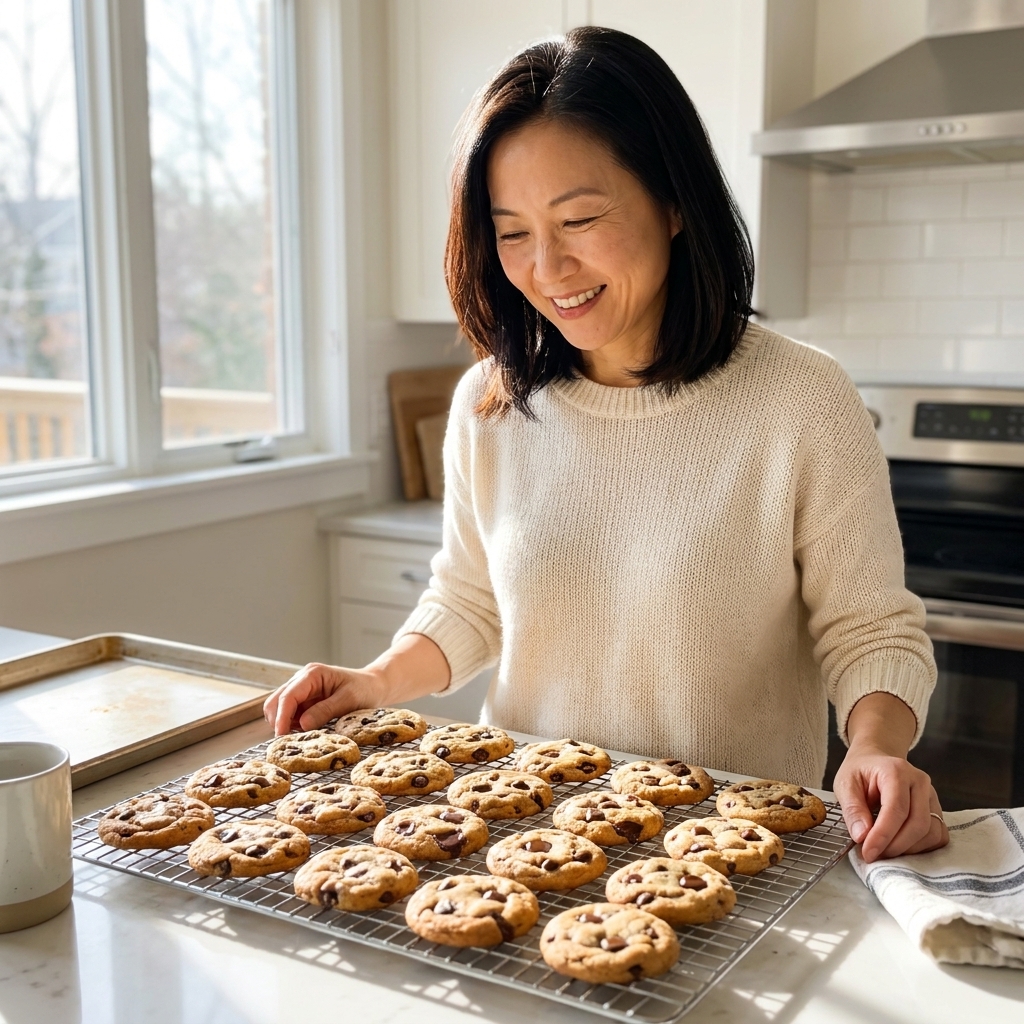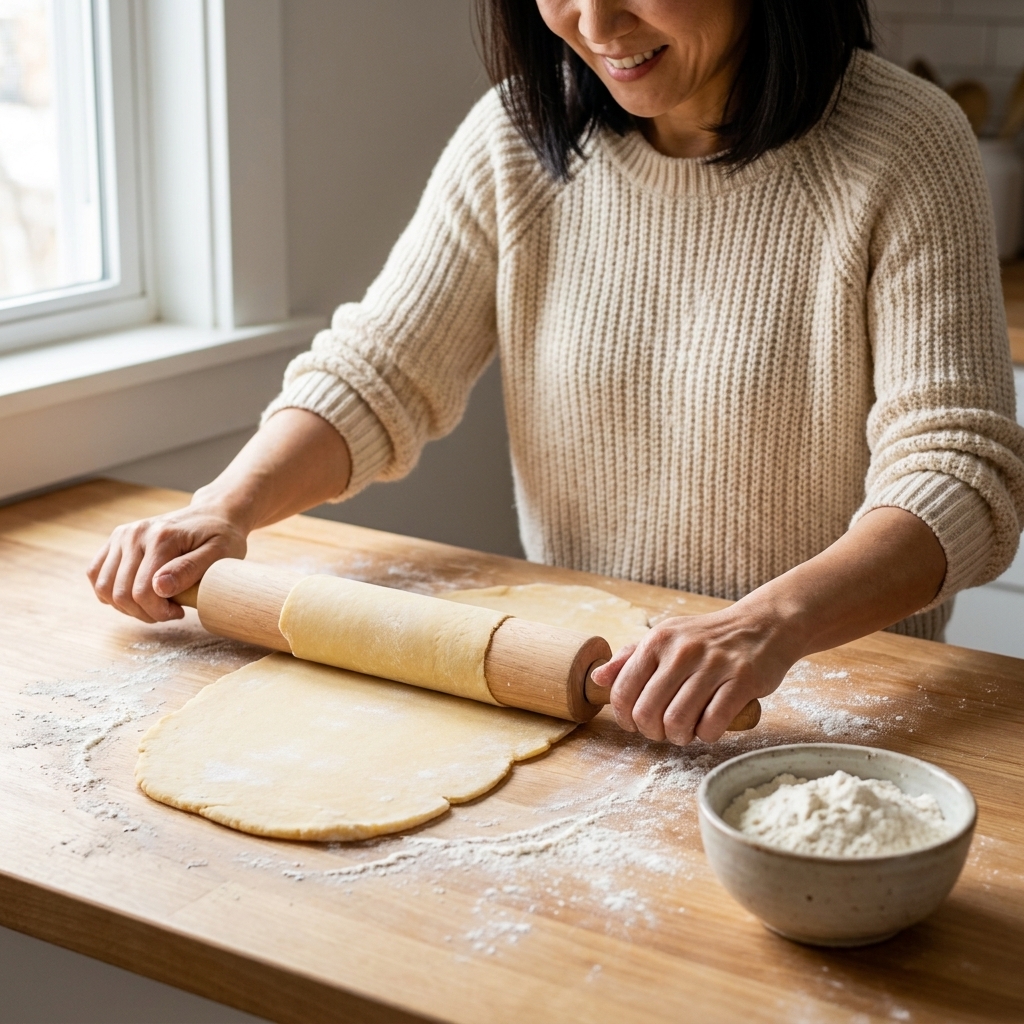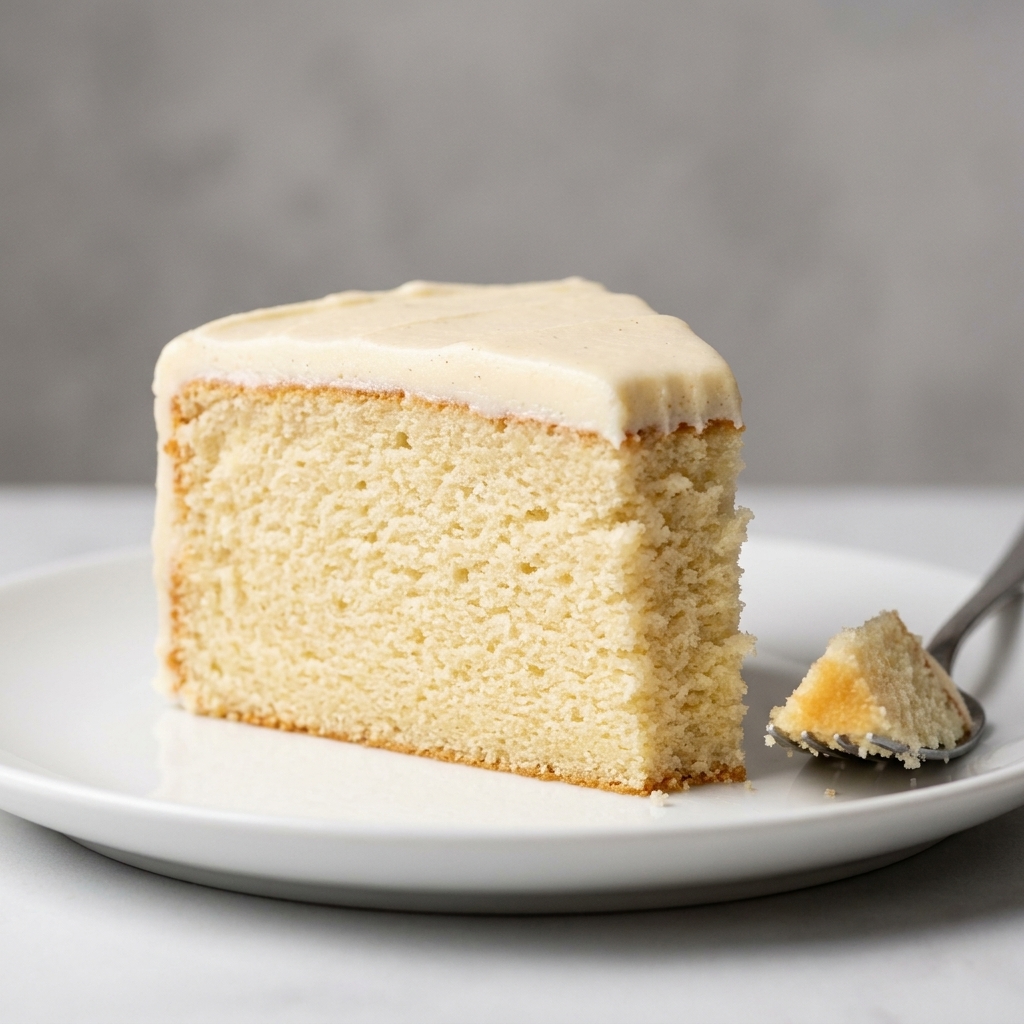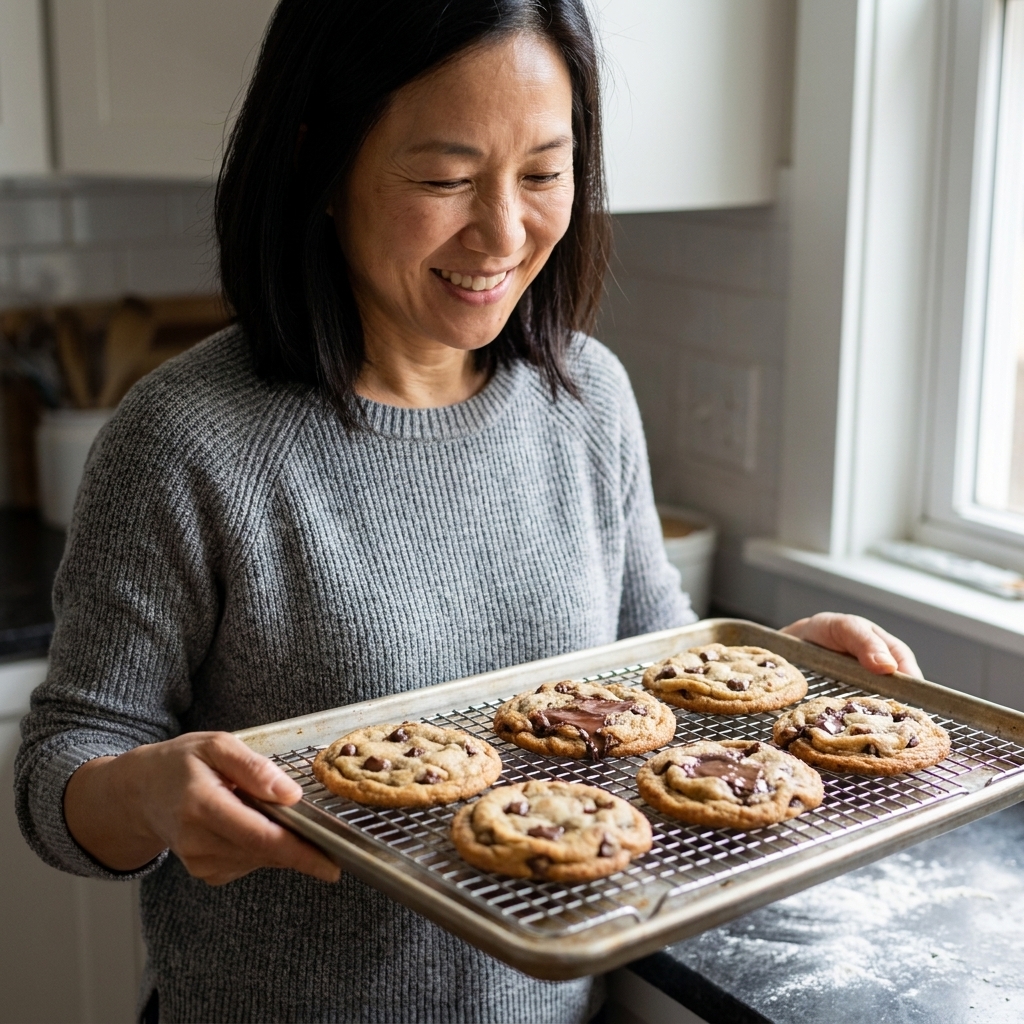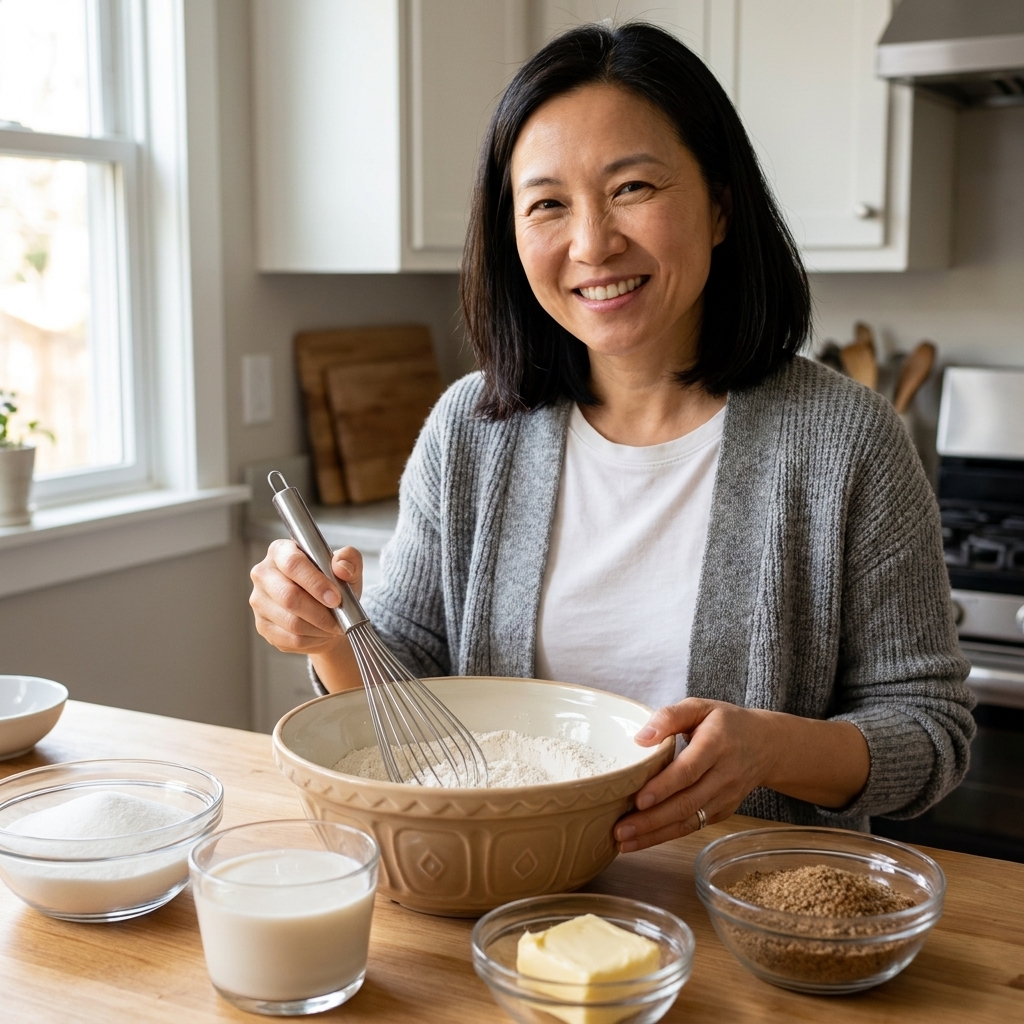
Exact swaps for eggs, butter, and milk in your favorite baked goods, plus tips for cookies, cakes, brownies, and quick breads so nothing turns out gummy or dry.
recipes
Updated September 21, 2026
Gluten-Free Baking Basics

Maya Chen
Maya Chen is a passionate home cook, recipe developer, and mother of two who believes that great food doesn't have to be complicated. Drawing from her multicultural upbringing and time spent in professional test kitchens, she creates approachable, flavor-packed recipes designed for real life.
Sizzlea
recipes
If gluten-free baking has ever made you feel like you need a chemistry degree and a second set of bowls, come stand next to me at the counter. We're going to keep it simple, practical, and very bakeable. Gluten-free desserts can be plush and chewy and golden at the edges. You just need to understand what gluten did in the first place, then swap in a few smart supports.
This guide is all about three things that change everything: choosing the right gluten-free flour blend, using xanthan gum on purpose (not blindly), and adjusting hydration so your batter isn't dry, gritty, or weirdly crumbly.
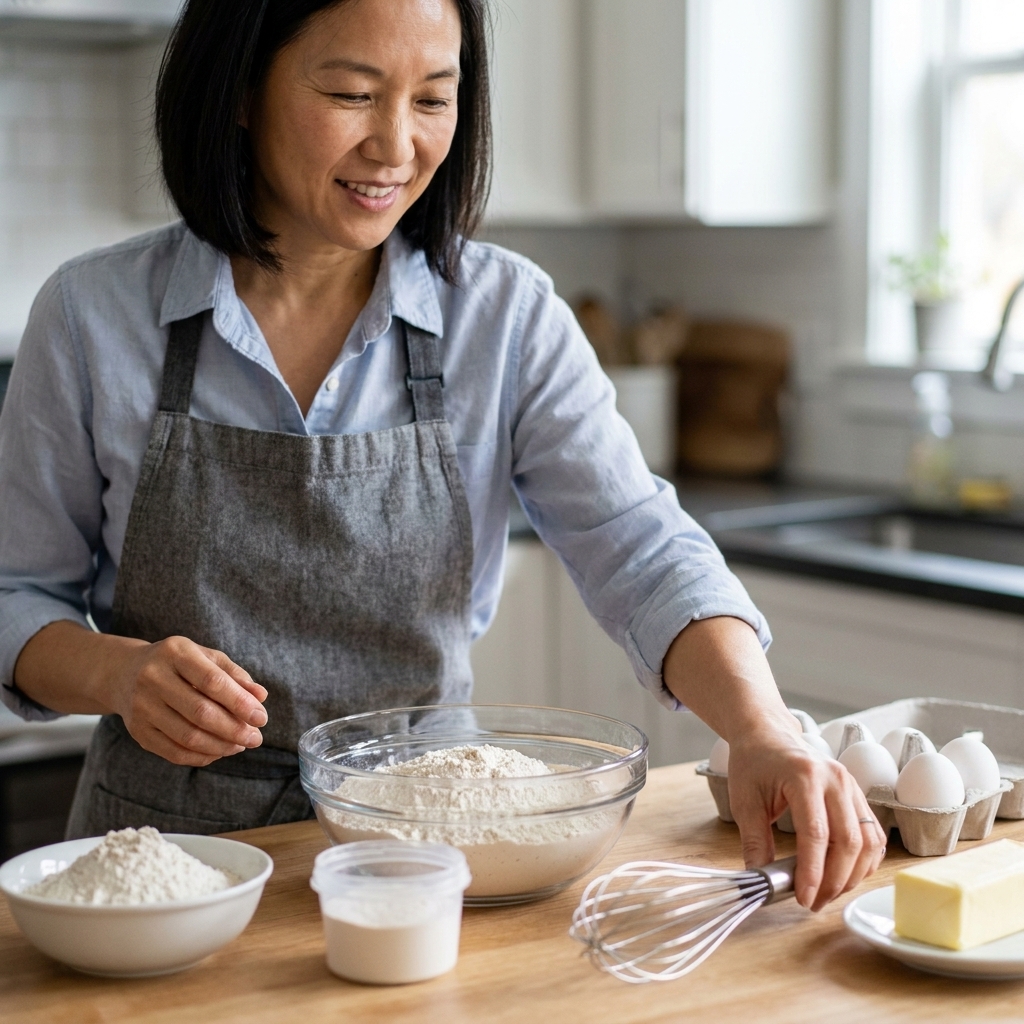
What gluten does
Gluten is the stretchy protein network formed when wheat flour meets liquid and mixing. In baked goods, that network:
- Traps gas so cakes rise and breads get structure.
- Helps retain moisture so slices stay soft instead of sandy. (Other things help too, like starches, fats, sugars, and binders, but gluten is a big part of the original support system.)
- Adds elasticity so dough can be shaped and still bake up tender.
When you bake gluten-free, you're building structure with a combo of starches, proteins, and binders instead of one magic net. That's not bad news. It just means you bake with intention.
Choose a flour blend
Let's clear up the biggest beginner confusion: gluten-free flour is rarely a single flour. Most reliable results come from a blend that includes both whole-grain flours (flavor, color, nutrition) and starches (lightness, tenderness).
Blend types
- 1:1 or “cup-for-cup” blends: Designed to replace all-purpose flour in many recipes. Great for cookies, muffins, quick breads, pancakes, and everyday cakes.
- All-purpose gluten-free flour (not always 1:1): Sometimes needs recipe changes or added binders. Check the label.
- Bread blends : Often higher in protein and may include psyllium husk for chew and structure. Better for yeasted doughs.
What to check
When you're shopping, flip the bag around and look for these clues:
- Does it include a binder? Many 1:1 blends contain xanthan gum. If yours does, you usually don't add more.
- What starches are used? Tapioca starch brings chew and browning. Potato starch adds tenderness and a soft crumb. Cornstarch can lighten texture but can taste a little powdery if it's doing too much of the job.
- Is it finely milled? Finer blends tend to feel less gritty, especially in cakes and cookies.
Quick blend notes
- Rice flour based blends are common and versatile, but some can read gritty if the rice flour is coarse. Resting the batter helps a lot.
- Sorghum or millet based blends often taste a little warmer and more whole-grain, sometimes less starchy.
- Oat based blends can be soft and flavorful, but oats must be certified gluten-free if you're baking for celiac disease.
A simple starter rule
If you want one bag that does a lot: choose a reputable 1:1 blend that already includes xanthan gum, and start with non-yeasted recipes. Build confidence there, then graduate to breads and your laminated dreams.
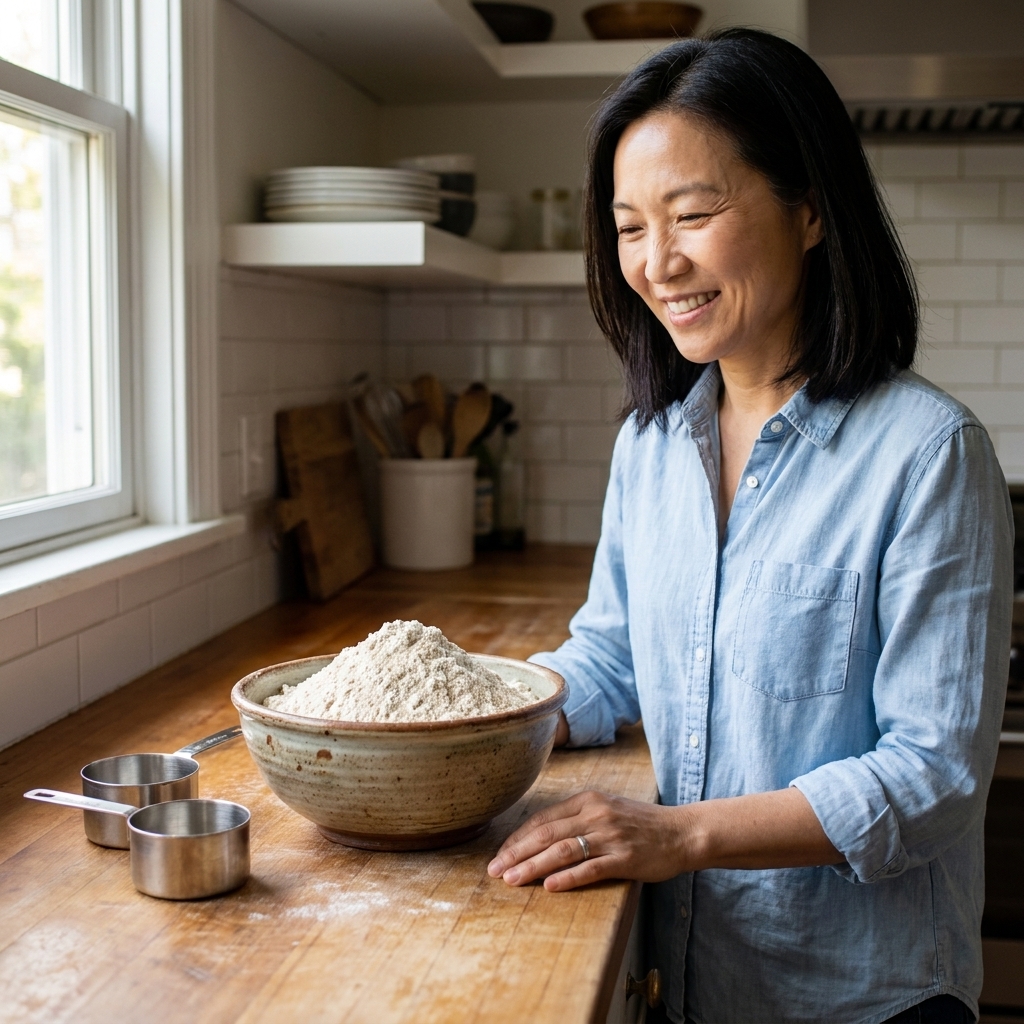
Xanthan gum
Xanthan gum is a powerful thickener and binder. In gluten-free baking, it helps replace gluten's ability to hold things together and trap air. Think of it as the quiet friend who keeps your cake from crumbling and your cookies from spreading into sad puddles.
Do you need it?
Sometimes yes, sometimes no:
- If your flour blend already contains xanthan gum, you usually skip adding more. Extra gum can make bakes gummy or oddly stretchy.
- If your blend is gum-free (or you're mixing your own), you often need to add a binder for structure.
- Some recipes rely on other binders like eggs, nut butters, or melted chocolate. In those cases, xanthan gum may be optional.
How much to use
These are dependable starting points for gum-free flour blends. Different blends absorb differently (more starch often needs less gum, more whole-grain/protein can need a touch more), so treat this as a starting line, not a law.
- Cookies and bars : 1/4 teaspoon per 1 cup gluten-free flour
- Cakes, muffins, quick breads: 1/2 teaspoon per 1 cup gluten-free flour
- Yeasted breads and pizza dough: 3/4 to 1 teaspoon per 1 cup gluten-free flour
If a recipe already includes other strong binders (like psyllium husk or lots of eggs), start at the lower end.
How to mix it
- Whisk xanthan gum into your dry ingredients very well before adding liquids.
- If you're scaling a recipe, measure xanthan gum with a proper measuring spoon and level it. Heaping isn't your friend here.
If you can't use xanthan
Some people prefer to avoid it. Depending on the bake, you can try:
- Psyllium husk powder (especially for breads): adds elasticity and chew
- Ground chia or flax: helps bind muffins and quick breads
- Gelatin: can improve texture in some cakes and soft rolls
These swaps change hydration needs, so expect a little experimenting.
Hydration
If I could put one sticky note on every beginner gluten-free recipe, it'd be: gluten-free flours need more time and often more liquid. Many gluten-free starches and whole-grain flours absorb liquid differently than wheat flour, and they often take longer to fully hydrate.
What too dry looks like
- Batter that's thick like modeling clay when it should be scoopable
- Muffins that taste gritty or stale on day one
- Cake that crumbles when you slice it, even after cooling
Three easy fixes
- Rest the batter: Let cookie dough or muffin batter sit 15 to 30 minutes before baking. This reduces grittiness and improves structure.
- Add liquid gradually: If you're adapting a wheat recipe, make small hydration adjustments (a tablespoon at a time) until the batter matches the original texture.
- Use moisture helpers : Sour cream, Greek yogurt, applesauce, pumpkin, or an extra egg yolk can make a huge difference in tenderness.
When to add liquid (and when not to)
Cakes and muffins usually benefit from slightly looser batter than you think. Cookies can be tricky: too much liquid and they'll spread. For cookies, a better move is often resting the dough, chilling it, and using moisture helpers like brown sugar, honey, or a bit of applesauce rather than pouring in extra milk.
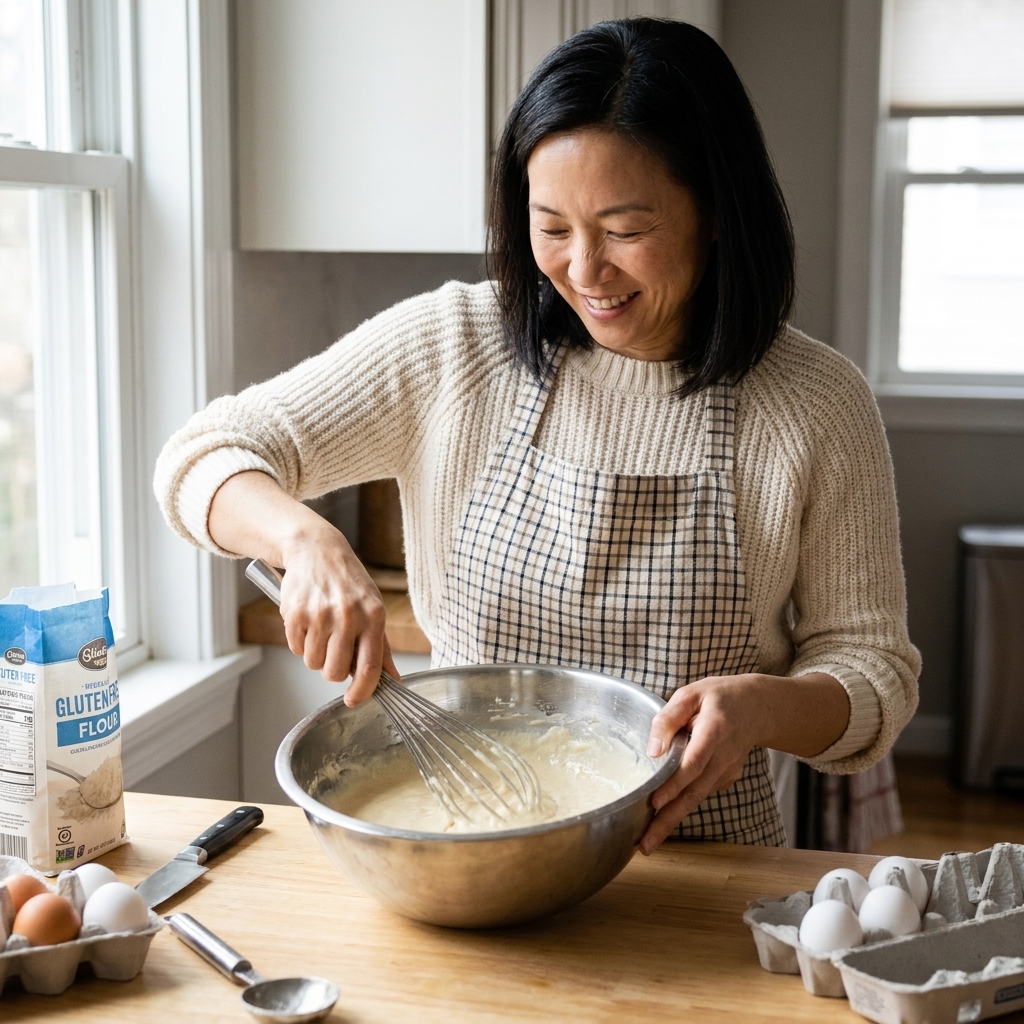
Adapt recipes
You can absolutely convert many of your favorite family recipes, especially simple ones. Here's the no-drama approach I use at home.
Step 1: Choose the right recipe
Start with recipes that are already forgiving:
- Banana bread, zucchini bread, pumpkin bread
- Brownies and blondies
- Drop cookies and bar cookies
- Sheet cakes and basic layer cakes
Save croissants, baguettes, and ultra-airy sponge cakes for later. They're doable, but they aren't beginner-friendly.
Step 2: Swap flour smartly
- Use a 1:1 blend for the easiest starting point.
- If your blend is gum-free, add xanthan gum using the guidelines above.
- Weigh your flour if you can. Cup-for-cup blends assume a specific cup weight, and that varies by brand. A kitchen scale makes results more repeatable. If your recipe is written in cups, spoon flour into the cup and level it. Don't pack it.
Step 3: Mixing and timing
- Rest batters when you can.
- Don't overbake. Gluten-free bakes can go from moist to dry fast. Use visual cues (set center, slight spring-back, clean toothpick with a few moist crumbs) and a thermometer when it makes sense. As a general guideline, many cakes and quick breads land around 200 to 205°F in the center, but richer or extra-moist bakes can read differently.
- Cool completely before slicing. Gluten-free structure sets as it cools, and cutting early can make even a perfect loaf crumble.
Troubleshooting
My cake is gummy
- Check if you double-added xanthan gum (your blend already had it).
- Make sure it's fully baked and fully cooled.
- Reduce xanthan gum slightly next time or switch to a different blend.
My muffins are gritty
- Rest the batter 20 to 30 minutes before baking.
- Try a finer-milled blend or one with a different rice flour base.
- Add a little more fat or dairy for moisture and softness.
My cookies spread too much
- Chill the dough 30 to 60 minutes.
- Reduce sugar slightly or use a bit more brown sugar for chew.
- Make sure your butter wasn't too warm.
My loaf crumbles
- Let it cool completely, then slice.
- Add a bit more binder (xanthan gum or psyllium, depending on recipe).
- Increase moisture slightly with yogurt, milk, or an extra egg.
Pantry list
If you want a streamlined pantry that covers most dessert and baking situations, this is my realistic, not-crazy list.
Staples
- 1:1 gluten-free flour blend (choose one you like and stick with it for a while)
- Almond flour (great for tenderness and flavor, also a tree-nut allergen)
- Tapioca starch (chew and browning)
- Baking powder and baking soda (check they're fresh)
- Xanthan gum (if your blend doesn't include it)
- Brown sugar, honey, or maple syrup (moisture and chew)
Nice-to-haves
- Psyllium husk powder (for breads and roll doughs)
- Greek yogurt or sour cream (moisture insurance)
- Buttermilk powder (easy tang for pancakes and cakes)
Allergen notes
- Oats: use certified gluten-free oats and oat flour if you're baking for celiac disease or gluten sensitivity.
- Blends vary: some contain milk powder or other allergens. Always read labels if allergies are in the mix.
FAQ
Can I replace all-purpose flour 1:1 in any recipe?
Not any recipe, but many. Cookies, muffins, quick breads, pancakes, and everyday cakes are the best candidates. Yeasted breads and very delicate cakes usually need more targeted formulas, different binders, and different hydration.
Do I need xanthan gum for cakes?
If your flour blend already contains xanthan gum, you typically don't add more. If your blend is gum-free, adding about 1/2 teaspoon per cup of flour is a solid starting point for cakes and muffins.
Why does gluten-free batter seem thicker?
Many gluten-free flours and starches absorb liquid quickly and continue absorbing as the batter sits. That's why resting the batter helps, and why you sometimes need a small hydration bump to match the original batter texture.
What's the easiest gluten-free dessert to start with?
Brownies or blondies. They're naturally forgiving, they don't rely heavily on gluten for structure, and they teach you a lot about doneness and moisture.
Store it right
Gluten-free baked goods tend to stale faster because the structure and starches behave a little differently than wheat. Two easy habits help a lot:
- Seal well: airtight container once fully cooled.
- Freeze extras: slice loaves, wrap, and freeze. You can toast or gently warm slices to bring back that just-baked feel.
Practice calmly
Pick one reliable gluten-free flour blend and bake the same thing three times: a batch of drop cookies, a simple muffin, then a quick bread. Keep notes like you're your own test kitchen. Did it feel dry? Add a spoonful of yogurt next time. Did it turn gummy? Check your xanthan gum and bake time. That repeat practice is what makes gluten-free baking feel easy.
And if you end up with a few crumbs on the counter along the way, welcome to my kitchen. We're doing great.