A home-cook’s speed test: air fryer vs. oven for chicken. Get typical times, best cuts for each method, and simple tips for juicy, crispy results every time.
recipes
Updated September 21, 2026
Convert Deep-Fried Favorites to the Air Fryer

Maya Chen
Maya Chen is a passionate home cook, recipe developer, and mother of two who believes that great food doesn't have to be complicated. Drawing from her multicultural upbringing and time spent in professional test kitchens, she creates approachable, flavor-packed recipes designed for real life.
Sizzlea
recipes
If you have ever pulled a batch of air-fried chicken out of the basket and thought, why is it pale and patchy, you are not alone. Deep frying and air frying create crispiness in totally different ways. The good news is that once you learn a few simple conversions, your favorites can come out crunchy, golden, and satisfying with way less oil.
Think of this as your friendly kitchen cheat sheet for turning classic deep-fried recipes into air fryer wins, without turning dinner into a science project.
How air frying is different
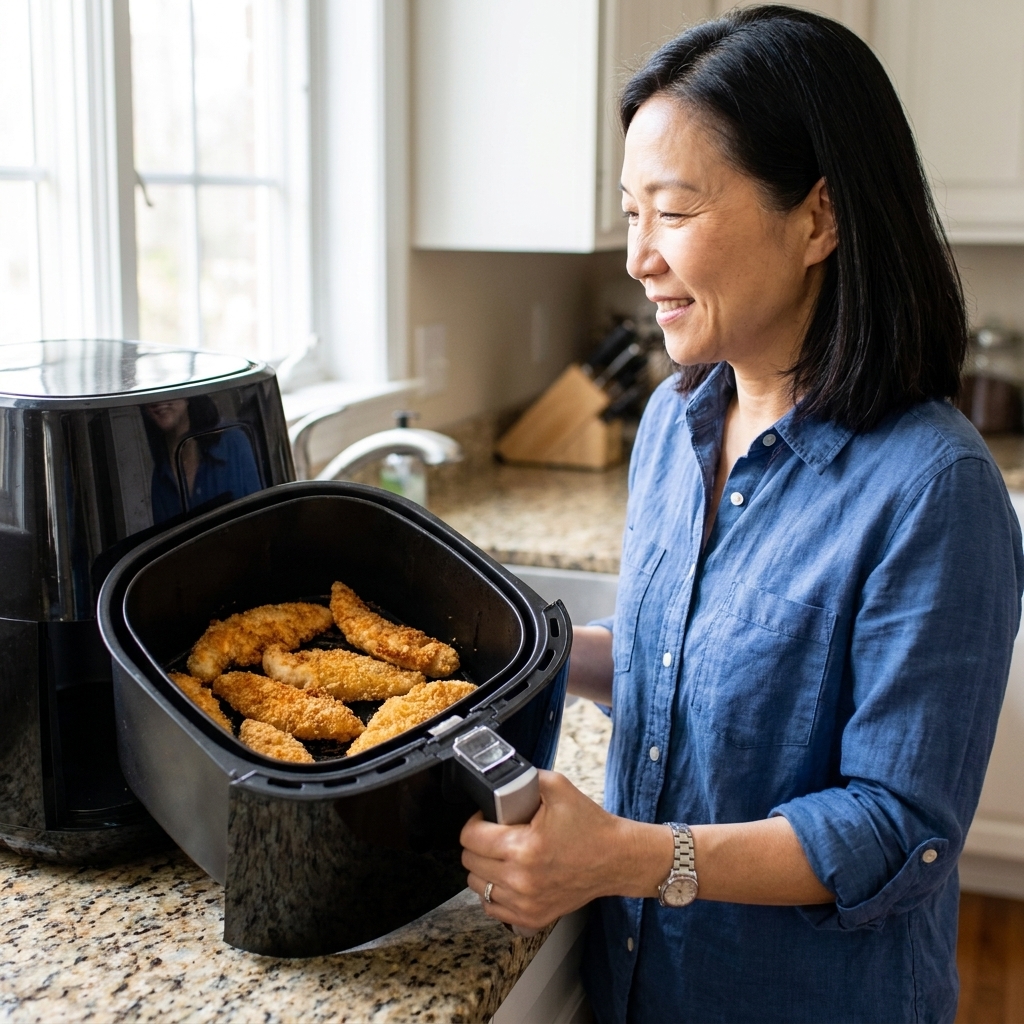
Deep frying surrounds food with hot oil, which browns the surface quickly and evenly. An air fryer is basically a compact convection oven that moves hot air around the food. That means:
- You need airflow. Crowding blocks crisping.
- You need surface oil. Not lots of oil, just enough to help browning and crunch.
- Breading needs help. Floury spots do not brown unless they are lightly oiled.
Once you cook with those three truths in mind, converting recipes gets much easier.
Temp and time basics
For most deep-fried foods, you are chasing two things: a crisp exterior and a cooked-through center. In the air fryer, that usually means cooking longer than deep frying, with smart temperature control so the outside does not over-dry before the inside is done.
My go-to starting point
- Set the air fryer to 375°F for most breaded foods.
- Flip or shake halfway for even browning.
- Finish with 2 to 4 minutes at 400°F if you want extra color and crunch.
Common successful temperature ranges
These are not strict one-to-one conversions. Think of them as ranges that work for a lot of home air fryers. Thickness, moisture, and basket load still matter.
- Deep frying around 350°F → Air fry around 360 to 375°F
- Deep frying around 365 to 375°F → Air fry around 375 to 390°F
- Delicate items (thin fish, soft veg) → Air fry around 350 to 360°F so the outside does not overbrown before the center warms through
Time rules that keep you out of trouble
- Small pieces cook fast. Nuggets, popcorn shrimp, wings: check early.
- Thick pieces need patience. Bone-in chicken, big cutlets: lower temp first, then crisp at the end.
- When in doubt, preheat. 3 to 5 minutes makes browning more reliable, especially for breaded foods.
Helpful reality check: If your air-fried food looks cooked but tastes a little dry, you probably ran too hot for too long. Drop the temp 15 to 25 degrees next time and add a quick high-heat finish.
Oil misting
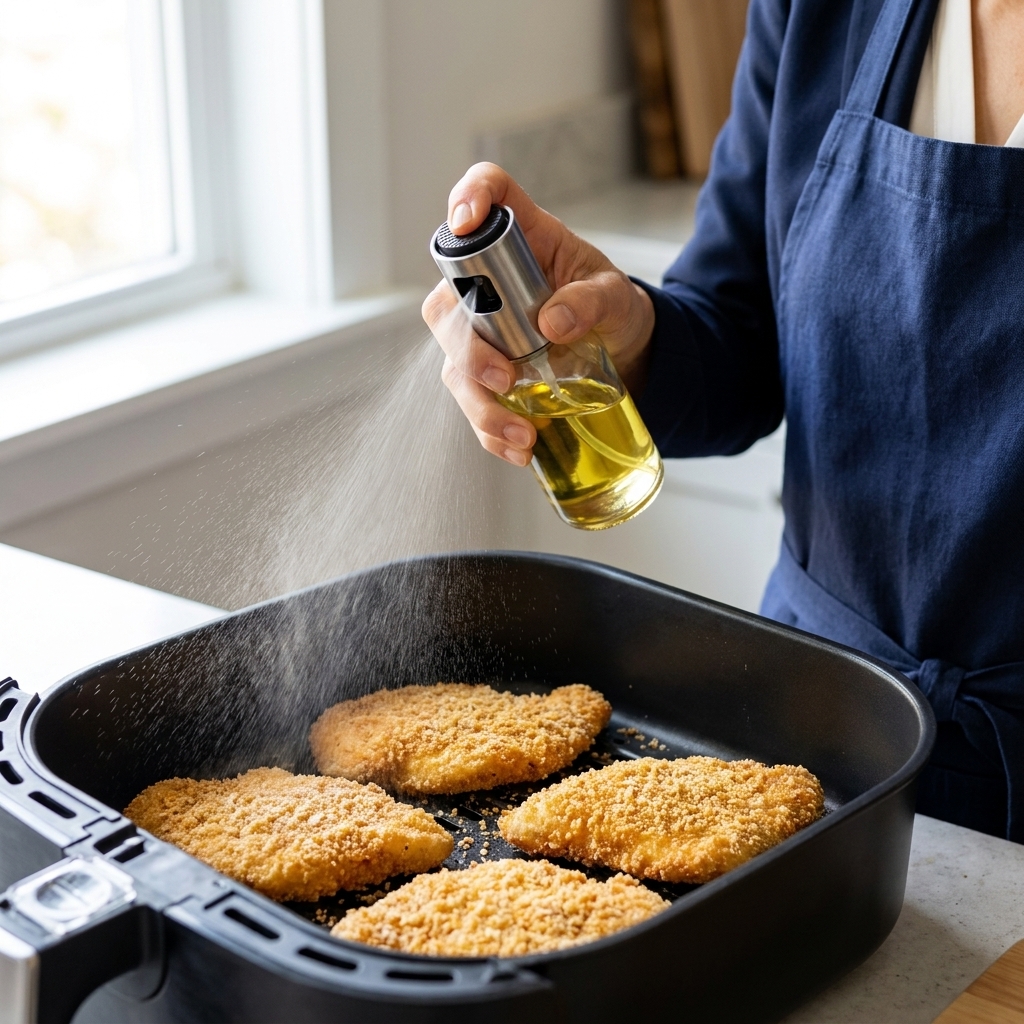
Air frying is “low oil,” not “no oil.” A light mist of oil helps breading brown, crisp, and taste like the real deal.
What to use
- Avocado oil spray for high heat and neutral flavor
- Canola or vegetable oil spray for budget-friendly high heat
- Olive oil spray for vegetables and Mediterranean flavors. Refined olive oil is better for higher heat. Extra-virgin can smoke sooner depending on the brand.
What to avoid
- Aerosol sprays with additives can leave residue on some nonstick baskets over time. Many air fryer manuals warn against them, so check yours. A refillable mister is the safe choice.
- Pouring oil directly on breading can create soggy spots. Mist is your friend.
How to spray for even browning
Here is my low-stress method:
- Spray the food lightly before cooking. Focus on dry floury areas.
- Flip halfway, then spray again. This is the moment most people skip. Do not skip it.
- Spot-spray pale patches near the end if needed.
Think “even sheen,” not “dripping.” If you can see oil pooling, you went too far.
Breading that sticks
Deep-fried breading clings because the hot oil sets it quickly. In an air fryer, breading needs a little structure and a little moisture, or it will fall off and leave you with sad naked spots.
Hack 1: Dry well, season every layer
Pat the protein dry first. Then season the flour (or starch), season the egg, and season the crumbs. This is the difference between “healthy” and why is this bland.
Hack 2: Add starch for crispiness
Swap some flour for starch to help crisping:
- 50% flour + 50% cornstarch for ultra-crisp chicken, tofu, and veggies
- Potato starch for a shatteringly crisp coating (great for wings)
Hack 3: Press, rest, then air fry
After breading, press the coating firmly onto the food, then let it rest on a rack or plate for 10 minutes. This quick rest hydrates the flour and helps everything cling better during flipping.
Hack 4: Batters need a different plan
Most pourable wet batters (beer batter, classic tempura) do not behave well in an air fryer. They drip, then bake into weird little stalactites. If you want the closest air fryer version:
- Set expectations: it will not be identical to deep-fried batter, but you can get crispy and satisfying.
- Use a thicker “sticky” batter or slurry (think seasoned flour mixed with just enough liquid to cling), then coat in panko.
- Or skip batter and go crunchy: flour, egg, panko (or crushed cornflakes).
- Pre-set the coating: chill breaded items 10 to 15 minutes, or freeze 20 to 30 minutes before air frying for better hold.
Hack 5: Panko is your best friend
If you want maximum crunch with minimal oil, reach for panko. For even more color, toast the panko first:
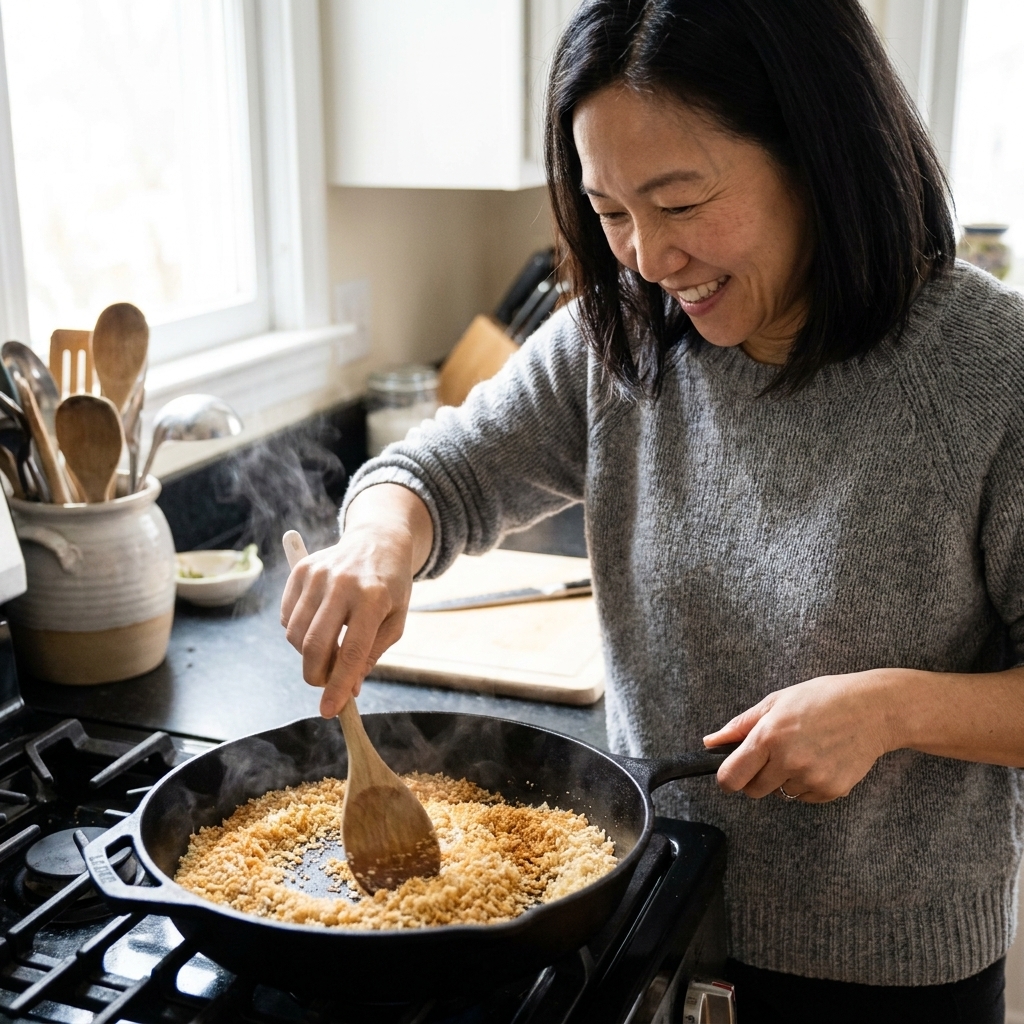
Quick toasted panko: Toss panko with 1 to 2 teaspoons oil and toast in a skillet over medium heat until light golden. Cool, then use as your crumb.
Convert common favorites
Fried chicken (bone-in or tenders)
- Best coating: flour plus cornstarch, or seasoned panko
- Temp: 360 to 375°F
- Time: tenders 10 to 14 minutes; bone-in pieces 22 to 30 minutes (flip halfway)
- Tip: Mist well after breading, especially on pale flour patches
- Doneness: chicken should hit 165°F in the thickest part
Wings
- Best method: dry rub, then crisp; sauce after
- Temp: 380°F until crisp, then 400°F for a final blast
- Time: 18 to 24 minutes total depending on size (shake or flip a couple times)
- Tip: a little aluminum-free baking powder (not baking soda) in the rub helps wings crisp up
Breaded fish or shrimp
- Best coating: panko or crushed cornflakes
- Temp: 350 to 375°F
- Time: shrimp 6 to 10 minutes; fish fillets 10 to 14 minutes
- Tip: chill breaded seafood 10 minutes before cooking to help it hold
French fries and potato wedges
- Best method: soak cut potatoes 20 to 30 minutes, dry very well, then toss with 1 to 2 teaspoons oil
- Temp: 380°F, shake often
- Time: shoestring fries 12 to 16 minutes; thicker wedges 18 to 25 minutes
- Tip: cook in batches for real crispness
Mozzarella sticks and cheesy bites
- Best coating: flour, egg, panko, then repeat egg and panko for insurance
- Temp: 360 to 375°F
- Time: 6 to 9 minutes (watch closely near the end)
- Tip: freeze 30 to 60 minutes so they do not explode
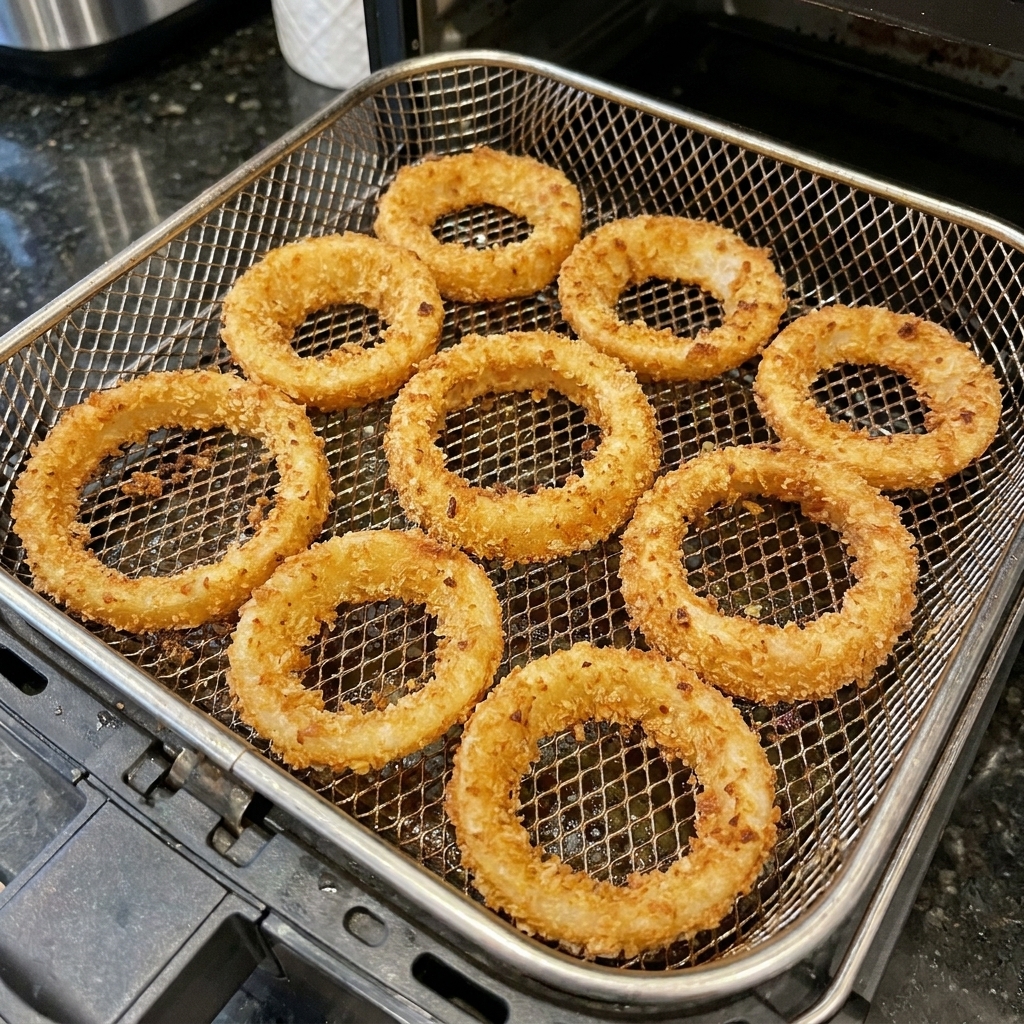
Onion rings
- Best coating: flour, egg, panko or crushed crackers
- Temp: 375°F
- Time: 10 to 14 minutes
- Tip: spray generously, flip carefully, spray again
Crispiness checklist
If you remember nothing else, use this. It fixes most problems.
- Preheat 3 to 5 minutes for breaded foods
- Single layer with space for airflow
- Light oil mist before cooking and halfway through
- Flip or shake at the midpoint
- Finish hot for color: 400°F for 2 to 4 minutes
- Rest 2 minutes before serving so the crust sets
Troubleshooting
“My breading is dry and floury.”
- Start with the Crispiness checklist, especially oil misting and flipping.
- Try panko or add cornstarch to the flour.
- Spot-spray pale patches, then finish hot for color.
“My coating fell off.”
- Pat the food dry before breading.
- Press the coating on firmly and let it rest 10 minutes.
- Flip gently with tongs or a thin spatula, not a vigorous shake for delicate items.
“It’s crispy outside but not cooked inside.”
- Lower the temp 15 to 25 degrees and cook longer.
- For thick cuts, start at 350°F, then finish at 400°F.
- Do not stack or crowd, which can insulate the center.
“It’s cooked but not browning.”
- Increase oil mist slightly.
- Preheat the air fryer.
- Finish at 400°F for a few minutes.
Sauce and marinades
Wet sauces and sugary marinades are crispiness killers. If you want that crunchy finish:
- Cook dry first (seasoned coating or dry rub).
- Sauce after, or toss quickly right at the end.
- For sticky glazes, add them during the last 2 to 3 minutes so they set without turning the coating soggy.
Food safety and doneness
Because air frying uses less oil, you do not get the same visual cues you might rely on with deep frying. When cooking proteins, a thermometer keeps things stress-free:
- Chicken: 165°F
- Turkey: 165°F
- Ground meats (beef, pork, and ground poultry): 160°F
- Fish: 145°F (or opaque and flakes easily)
- Pork chops: 145°F, then rest 3 minutes
Also, remember that breading can look golden before the center is fully done, especially on thicker pieces.
Cleanup note
If you are misting oil regularly, cleanup stays easy if you do a quick routine: let the basket cool, wash with warm soapy water, and use a soft sponge. If you ever notice a sticky film, it is usually oil residue built up over time. A soak and a gentle scrub (not abrasive) usually fixes it.
My go-to setup
If you want one simple game plan to keep in your back pocket, this is it:
- Coating: seasoned flour plus cornstarch, then egg, then panko
- Cook: 375°F, flip halfway
- Oil: light mist before cooking and after flipping
- Finish: 400°F for 2 to 3 minutes
It hits that sweet spot: crisp, cozy, and weeknight-friendly. And yes, you can absolutely eat it straight from the basket while you plate everyone else’s food. I will never tell.
FAQ
Do I need to preheat an air fryer?
For breaded foods and anything you want really crisp, yes. Preheating helps the coating start browning immediately instead of slowly drying out.
Can I use parchment paper or liners?
You can, but only if they are weighted down by food. Loose parchment can lift into the heating element and block airflow, which reduces crispiness.
Why does my air fryer food taste less “fried”?
Deep frying has more oil contact, which creates that unmistakable fried aroma and richness. To close the gap, season aggressively, use a tiny bit more oil mist, and finish with a pinch of salt right after cooking.
Can I make air fryer versions ahead of time?
You can bread ahead and refrigerate for a few hours (great for busy nights). For best crunch, air fry right before serving. Reheat leftovers at 350 to 375°F until crisp again.