Your starter guide to an Indian spice pantry: 10 must-have spices, how to bloom them for big flavor, and easy beginner curries you can actually make on a wee...
recipes
Updated September 21, 2026
8 Vegan Ethiopian Dishes

Maya Chen
Maya Chen is a passionate home cook, recipe developer, and mother of two who believes that great food doesn't have to be complicated. Drawing from her multicultural upbringing and time spent in professional test kitchens, she creates approachable, flavor-packed recipes designed for real life.
Sizzlea
recipes
If you have ever wanted to host a dinner party that feels like a warm hug and a celebration at the same time, Ethiopian food is it. Everything is meant to be shared. The stews are rich and spiced, the lentils are silky, the greens are garlicky, and injera turns the whole meal into a hands-on, laugh-a-lot kind of experience.
Even better for plant-based hosts: many Ethiopian favorites are naturally vegan, especially fasting-friendly dishes (often called tsom foods) that generally skip animal products without skipping flavor.
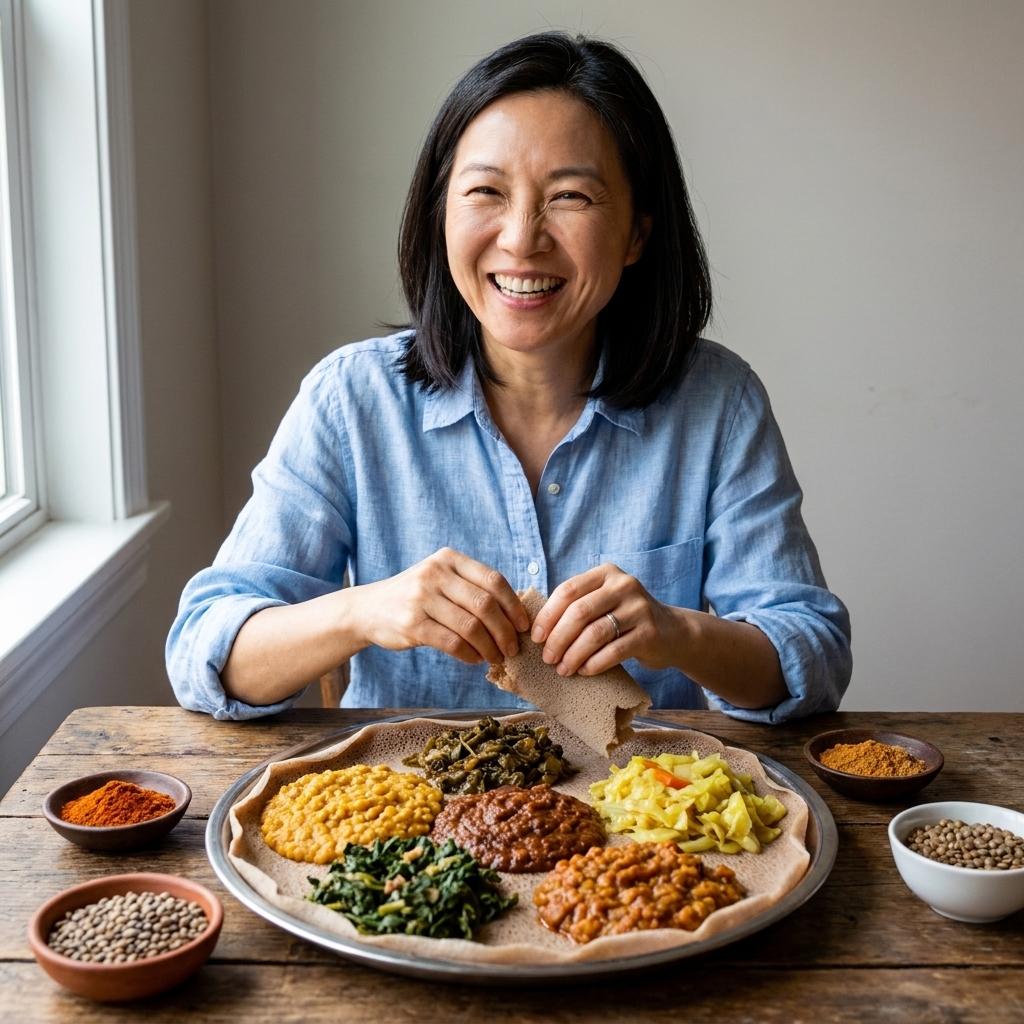
Below are eight vegan Ethiopian dishes that are dinner-party hearty, plus a beginner-friendly injera guide, a simple timeline, and the exact shortcuts I use when I am cooking with two kids orbiting the kitchen like tiny hungry moons.
Before you start: the Ethiopian flavor toolkit
You can make Ethiopian food with everyday pantry items, but a couple of staples make it taste unmistakably Ethiopian. If you only buy two things, make it berbere and a niter kibbeh substitute (we will do a vegan version).
Key ingredients
- Berbere: a warm, complex spice blend (chile, paprika, ginger, fenugreek, cloves, and more). Heat level varies by brand.
- Mitmita (optional): a hotter chili blend for finishing.
- Teff flour: the traditional flour for injera. A blend works well for beginners.
- Red onions: lots of them. They melt into the base of many stews.
- Garlic and ginger: fresh is best, jarred works in a pinch.
- Lentils: red lentils for creamy stews, brown or green for hearty texture.
- Collards or kale: for Ethiopian-style greens.
- Tomato paste: helps build depth in some stews.
- Lemon: brightens lentils and greens at the end.
Vegan “kibbeh” flavor, no stress
Traditional niter kibbeh is spiced clarified butter. For vegan cooking, we can mimic that fragrant, savory base with olive oil or avocado oil gently warmed with aromatics.
Quick vegan spiced oil: Warm 1/3 cup olive oil with 1 teaspoon grated ginger, 2 smashed garlic cloves, 1/2 teaspoon ground cumin, 1/4 teaspoon ground cardamom, and a small cinnamon stick for 5 to 8 minutes on low. Strain if you want it smooth, or leave it rustic and spoonable.
Beginner injera guide
Injera is the spongy, tangy flatbread that doubles as plate, utensil, and best part of the meal. Traditional injera is often 100 percent teff and typically fermented 2 to 3 days. Delicious, yes. Also: intimidating when you are hosting.
This guide is the “real life” version: a teff blend, a shorter ferment, and a couple of tricks that get you close to that classic flavor and texture without losing your weekend.

Option A: 2-day teff blend injera
Makes: about 6 to 10 injera (12-inch pan), depending on thickness
Ingredients
- 1 1/2 cups teff flour
- 1 1/2 cups all-purpose flour (or gluten-free all-purpose blend)
- 3 1/2 cups lukewarm water, plus more as needed
- 1/2 teaspoon active dry yeast (optional but helpful for reliable bubbles)
- 1 teaspoon salt
- Neutral oil for the pan (lightly)
Steps
- Mix and ferment: In a large bowl, whisk flours with water until smooth (think: thin pancake batter). Stir in yeast if using. Cover loosely and let sit at room temp 24 to 48 hours until tangy and bubbly.
- Stir and rest: The batter may separate. Stir it back together. If it smells pleasantly sour, you are in business.
- Salt and adjust: Add salt. If batter is thick like crepe batter, thin with water a little at a time until it pours easily.
- Cook one side only: Heat a nonstick skillet or well-seasoned crepe pan over medium. Lightly oil, then pour batter in a spiral (center-out or outside-in) and tilt the pan as needed. Cover with a lid and cook 1 to 2 minutes until the surface is covered in holes (those classic “eyes”) and the top looks set. Do not flip.
- Steam and cool: Slide onto a towel. Stack with parchment or towels between if needed. Let cool before serving so they stay flexible.
Option B: Same-day “injera-style” quick bread
If fermentation is not happening and guests are arriving, make a tangy skillet flatbread and call it a win. Use 1 cup teff flour + 1 cup all-purpose flour + 2 cups water + 1 tablespoon lemon juice or apple cider vinegar + 1/2 teaspoon baking powder + 1 teaspoon salt. Cook like above. Flavor is less complex, but it still scoops beautifully.
Troubleshooting
- No bubbles: Batter too thick or pan not hot enough. Thin with water and preheat the pan a bit longer.
- Sticks to the pan: Use a nonstick pan for your first few tries. Also, do not rush it. Let the top set fully.
- Too sour: Fermented too long or too warm. Next time shorten the ferment, or refrigerate after 24 hours.
- Dry edges: Cover while cooking and do not overcook. Injera should be soft and pliable.
Gluten-free note
The blend above includes wheat. For gluten-free, use a gluten-free all-purpose blend in place of the wheat flour, or go all teff if you are comfortable with a slightly more finicky batter.
8 vegan Ethiopian dishes for your feast
Quick note so expectations match reality: these are dinner-party friendly mini recipe guides. You get reliable ratios plus a simple method for each dish, without turning this post into a full cookbook. (If you want exact gram weights and step-by-step photos, tell me and I will happily go there.)
Also, you will see wot here. It is the common transliteration for an Ethiopian-style stew. You may also see it spelled wat. Both show up in English, but I am sticking with wot for consistency.
1) Misir Wot (spicy red lentil stew)
This is the stew that makes people fall in love with Ethiopian food. Red lentils melt into a thick, scoopable sauce with berbere and slow-cooked onions.
- Base ratio (serves 4 to 6): 2 cups finely chopped onion, 3 tablespoons oil, 2 to 3 tablespoons berbere (start smaller), 1 tablespoon minced garlic, 1 tablespoon minced ginger, 1 cup red lentils, 3 cups water or broth, salt, lemon to finish.
- Time saver: use a food processor to finely chop onions
- Make-ahead: tastes even better the next day
Basic method: Sweat onions in oil with a pinch of salt until deep golden. Stir in garlic, ginger, and berbere. Add rinsed red lentils and water or veg broth, then simmer 15 to 25 minutes until creamy. Finish with lemon and a drizzle of spiced oil.
2) Kik Alicha (mild split pea stew)
If you are serving spice lovers and spice skeptics at the same table, kik alicha is your peace treaty. It is gentle, golden, and comforting, usually flavored with turmeric and aromatics rather than berbere heat.
- Base ratio (serves 4 to 6): 1 1/2 cups split peas (yellow), 1 1/2 cups finely chopped onion, 3 tablespoons oil, 1 tablespoon minced garlic, 1 tablespoon minced ginger, 1 1/2 teaspoons turmeric, 5 cups water or broth, salt, lemon to finish.
- Texture tip: simmer uncovered at the end to thicken
- Serving note: perfect next to fiery dishes for balance
Basic method: Rinse split peas. Cook onions in oil until soft. Add garlic, ginger, and turmeric. Stir in split peas and water. Simmer 45 to 70 minutes until very tender, stirring often and adding water as needed. Salt, then finish with lemon.
3) Shiro Wot (chickpea stew)
Shiro is made from chickpea flour (often sold as shiro powder, sometimes pre-seasoned). It thickens into a velvety stew that feels like the Ethiopian equivalent of the coziest bowl of soup, except it is meant for scooping.
- Base ratio (serves 4): 1 1/2 cups finely chopped onion, 3 tablespoons oil, 1 tablespoon minced garlic, 1 to 2 tablespoons berbere (optional if your shiro is already seasoned), 3/4 to 1 cup chickpea flour (or shiro powder), 3 cups water, salt, lemon to finish.
- Time saver: uses pantry ingredients and cooks quickly
- Hosting win: easy to scale up for a crowd
Basic method: Cook onions down, add garlic and spices, then whisk in chickpea flour with water gradually to avoid lumps. Simmer 10 to 15 minutes until thick and glossy.
4) Gomen (Ethiopian collard greens)
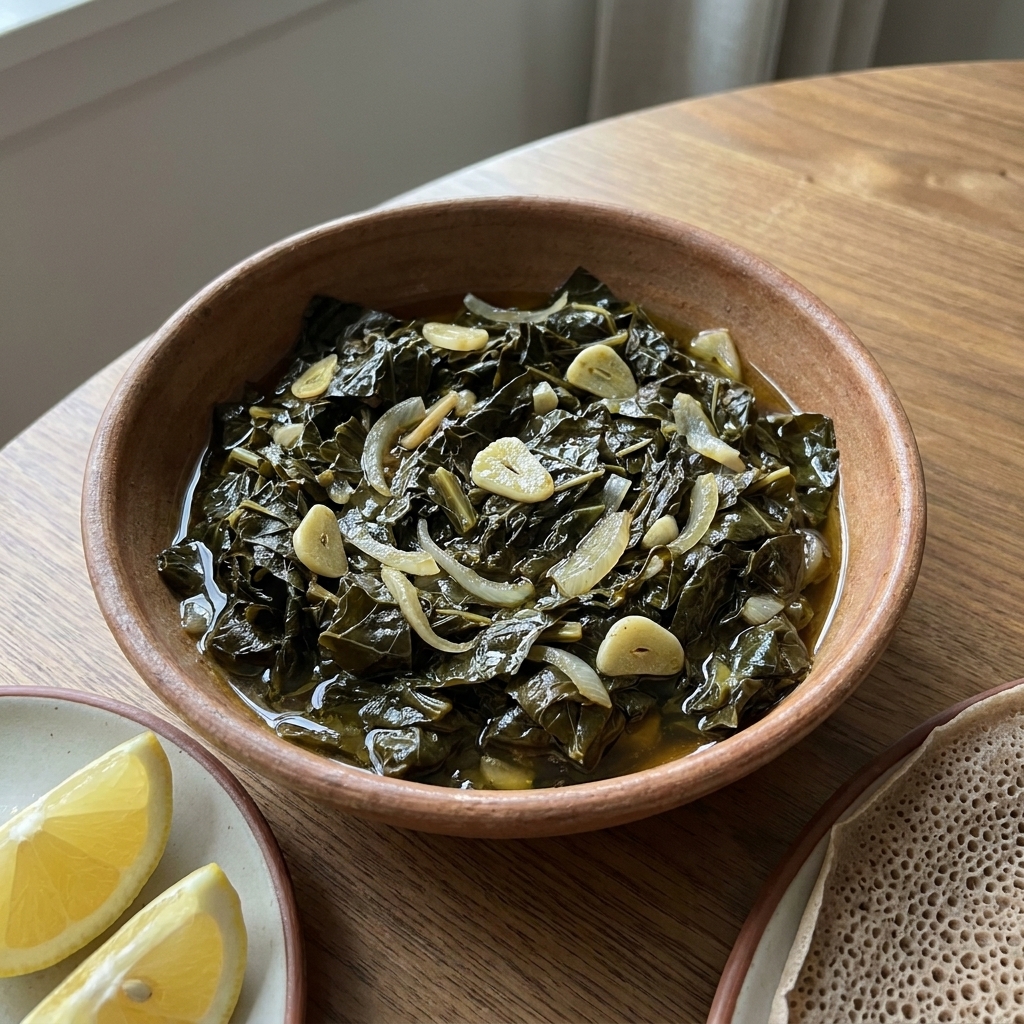
Gomen is the garlicky, silky green side that makes the platter feel complete. Collards are classic, but kale works beautifully if that is what your store has.
- Base ratio (serves 4 to 6): 2 large bunches collards (or 2 to 3 bunches kale), 1 1/2 cups chopped onion, 3 tablespoons oil, 1 tablespoon minced garlic, 2 teaspoons minced ginger, 1/2 cup water, salt, lemon to finish.
- Texture tip: slice greens thin so they become tender faster
- Finish: a squeeze of lemon right before serving
Basic method: Cook onions in oil until soft. Add garlic and ginger. Add greens, salt, and a splash of water. Cover and steam, then uncover and simmer until silky-tender.
5) Atakilt Wot (cabbage, carrots, and potatoes)
This one is weeknight-simple and dinner-party perfect. Atakilt wot is mild, fragrant, and full of cozy vegetables. It also gives your platter a bright, golden look next to deeper red stews.
- Base ratio (serves 6): 1 large onion (about 1 1/2 cups chopped), 3 tablespoons oil, 3 carrots (sliced), 3 medium potatoes (cut into larger chunks), 1 small cabbage (shredded), 1 1/2 teaspoons turmeric, 1 teaspoon minced garlic, 1 teaspoon minced ginger, 1 to 1 1/2 cups water, salt, lemon to finish.
- Time saver: use pre-shredded cabbage
- Make-ahead: reheats well, keep potatoes in larger chunks so they hold their shape
Basic method: Cook onion in oil until soft. Add garlic, ginger, and turmeric. Add carrots and potatoes with a splash of water, cover 10 minutes. Add cabbage, salt, and more water as needed. Simmer until tender.
6) Tikil Gomen (cabbage and greens stew)
Think of this as atakilt’s leafy cousin. Cabbage and greens cook down together into a tender, savory heap that disappears fast. If you want a platter that feels abundant, this is it.
- Base ratio (serves 6): 1 1/2 cups chopped onion, 3 tablespoons oil, 1 small cabbage (shredded), 1 large bunch collards or kale (thinly sliced), 1 tablespoon minced garlic, 2 teaspoons minced ginger, 3/4 cup water, salt, optional 1 teaspoon berbere for gentle heat.
- Heat level: usually mild, add berbere if you like
- Serving tip: extra delicious with a drizzle of spiced oil
Basic method: Cook onion in oil until soft. Add garlic and ginger. Add cabbage, greens, salt, and water. Cover 10 minutes, then uncover and simmer until tender and glossy.
7) Tikil Gomen with mushrooms
Mushrooms are not traditional in every household, but they are a very smart vegan move here. They add that deep savory note that keeps everyone going back for “just one more bite.”
- Base ratio (serves 6): 8 to 12 ounces mushrooms (sliced), 3 tablespoons oil, 1 1/2 cups chopped onion, 1 small cabbage (shredded), 1 bunch greens (optional but great), 1 tablespoon minced garlic, 2 teaspoons minced ginger, 3/4 cup water, salt, optional pinch of berbere.
- Best mushrooms: cremini or oyster
- Technique tip: brown mushrooms first, then add aromatics and veg
Basic method: Brown mushrooms in oil until they give off liquid and start to caramelize. Add onion, cook until soft. Add garlic and ginger, then cabbage (and greens if using) with a splash of water. Cover, then simmer until tender.
8) Azifa (Ethiopian lentil salad)
Every platter loves something bright and punchy. Azifa is a chilled lentil salad with mustard, lemon, and sometimes jalapeño. It cuts through rich stews and makes the whole spread feel fresh.
- Base ratio (serves 4 to 6): 1 cup green or brown lentils, 3 cups water, 1/3 cup finely chopped red onion, 3 tablespoons lemon juice, 1 tablespoon Dijon mustard, 2 tablespoons olive oil, salt, black pepper, optional jalapeño or serrano.
- Make-ahead: best after chilling at least 1 hour
- Serving note: a perfect “cool” side if your wot is spicy
Basic method: Simmer lentils until tender, drain well, and cool. Toss with onion, lemon, mustard, oil, and salt. Chill and taste again before serving.
Build the platter
Here is my no-fuss formula for a dinner-party platter that looks like you worked harder than you did.
- Choose 3 stews: one spicy (misir wot), one mild (kik alicha or atakilt wot), one creamy (shiro wot).
- Add 1 green: gomen.
- Add 1 bright side: azifa.
- Serve on injera: line a large tray with injera, spoon dishes in small mounds around the center, then add extra injera on the side for scooping.

Spice level strategy
If you are feeding a mixed crowd, keep one stew mild and put mitmita or extra berbere on the table. People who want heat can customize without you making separate meals.
How much to make
For 6 to 8 people, I like 3 stews plus gomen and azifa. As a loose guide, aim for 1 cup dried lentils or split peas per lentil-based stew, and 1 small cabbage per cabbage-based dish. You want leftovers. Trust me.
Dinner party timeline
2 days before
- Start injera batter (Option A).
- Shop for onions, greens, lentils, and spices.
1 day before
- Cook misir wot and kik alicha (they improve overnight).
- Make azifa and refrigerate.
- Wash and slice greens and cabbage.
Day of
- Cook injera (or quick version if needed).
- Make gomen and atakilt wot.
- Reheat stews gently, loosening with a splash of water if thick.
- Assemble the platter right before serving.
Maya’s hosting tip: Put a damp towel over your injera stack to keep it soft. Then hide the mess in the sink until after everyone leaves. Future you will cope.
What to serve with vegan wot
- Simple salad: cucumber, tomato, lemon, and salt.
- Drink: iced hibiscus tea, sparkling water with lime, or a light red wine.
- Extra crunch: quick pickled carrots or onions.
- For dessert: a not-too-sweet bake like orange olive oil cake or spiced date cookies.
FAQ
Are Ethiopian stews always vegan?
No, but many traditional dishes are naturally vegan, especially fasting dishes. Some recipes use niter kibbeh (spiced butter), which you can easily swap for a vegan spiced oil. Fasting practices vary by tradition and day, but for most home cooks, “tsom-friendly” is a helpful shorthand for plant-based.
Can I make these without teff flour?
You can make injera-style flatbread with all-purpose flour, but it will not taste the same. If you can, grab at least a small bag of teff and use a blend. It gets you much closer without being fussy.
How do I store leftovers?
Stews keep well in the fridge for 3 to 4 days (up to 5 if handled and chilled promptly). Injera is best within 2 days, stored wrapped well at room temp for 1 day, then refrigerated. Warm injera gently in a covered skillet or microwave with a barely damp paper towel.