A home-cook-friendly guide to what makes Thai and Indian curries taste so different, with easy recipes for Thai green curry and Indian chicken tikka masala.
recipes
Updated September 21, 2026
The Essential Indian Spice Box: 10 Must-Have Spices for Great Curries

Maya Chen
Maya Chen is a passionate home cook, recipe developer, and mother of two who believes that great food doesn't have to be complicated. Drawing from her multicultural upbringing and time spent in professional test kitchens, she creates approachable, flavor-packed recipes designed for real life.
Sizzlea
recipes
If you have ever eaten a curry that tasted like it had a hundred layers of flavor and then tried to recreate it at home only to get something… sort of tomato-y and sad, I have good news. You probably do not need more effort. You need the right spices, and you need to treat them kindly.
In my grandmother’s kitchen, the spice box was not decoration. It was the daily toolkit. Mine is a little more chaotic (kids, homework, someone always needs a snack), but the goal is the same: maximum flavor with minimal stress.
Let’s build you a simple, traditional Indian-style spice pantry with 10 essentials, plus the one technique that makes everything taste instantly more “real”: blooming spices in hot fat.
What is an Indian spice box?
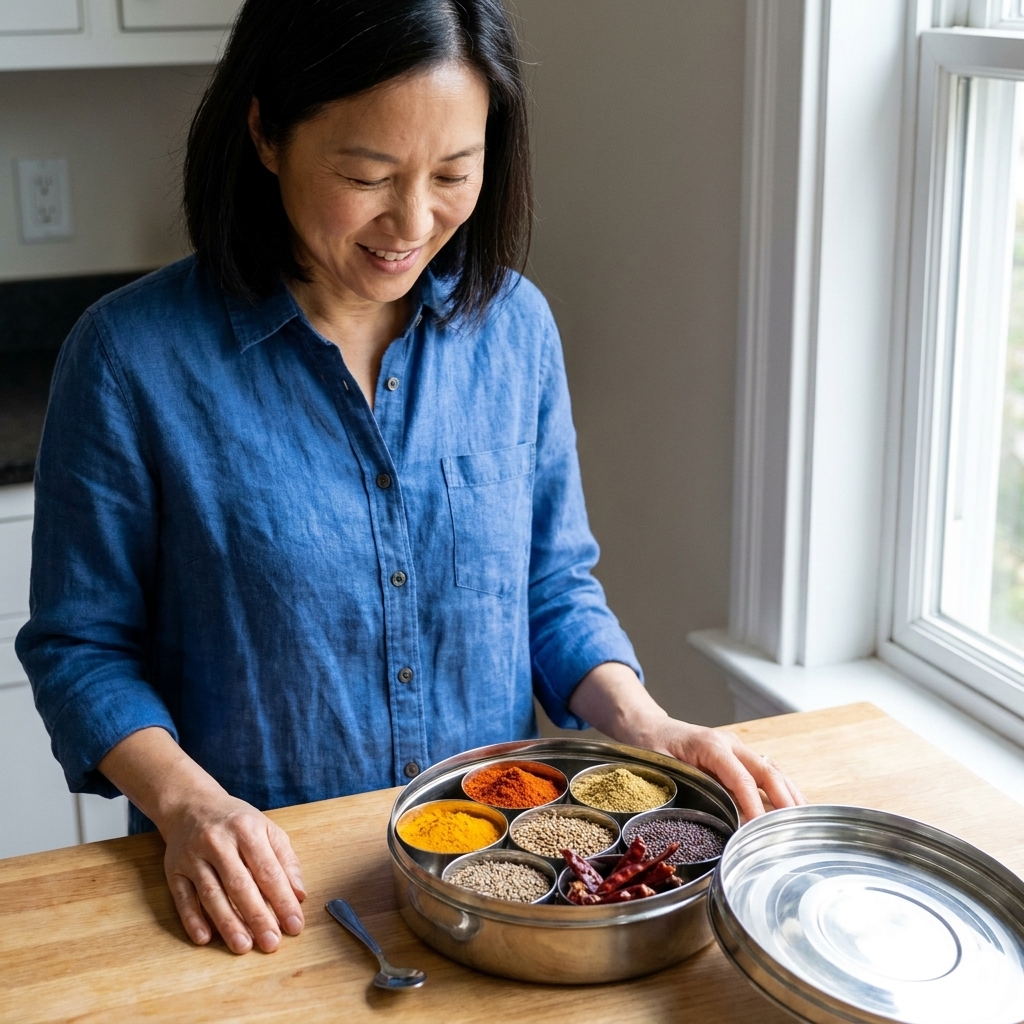
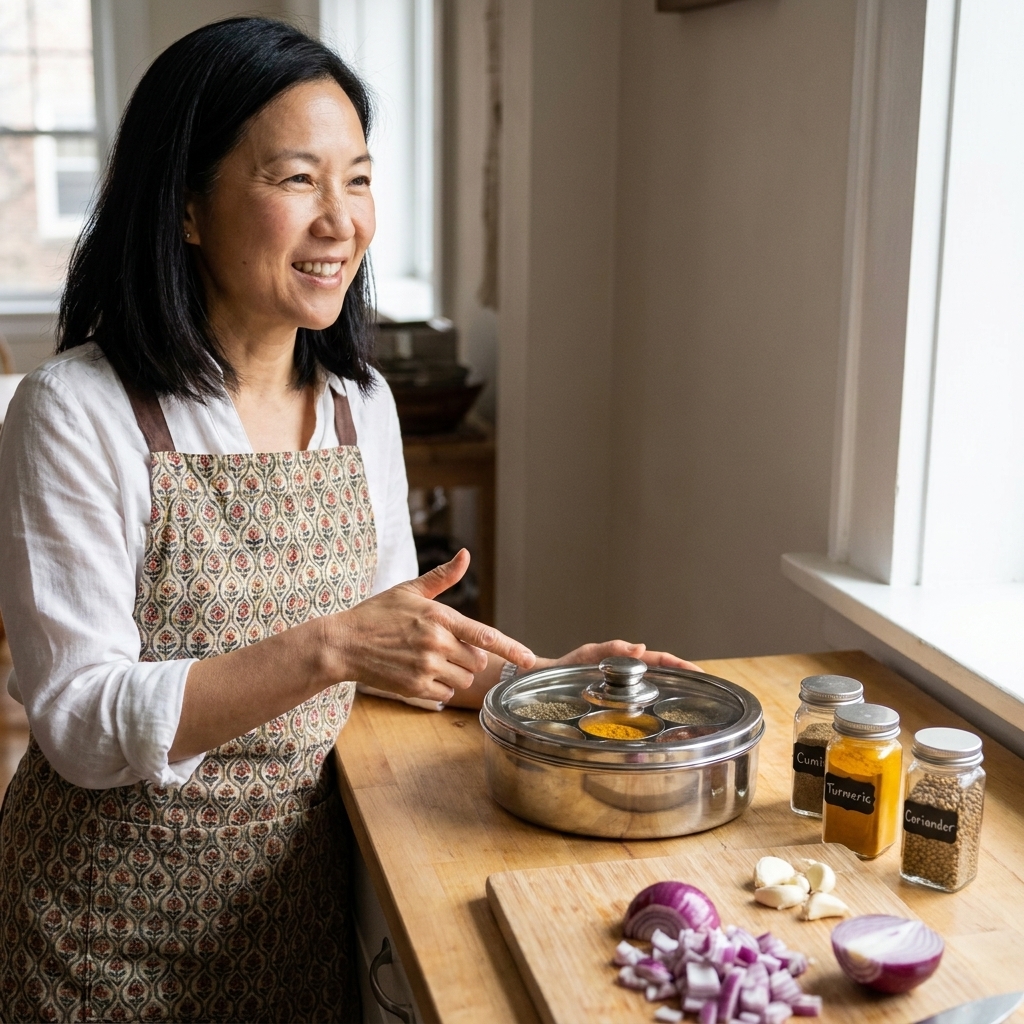
An Indian spice box is often called a masala dabba. It is typically a round metal container with several small cups inside, holding the spices you reach for every day. Think of it like your weeknight command center.
You do not need a fancy box to start. Small jars, a drawer organizer, even a sturdy container with tight lids work. What matters is that your core spices are easy to grab, fresh enough to smell amazing, and used often.
The 10 must-have spices for great curries
There is no single “one true” Indian spice list. Indian cooking is wildly regional. This is a versatile, North-Indian-leaning starter set that still plays nicely with South Indian-style tempering, and it will take you very far on weeknights.
1) Cumin (whole and/or ground)
Flavor: warm, earthy, slightly nutty.
How you will use it: Bloom whole cumin seeds in oil at the start of a curry, or stir ground cumin into sauces, lentils, and yogurt marinades.
Buying tip: Whole cumin seeds stay flavorful longer than ground. If you can only buy one, choose whole and grind as needed.
2) Coriander (ground)
Flavor: citrusy, lightly sweet, mellow.
How you will use it: Coriander is the quiet workhorse that makes curries taste rounded and “finished.” It plays beautifully with cumin.
3) Turmeric (ground)
Flavor: earthy, slightly bitter, warm.
How you will use it: Color, aroma, and background depth in curries, dals, and rice.
Real-life note: Turmeric stains. Wear an apron, and do not ask me how I know.
4) Kashmiri chili powder (or mild red chili)
Flavor: gentle heat with gorgeous red color.
How you will use it: For restaurant-style curries that are vibrant without being painfully spicy.
Swap: If you cannot find Kashmiri, use paprika for color plus a little pure ground chili (like cayenne, ancho, or crushed red pepper ground fine) to taste. Avoid American “chili powder” blends (the kind made for chili) since they usually include cumin, garlic, and oregano.
5) Garam masala (blend)
Flavor: warming spices like cinnamon, clove, cardamom, pepper.
How you will use it: Add near the end of cooking for aroma. It is more perfume than punch, so treat it like a finishing spice.
Tip: Different brands taste different. Find one you love and stick with it.
6) Mustard seeds (black or brown)
Flavor: sharp, toasty, slightly pungent.
How you will use it: Classic in South Indian-style tempering and many vegetable curries. When mustard seeds pop in hot oil, you know good things are about to happen.
7) Fenugreek (seeds or dried leaves)
Flavor: bittersweet, maple-like, deeply savory.
How you will use it: A tiny amount makes butter chicken-style sauces and creamy curries taste unmistakably “authentic.”
Beginner move: If you can find dried fenugreek leaves (kasuri methi), buy those. Crush them between your palms and add at the end.
8) Whole cloves
Flavor: intense, sweet-spicy warmth.
How you will use it: Whole cloves are common in rice dishes and richer gravies. Use sparingly, and remove whole spices before serving if you want a kid-friendly bite.
9) Green cardamom pods
Flavor: floral, citrusy, slightly sweet.
How you will use it: Curries, chai, biryani-style rice, and desserts. Lightly crush the pods to release aroma.
10) Cinnamon (stick)
Flavor: sweet warmth and depth.
How you will use it: Simmer a small piece in sauces or rice for a cozy background note.
Note: In a lot of Indian cooking, the “cinnamon” used is actually cassia bark (often sold simply as cinnamon). It is bolder and a little more assertive than “true” Ceylon cinnamon. Either will work, but cassia gives you that classic warm, savory backbone faster.
Spice blooming 101
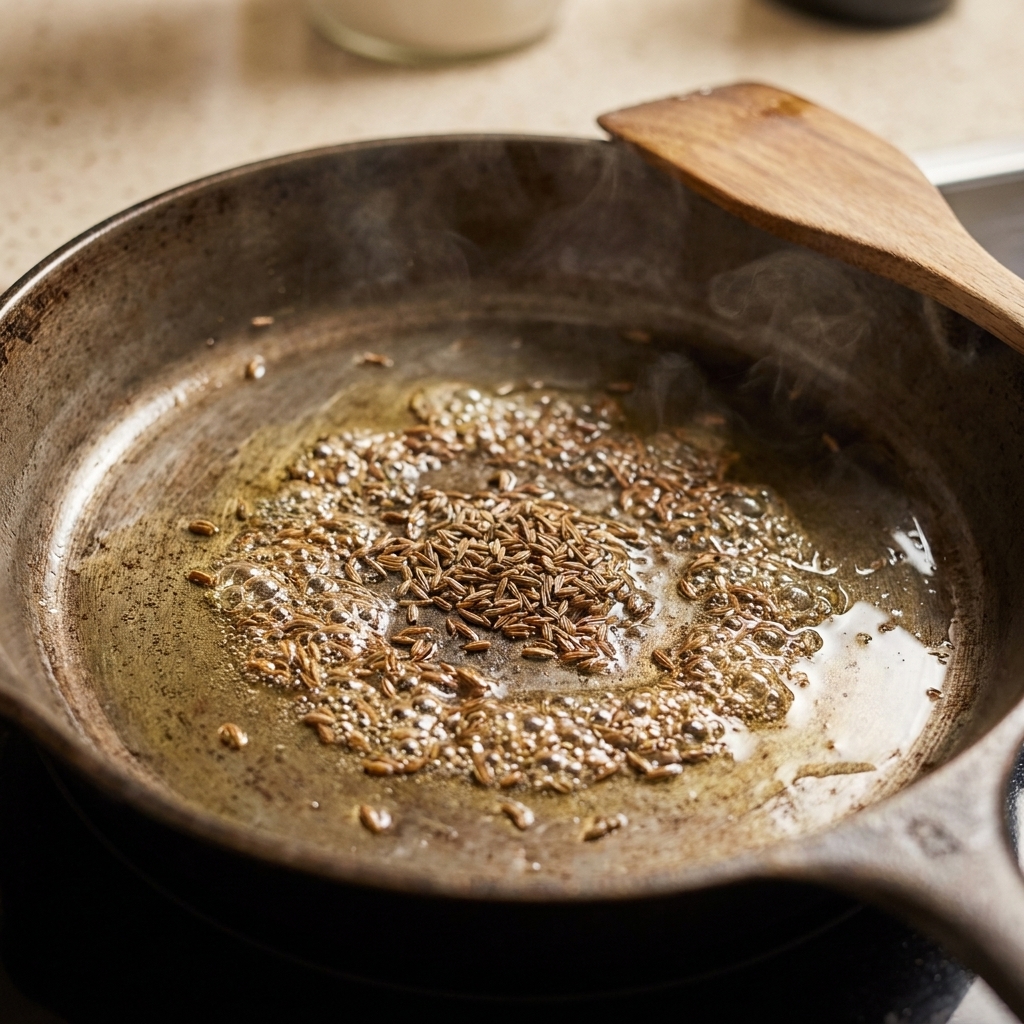
If you take one thing from this guide, let it be this: Indian curries often start by blooming spices in hot fat. This step is called tadka or tempering (you will also see tarka). Sometimes tadka happens at the start of cooking, and sometimes it is made separately and poured over the finished dish (especially dals) for a last-minute hit of aroma.
Bloom whole spices
- Heat fat first: 1 to 2 tablespoons neutral oil, ghee, or coconut oil in a pan over medium heat.
- Add whole spices: cumin seeds, mustard seeds, cinnamon stick, cloves, cardamom.
- Watch and listen: cumin will sizzle and darken slightly; mustard will pop. This takes 15 to 45 seconds.
- Immediately add aromatics: onion, ginger, garlic, or curry leaves. This stops the spices from burning and carries the flavor into the dish.
Bloom ground spices (without burning)
- After onions soften, add ginger and garlic and cook 30 seconds.
- Add ground spices (turmeric, coriander, chili powder) and stir for 10 to 20 seconds.
- Quickly add a splash of water, tomatoes, or yogurt to prevent scorching.
My no-stress rule: If you smell “toasted and amazing,” you are winning. If you smell “burnt and bitter,” lower the heat and add a splash of liquid right away.
Nice-to-have add-ons
If you want to keep going, these are small buys that make a big difference without turning your kitchen into a spice warehouse.
- Hing (asafoetida): onion-garlic depth, especially helpful for dals and vegetable dishes (use a tiny pinch).
- Curry leaves: citrusy, savory aroma for South Indian-style tempering. Keep frozen and use straight from the freezer.
- Tej patta (Indian bay leaf): adds a warm, tea-like fragrance to rice and gravies (different from Mediterranean bay leaf).
- Black pepper: a simple way to add heat that feels “warm” rather than sharp.
- Amchur (dried mango powder): a bright, tangy finish when you do not have lemon on hand.
How to store spices
Spices are not forever. They do not usually “go bad” in a scary way, but they absolutely go bland.
- Buy smaller amounts: especially ground spices you do not use daily.
- Keep away from heat and light: not right above the stove if you can help it.
- Whole lasts longer: whole cumin, mustard, cardamom, cloves, and cinnamon sticks keep flavor better than pre-ground versions.
- Smell test: rub a pinch between your fingers. If it barely smells like anything, it will barely taste like anything.
Rule of thumb for best flavor: whole spices stay vibrant for a year or more; ground spices are usually best within about 6 to 12 months.
Build it on a budget
If you are starting from zero, do not buy everything at once unless you want to. Here is the order I recommend for the biggest cooking payoff.
Start with these 5
- Cumin
- Coriander
- Turmeric
- Kashmiri chili powder (or mild red chili)
- Garam masala
Then add these 5
- Mustard seeds
- Fenugreek (ideally kasuri methi)
- Cloves
- Green cardamom
- Cinnamon sticks
Easy recipes to start
These are intentionally approachable. No specialty equipment, no all-day simmering, and you can scale the heat up or down.
1) Weeknight Tomato Lentil Dal (Masoor Dal)
Serves: 4
Time: 30 minutes
You will need: red lentils, onion, garlic, ginger, canned tomatoes, cumin, turmeric, coriander, chili powder, garam masala.
Steps
- Rinse 1 cup red lentils until the water runs mostly clear.
- In a pot, heat 1 tbsp oil or ghee. Bloom 1 tsp cumin seeds for 20 seconds.
- Add 1 chopped onion and a pinch of salt. Cook until soft, 6 to 8 minutes.
- Add 1 tbsp grated ginger and 3 cloves minced garlic. Cook 30 seconds.
- Add 1 tsp turmeric, 2 tsp ground coriander, and 1 to 2 tsp Kashmiri chili powder. Stir 15 seconds.
- Add 1 cup canned crushed tomatoes and 3 cups water. Add lentils. Simmer 15 to 18 minutes until creamy.
- Finish with 1 tsp garam masala. Salt to taste. Add water to loosen if needed.
Optional upgrade: Top with a quick finishing tadka (1 tbsp ghee, 1/2 tsp cumin or mustard seeds, 1 sliced garlic clove) and/or a squeeze of lemon and chopped cilantro.
Serve with: rice, naan, or buttered toast (yes, toast is a totally acceptable weeknight move).
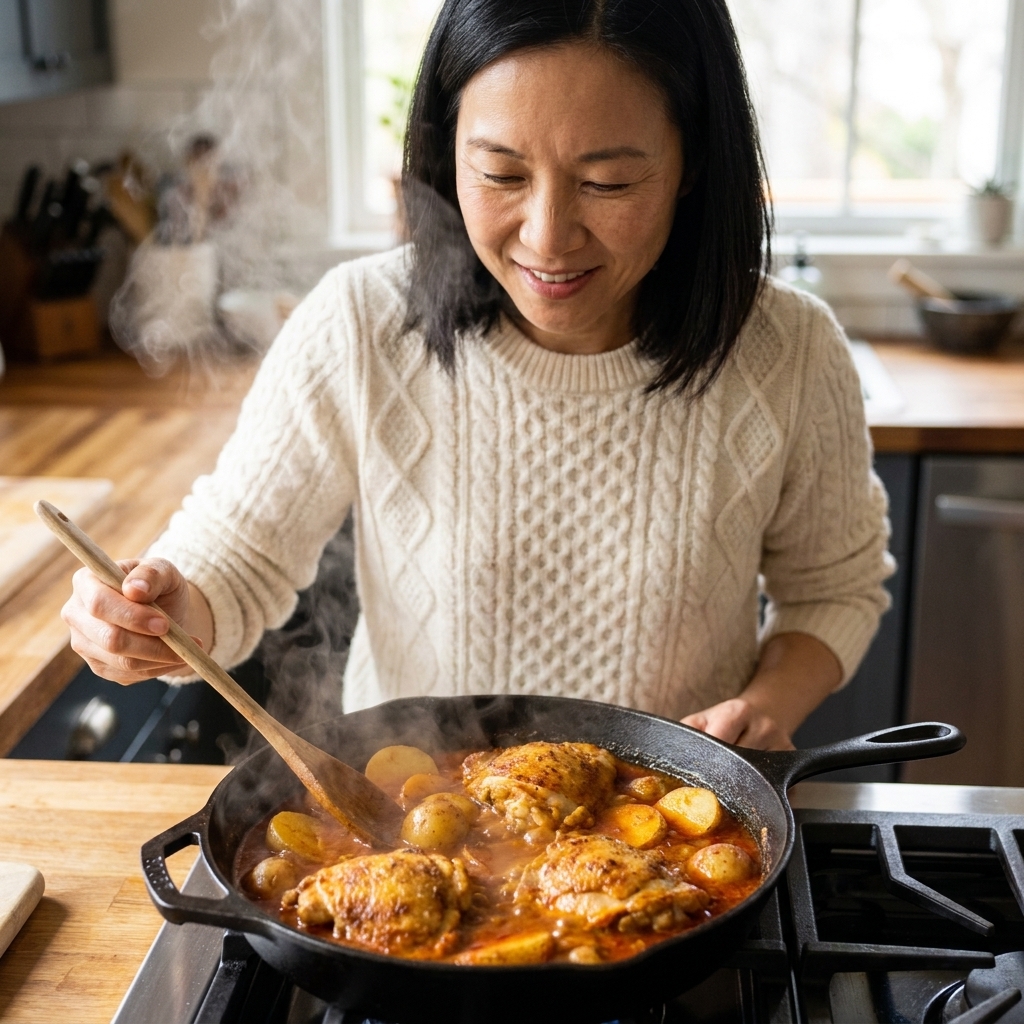
2) One-Pan Cumin Chicken and Potatoes
Serves: 4
Time: 40 minutes
You will need: chicken thighs, potatoes, onion, garlic, ginger, cumin, coriander, turmeric, chili powder, garam masala.
Steps
- Season 1.5 lb chicken thighs with salt. Toss 1 lb diced potatoes with a little oil and salt.
- Heat 1 to 2 tbsp oil in a large skillet. Brown chicken 3 to 4 minutes per side. Remove to a plate.
- Add 1 tsp cumin seeds. Sizzle 20 seconds.
- Add 1 sliced onion. Cook until soft. Add 1 tbsp ginger and 3 cloves garlic. Cook 30 seconds.
- Add 2 tsp coriander, 1 tsp turmeric, and 1 to 2 tsp chili powder. Stir 15 seconds.
- Add 1 cup water and scrape up browned bits. Add potatoes and chicken back in. Cover and simmer 20 minutes, stirring once or twice, until potatoes are tender and chicken is cooked through.
- Finish with 1 tsp garam masala. Taste for salt. Add a squeeze of lemon if you have it.
3) Creamy Butter-Style Paneer (or Chicken) in 25 Minutes
Serves: 4
Time: 25 minutes
You will need: paneer or cooked chicken, butter or ghee, garlic, ginger, canned tomato puree or crushed tomatoes, Kashmiri chili powder, garam masala, kasuri methi (optional but magical), cream or coconut milk.
Steps
- Melt 2 tbsp butter or ghee in a pan over medium.
- Add 1 tbsp grated ginger and 3 cloves minced garlic. Cook 30 seconds.
- Stir in 1 to 2 tsp Kashmiri chili powder and 1 tsp ground coriander (optional but nice). Cook 10 seconds.
- Add 1.5 cups tomato puree or crushed tomatoes plus a pinch of salt and 1 tsp sugar (optional). Simmer 8 to 10 minutes.
- Stir in 1/2 cup cream or coconut milk. Add paneer cubes (or cooked chicken) and warm through.
- Finish with 1 tsp garam masala and 1 tsp crushed kasuri methi if using.
Kid-friendly tip: Keep the chili mild, then let heat-lovers add extra chili at the table.
Quick FAQ
Do I need whole spices?
No. You can make excellent curry with ground spices. Whole spices just add extra depth, and they shine in blooming because they perfume the oil.
Curry powder vs garam masala
“Curry powder” is typically a Western-style blend that varies by brand. Garam masala is an Indian blend meant to add warming aroma, often stirred in toward the end. If you only buy one blend for Indian cooking, choose garam masala.
My spices taste bitter. What happened?
Usually the heat was too high and the spices scorched, especially ground spices. Next time, bloom on medium heat, stir constantly, and add tomatoes or a splash of water quickly after adding ground spices.
How long do spices last?
Whole spices can stay vibrant for a year or more. Ground spices are usually best within about 6 to 12 months for peak flavor. They may be safe longer, but they will not do you any favors if they smell like cardboard.
Your next step
If you are brand new, start with cumin, coriander, turmeric, chili powder, and garam masala. Make the Tomato Lentil Dal once. You will learn the rhythm of blooming spices, and suddenly Indian cooking will feel less like mystery and more like muscle memory.
And if your kitchen gets a little messy along the way, welcome to the club. The spices are worth it.