Busy night? These 10 pantry-only dinners bring big flavor with 15 minutes of active cooking, plus quick measurements, smart swaps, and storage tips.
recipes
Updated September 21, 2026
Thai Curry vs. Indian Curry

Maya Chen
Maya Chen is a passionate home cook, recipe developer, and mother of two who believes that great food doesn't have to be complicated. Drawing from her multicultural upbringing and time spent in professional test kitchens, she creates approachable, flavor-packed recipes designed for real life.
Sizzlea
recipes
If you have ever tasted a Thai curry and thought, “Wow, this is bright and herby,” then tried an Indian curry and thought, “Oh, this is warm and toasty,” you are not imagining it. Both are glorious, spoon-over-rice comfort foods, but they are built on different flavor foundations and cooked a little differently.
Today we are doing a friendly kitchen-side breakdown: paste versus powder, fresh herbs versus toasted spices, and coconut-forward versus dairy or onion-tomato bases. Then we are taking it straight to the stove with two approachable recipes you can absolutely pull off on a weeknight.
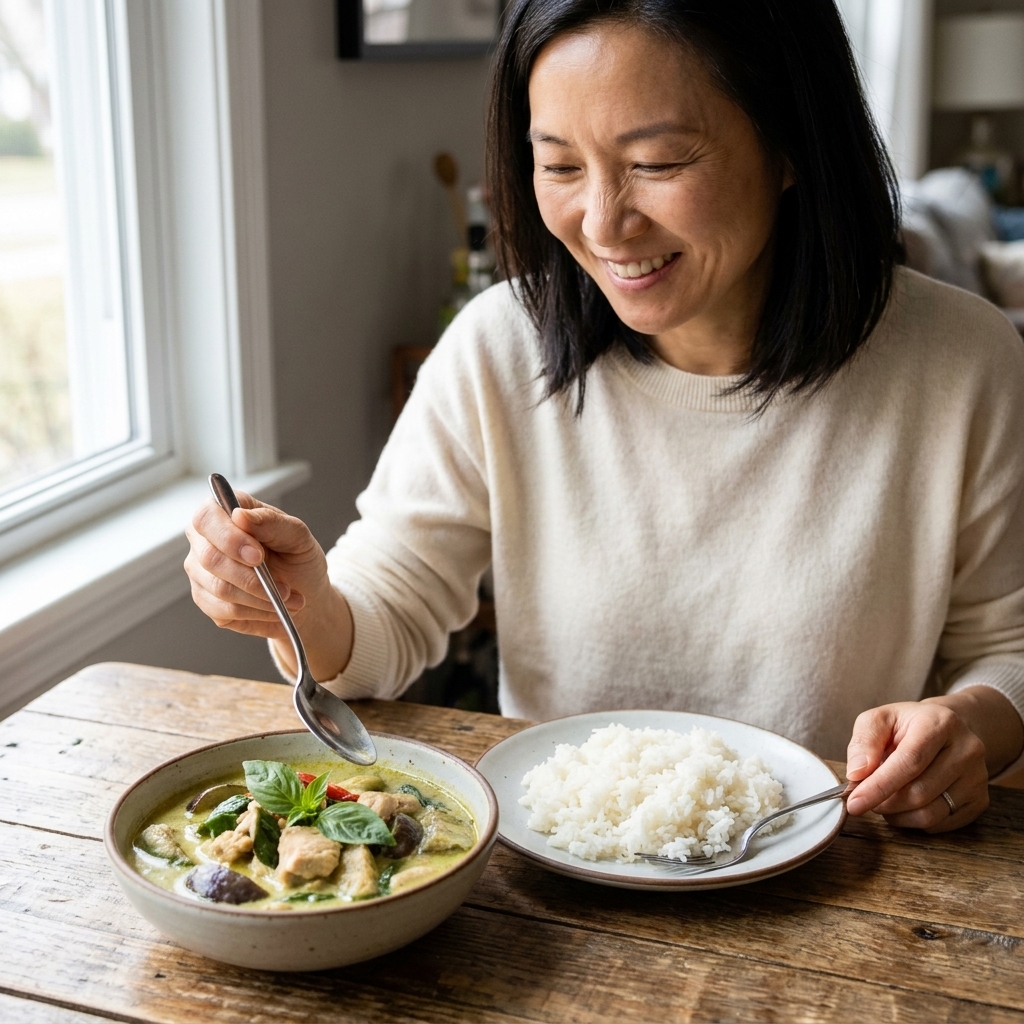
The big-picture flavor difference
Thai curry: fresh, aromatic, and coconut-silky
Many Thai curries taste like a lively chord of fresh aromatics: lemongrass, galangal (or ginger), makrut lime leaf, cilantro root (if available), garlic, shallot, and chilies. The richness often comes from coconut milk, while the “snap” comes from fish sauce and lime. Many Thai curries are finished with fresh herbs like Thai basil that perfume the whole bowl. (And just to zoom out for a second: Thailand has plenty of non-coconut curries too, including broth- or tamarind-based styles.)
Quick note on cilantro root: If you cannot find it, chopped cilantro stems are a great stand-in.
Indian curry: warm, layered, and spice-toasted
Indian curries lean into dried spices and the deep flavor you get from cooking them properly. Think cumin, coriander, turmeric, chili powder, black pepper, cardamom, clove, cinnamon, and bay leaf. Many dishes start with onions cooked down until sweet, then garlic and ginger, then spices “bloomed” in oil or ghee. The body might come from tomatoes, yogurt, cream, nuts, or sometimes coconut depending on the region.
Paste vs. powder
Thai curry paste (wet base)
Most Thai curries start with a curry paste, traditionally pounded in a mortar and pestle. That paste contains the flavor backbone plus the heat. When you fry curry paste in a little oil (or coconut cream), it wakes up and becomes intensely fragrant. Store-bought paste is totally fair game, especially on busy nights.
- Common pastes: green, red, panang, massaman, yellow (massaman tends to lean warmer and more dried-spice-forward, but it is still paste-based)
- What it brings: fresh herbal notes, chile heat, citrusy lift
- Key tip: fry the paste until it smells “sweet and loud,” aka fragrant and slightly caramelized, before adding coconut milk
Indian spice blends (dry base)
Indian curries often rely on whole spices plus ground spices, sometimes supported by a blend like garam masala. The magic is in when you add them: whole spices early to flavor the fat, ground spices after the aromatics so they toast without burning.
- Common blends: garam masala, curry powder (more common in Western pantries than in many Indian households), tandoori masala
- What it brings: warm, roasted depth and complexity
- Key tip: cook spices briefly in oil until fragrant, not scorched
Cooking methods
Thai curry method: fry paste, simmer gently
Many Thai curries follow a similar rhythm: sauté paste, add coconut milk, season (fish sauce, sugar), then simmer proteins and vegetables until just done. The goal is gentle simmering so coconut milk stays silky.
- Do not rush: give the paste 1 to 2 minutes in oil
- Balance matters: taste for salty (fish sauce), sweet (palm sugar or brown sugar), sour (lime)
- Finish fresh: herbs and lime at the end keep it bright
- Label-reading tip: curry paste brands vary a lot in salt and heat. Start smaller, taste, then add more.
Indian curry method: build a masala, then simmer
Indian curries often start by building a masala base: onions, ginger, garlic, spices, tomatoes. This base needs time. When the oil starts separating slightly at the edges, you are in a great place. Then you simmer with protein and a finishing touch like cream, yogurt, or garam masala.
- Do not undercook onions: that is where sweetness and body come from
- Toast, then simmer: spices need both quick heat and gentle time
- Finish with fragrance: garam masala goes in late to stay aromatic
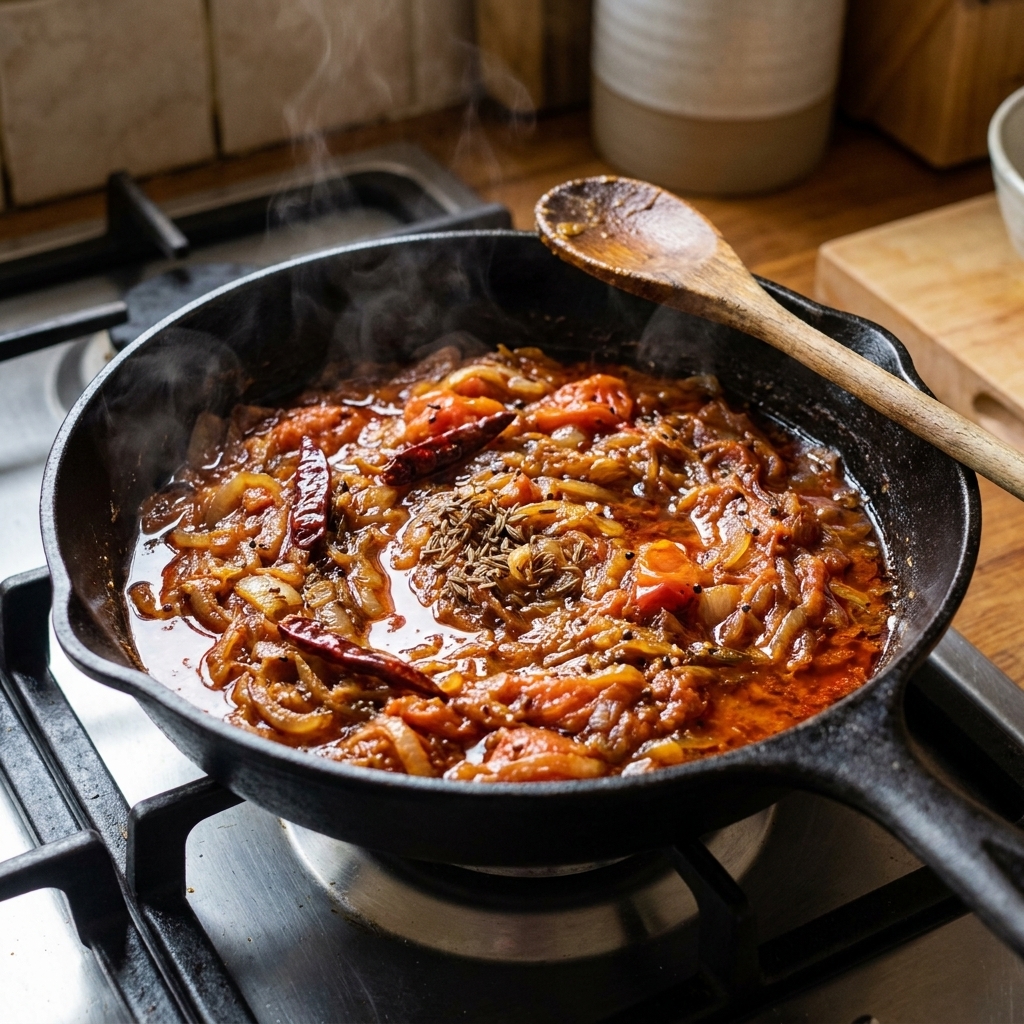
Ingredient cheat sheet
Thai curry staples
- Thai curry paste (green or red is most versatile)
- Coconut milk (full-fat for best texture)
- Fish sauce
- Palm sugar or light brown sugar
- Limes
- Thai basil (or regular basil in a pinch)
- Jasmine rice
Indian curry staples
- Ground cumin, coriander, turmeric, Kashmiri chili powder or mild chili powder
- Garam masala
- Ginger and garlic
- Canned crushed tomatoes or tomato puree
- Plain yogurt and/or heavy cream (depending on dish)
- Ghee or neutral oil
- Basmati rice or naan
Recipe 1: Thai green curry chicken
This is my “I need dinner in 30 minutes but I want it to taste like I tried” curry. The green curry paste does the heavy lifting, and you get that creamy coconut broth with a pop of lime at the end.
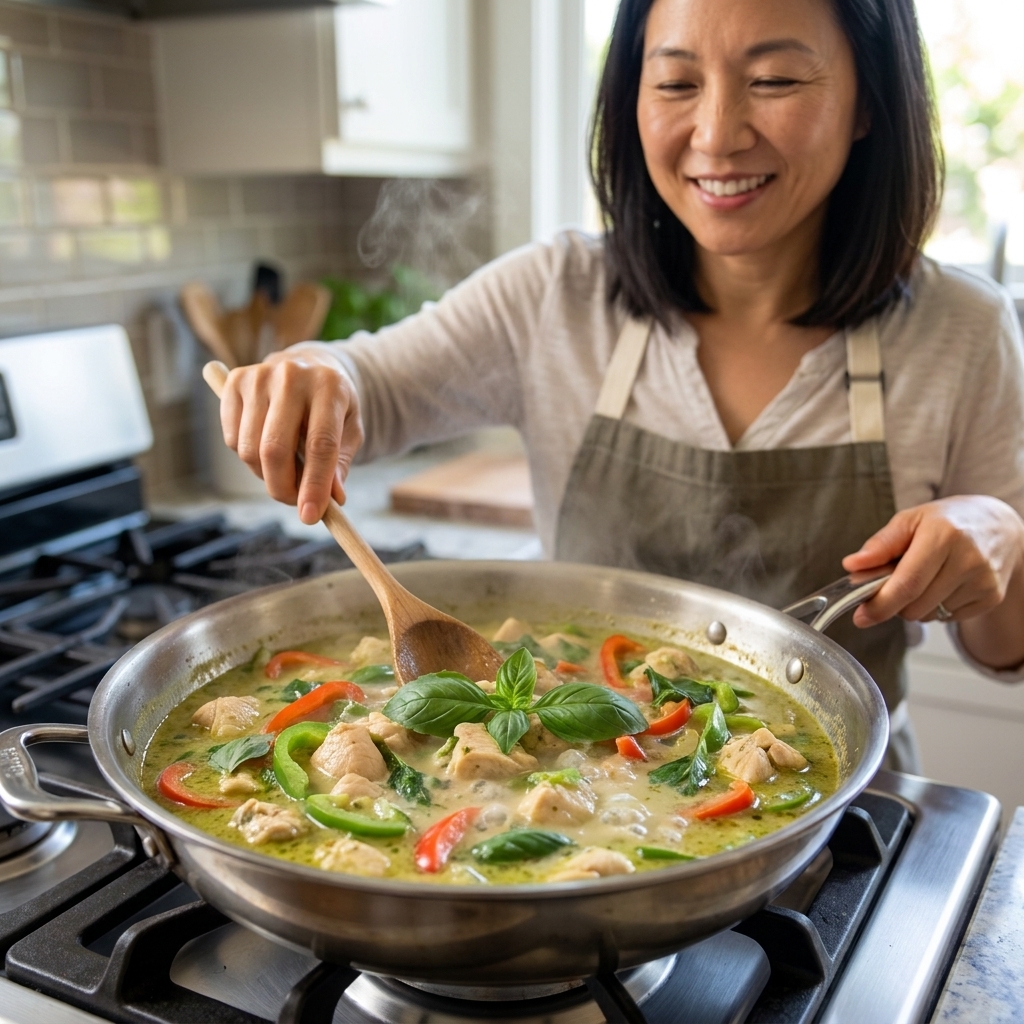
Ingredients (serves 4)
- 1 tbsp neutral oil
- 3 to 4 tbsp Thai green curry paste (start with 3, add more to taste)
- 1 can (13.5 oz) full-fat coconut milk
- 1 cup low-sodium chicken broth (or water)
- 1 tbsp fish sauce, plus more to taste
- 1 to 2 tsp brown sugar (optional but helpful for balance)
- 1 lb boneless skinless chicken thighs, thinly sliced (breast works too)
- 1 to 2 cups quick-cooking vegetables: sliced bell pepper, zucchini, snap peas, or spinach
- 1 makrut lime leaf (optional) or 1 tsp lime zest
- 1 big handful Thai basil (or regular basil)
- Lime wedges, for serving
- Jasmine rice, to serve
How to make it
- Fry the paste: Heat oil in a large skillet or pot over medium heat. Add curry paste and cook 60 to 90 seconds, stirring, until very fragrant.
- Build the sauce: Pour in coconut milk and broth. Stir well. Add fish sauce, sugar, and makrut lime leaf if using. Bring to a gentle simmer.
- Cook the chicken: Add sliced chicken and simmer 6 to 8 minutes, stirring occasionally, until cooked through.
- Add vegetables: Add quick-cooking vegetables and simmer 2 to 4 minutes until crisp-tender. If using spinach, stir it in at the end to wilt.
- Finish bright: Turn off heat. Stir in basil. Squeeze in lime to taste. Adjust with more fish sauce for salt or a pinch more sugar if it tastes sharp.
Maya’s no-stress tips
- Too spicy? Add a splash more coconut milk and a little extra sugar.
- Want more depth? Add 1 tsp peanut butter or a spoon of coconut cream.
- Meal prep win: Slice chicken and veggies ahead. The curry itself is fastest when everything is ready to toss in.
Recipe 2: Chicken tikka masala
Tikka masala is not about burning your day in the kitchen. This version keeps the cozy, spiced tomato-cream sauce but stays weeknight-friendly. If you can stir a pot and sear chicken, you are in business. (Think of this as a restaurant-style favorite that fits beautifully into the broader Indian curry universe.)
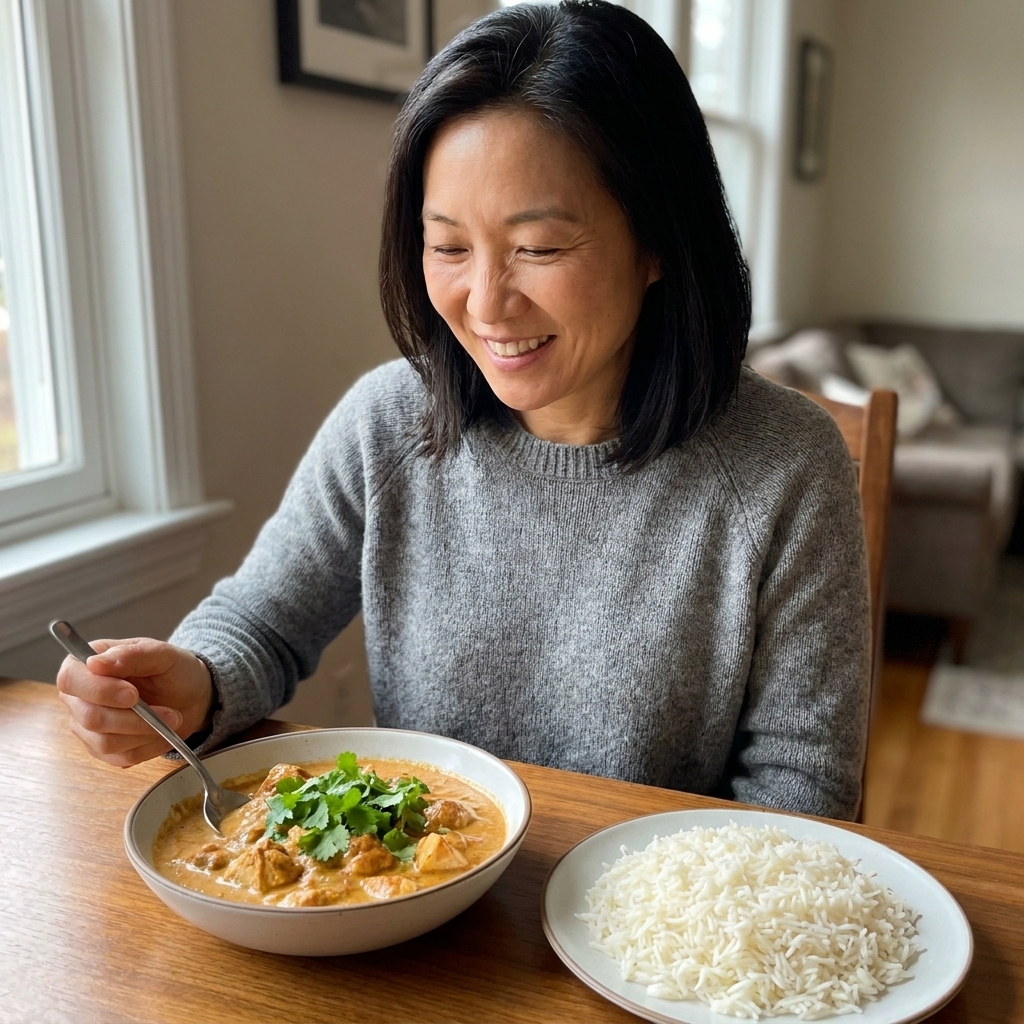
Ingredients (serves 4)
- For the chicken:
- 1.5 lb boneless skinless chicken thighs, cut into bite-size pieces
- 3/4 cup plain yogurt
- 1 tbsp grated ginger
- 2 cloves garlic, grated or minced
- 1 tsp ground cumin
- 1 tsp ground coriander
- 1 tsp Kashmiri chili powder or mild chili powder
- 1/2 tsp turmeric
- 1 tsp kosher salt
- For the sauce:
- 2 tbsp ghee or neutral oil
- 1 large yellow onion, finely chopped
- 2 cloves garlic, minced
- 1 tbsp grated ginger
- 1.5 tsp ground cumin
- 1.5 tsp ground coriander
- 1/2 tsp turmeric
- 1 to 2 tsp chili powder (to taste)
- 1 can (15 oz) crushed tomatoes or tomato puree
- 1/2 cup heavy cream (or more yogurt for a tangier sauce)
- 1 tsp garam masala
- Salt to taste
- Cilantro, for serving
- Basmati rice or naan, to serve
How to make it
- Marinate quickly: In a bowl, mix yogurt, ginger, garlic, spices, and salt. Toss chicken in the mixture. If you have time, let it sit 15 to 30 minutes. If not, proceed. Real life counts.
- Sear the chicken: Heat a large skillet over medium-high. Add a little oil. Shake off excess marinade and sear chicken in batches until browned (it does not need to be cooked through yet). Transfer to a plate.
- Build the masala base: Lower heat to medium. Add ghee or oil, then onions. Cook 8 to 10 minutes, stirring, until soft and golden. Add garlic and ginger, cook 30 seconds.
- Bloom the spices: Stir in cumin, coriander, turmeric, and chili powder. Cook 30 to 60 seconds until fragrant.
- Simmer the sauce: Add tomatoes and a splash of water if thick. Simmer 8 to 10 minutes, stirring occasionally, until the sauce darkens slightly and tastes less raw.
- Finish: Lower heat. Stir in cream (or yogurt). Add chicken back in and simmer gently 5 to 7 minutes until cooked through. Turn off heat and stir in garam masala. Taste and salt as needed.
Maya’s no-stress tips
- Shortcut spice option: If you only have curry powder and garam masala, use 2 tsp curry powder in the sauce plus 1 tsp garam masala at the end. It will not be identical, but it will still be delicious.
- Using yogurt instead of cream? Keep the heat low after you add it, and avoid a hard boil so it stays smooth.
- Too acidic? Add a pinch of sugar or a little extra cream.
- Want it smoother? Blend the tomato-onion sauce before adding chicken back in.
Pick tonight’s curry
- You want bright and herby: Thai curry. Grab paste, coconut milk, and whatever veggies are wilting in the drawer.
- You want cozy and spiced: Indian curry. Take the extra 10 minutes to cook the onions and you will taste the payoff.
- You are cooking for mixed heat levels: Either works. For Thai, start with less paste. For Indian, keep chili mild and let spice lovers add heat at the table.
FAQ
Is “curry” the same thing in Thai and Indian cooking?
Not really. “Curry” is an umbrella term used in English. In Thai cooking, you are often making a coconut-based stew flavored with curry paste, though some curries are broth- or tamarind-based. In Indian cooking, you are often making a spiced gravy or sauce built from a masala base. Both are called curry, but the technique and flavor building blocks are different.
Can I substitute Thai curry paste for Indian curry powder?
I would not swap them 1:1. Thai paste is wet, salty, and loaded with fresh aromatics and chilies. Indian curry powder is dry and spice-forward. If you are in a pinch, choose a recipe designed for the ingredient you have and lean into it.
Which one is usually spicier?
Either can be spicy. Thai heat often comes from fresh chilies in the paste. Indian heat can come from different chili powders and fresh chilies. The biggest difference is the type of heat: Thai often feels sharper and brighter, Indian often feels warmer and more lingering.
What is the best rice for each?
Thai curries: jasmine rice. Indian curries: basmati rice. If you only have one, use it. Warm rice plus good sauce is never wrong.
A quick love note
If curry feels intimidating, I want you to hear this clearly: the best curry is the one you actually make on a Tuesday. Start with a solid paste or a handful of spices, taste as you go, and chase balance instead of perfection. Your future self, the one holding a warm bowl in both hands, will be very proud of you.