A friendly, practical breakdown of olive oil vs. avocado oil for roasting: heat, health, flavor, and when each one shines on your sheet pan.
recipes
Updated September 21, 2026
Wok Hei at Home

Maya Chen
Maya Chen is a passionate home cook, recipe developer, and mother of two who believes that great food doesn't have to be complicated. Drawing from her multicultural upbringing and time spent in professional test kitchens, she creates approachable, flavor-packed recipes designed for real life.
Sizzlea
recipes
There is a very specific moment in a great stir-fry when the kitchen smells like toasted soy, seared meat, and a faint little kiss of smoke. That flavor has a name: wok hei, the “breath of the wok.” It is what makes takeout taste like takeout, in the best way.
And yes, you can get surprisingly close at home on a standard stove. You do not need a jet-engine burner or a restaurant kitchen. You need the right setup, fast prep, and a few techniques that feel almost too simple to matter. They matter.
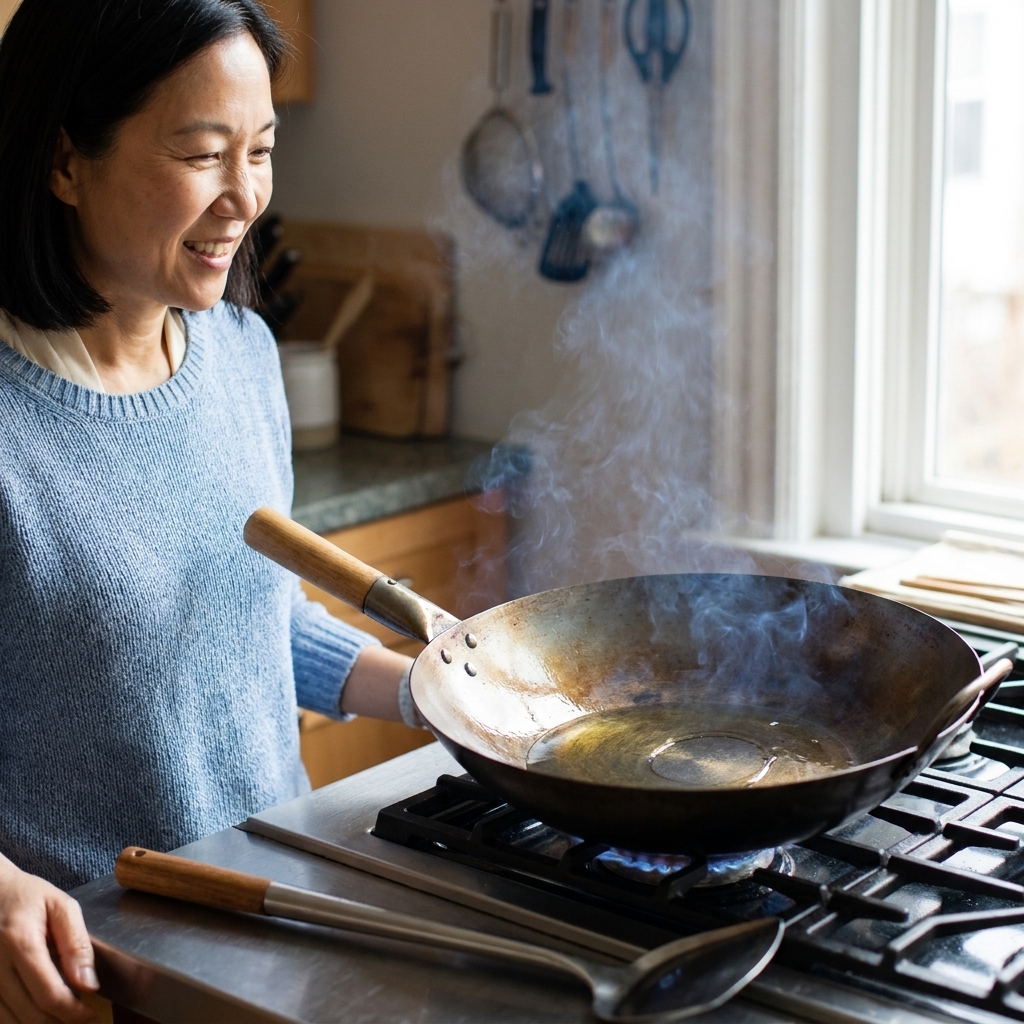
What wok hei is
Wok hei is not “add liquid smoke” or “burn your food a little.” It is the combination of:
- High heat searing that browns proteins and aromatics fast
- Oil vapor and brief smokiness as oil and sauce hit hot metal
- Maillard reactions (that deep savory browning)
- Fast evaporation so food fries instead of steams
Purist note, because it is worth knowing: in restaurant kitchens, part of wok hei also comes from combustion byproducts and aerosolized oil and sauce interacting with very hot metal and open flame. At home, we recreate the vibe with smaller batches, a ripping hot pan, and smart timing.
In restaurant woks, flames lick up the sides and super-hot metal stays hot even when a cook dumps in a pile of food. At home we chase the same flavor by keeping everything dry, hot, and moving.
Setup for max heat
Choose the right wok (or pan)
- Best: 12 to 14 inch carbon steel wok. It heats fast and seasons like cast iron, but lighter.
- Electric coil or induction: a flat-bottom carbon steel wok or a wide carbon steel skillet works better than a round-bottom wok. Induction can be very powerful, but heat is concentrated where the pan contacts the burner, so a broad, flat base helps.
- Nonstick: convenient, but not recommended for wok hei. The high heat you want can damage PTFE coatings and create unpleasant fumes. Use it if you must, but keep the heat lower and expectations realistic.
Use the right spatula
A metal wok spatula (or a sturdy metal turner) lets you scrape browned bits and move food quickly. Those browned bits are flavor, not a problem.
Ventilation is part of the recipe
Turn on your hood fan, crack a window, and keep a lid nearby in case you need to cover a flare-up. Wok hei means you are flirting with smoke. Respectfully.
Carbon steel care (quick and painless)
If carbon steel is new to you: wash off the factory coating, dry completely, then heat the wok until dry and warm. Wipe in a very thin film of neutral oil, heat until it just starts to smoke, and let it cool. Cook, rinse, dry, and oil lightly after each use. Over time it turns darker and more nonstick.
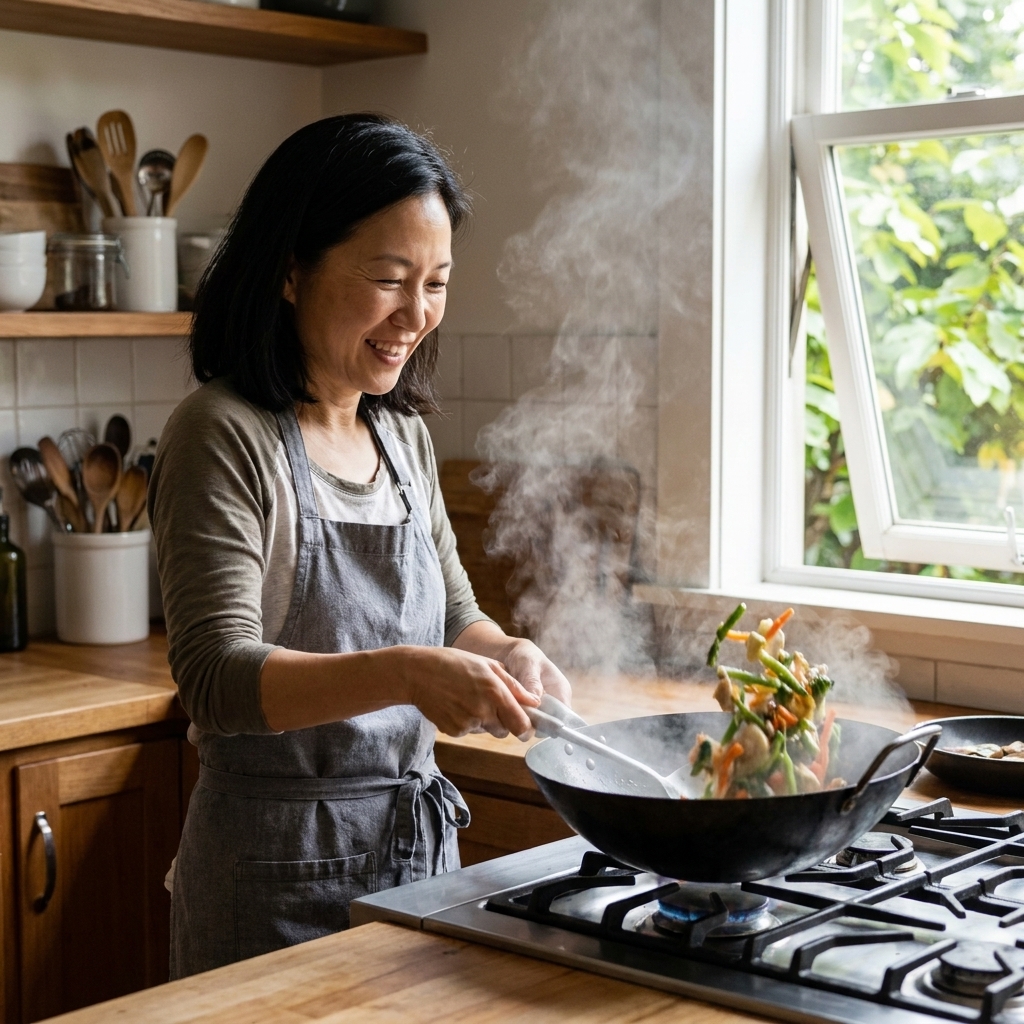
Techniques for wok hei
1) Prep first, cook fast
Once the wok is hot, the cooking is fast. Have everything cut, mixed, and within arm’s reach. Stir-fry is not the time to hunt for the soy sauce while your garlic turns bitter.
My mise en place rule: proteins sliced, aromatics chopped, sauce mixed, vegetables separated by cook time.
2) Dry food is fry food
Moisture is the enemy of searing. Pat meat dry. Rinse vegetables ahead of time and spin or towel-dry them well. If your mushrooms look wet, they will steam.
3) Preheat until barely smoking
Preheat the empty wok over high heat for 1 to 3 minutes, just until you see the faintest wisp of smoke and a drop of water skitters and evaporates instantly. Then add oil and swirl.
Safety note: do this briefly, ventilate well, and do not do it with nonstick.
4) Do not crowd the wok
This is the number one reason home stir-fries taste “fine” instead of incredible. Cook in batches when needed. Crowding drops the temperature and creates steam.
5) The “wok conditioning” move (often called long yao or run guo)
In Cantonese cooking, many cooks heat the wok, add oil, swirl to coat, then pour off excess. You will also see this described as a wok conditioning step. At home, you can do a simplified version:
- Heat wok until very hot.
- Add 1 tablespoon oil, swirl to coat the bottom and sides.
- Add your food quickly.
This helps prevent sticking and gives you that slick, glossy stir-fry finish.
6) Add sauce around the edge
Pour your sauce in a thin stream around the hot sides of the wok, not directly onto the pile of food. It hits the metal first, sizzles, reduces fast, then coats everything. This tiny habit is a big wok hei booster.
7) Finish with a quick sear
When your stir-fry is almost done, let it sit untouched for 10 to 20 seconds on high heat so the bottom gets a fast sear, then toss. It is like giving the dish one last deep breath of heat.
Stir-fry staples
You do not need a specialty store haul every time, but a few staples make Chinese stir-fries taste like themselves.
Core sauces
- Light soy sauce (all-purpose savory salt)
- Dark soy sauce (color and deeper molasses-like notes)
- Oyster sauce (sweet-savory richness, not fishy when used right)
- Shaoxing wine (or dry sherry in a pinch)
Aromatics
- Garlic
- Ginger
- Scallions
Thickener
- Cornstarch for velveting and glossy sauces
Finishing oils (optional but lovely)
- Toasted sesame oil (finish, do not fry)
- Chili crisp (finish, or serve at the table)
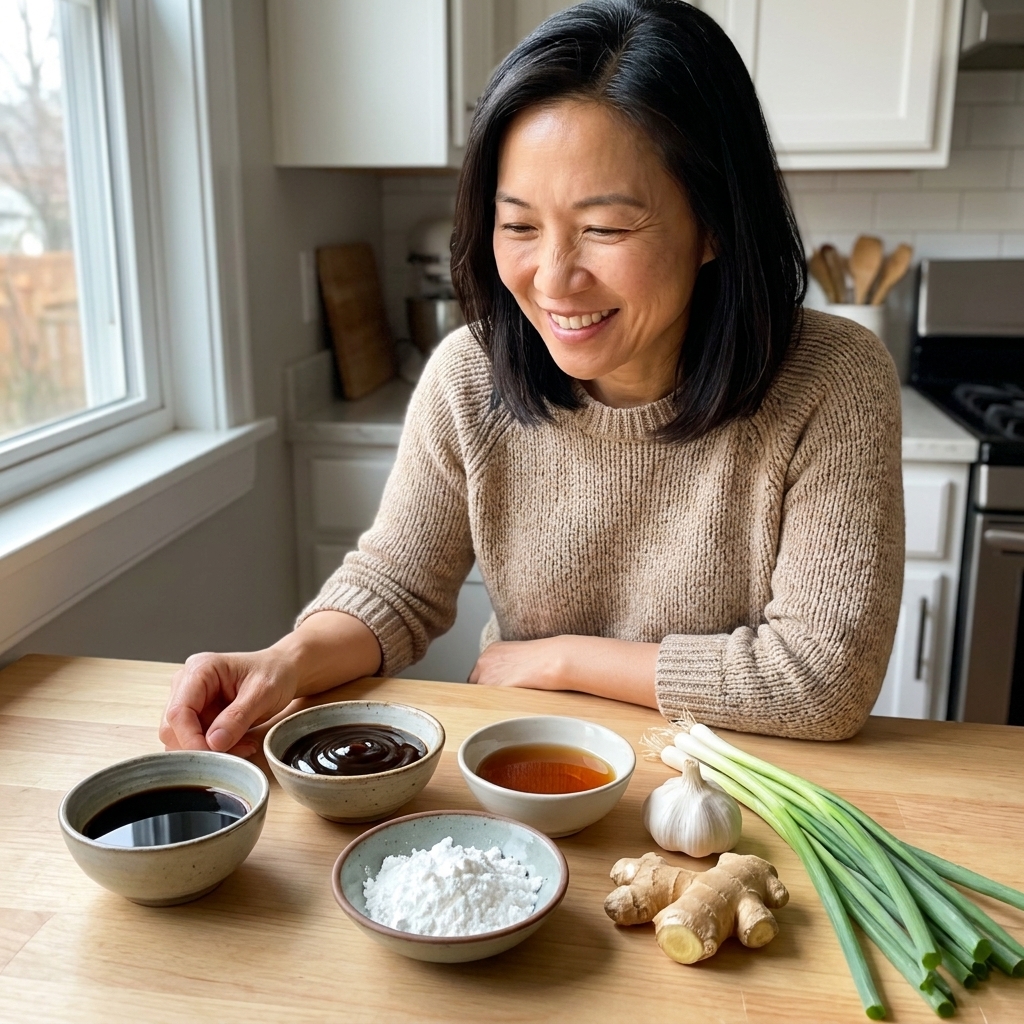
Recipe 1: Beef chow fun
If you have ever wondered why restaurant beef chow fun tastes smoky and slippery without being greasy, this is it. The key is hot wok, quick cooking, and not too much sauce.
Ingredients (serves 3 to 4)
- 10 to 12 oz fresh wide rice noodles (ho fun), separated gently
- 10 oz flank steak or sirloin, sliced thin against the grain
- 2 teaspoons cornstarch
- 1 tablespoon light soy sauce (for marinade), plus a splash to adjust at the end
- 1 tablespoon Shaoxing wine (or dry sherry)
- 2 teaspoons neutral oil, plus 2 to 3 tablespoons for stir-frying
- 3 scallions, cut into 2-inch pieces
- 2 cups bean sprouts
- Sauce mix: 2 teaspoons dark soy sauce, 1 tablespoon oyster sauce, 1 to 2 teaspoons sugar (optional, balances)
- White pepper or black pepper, to taste
Prep
- Marinate beef: Toss beef with cornstarch, 1 tablespoon light soy, Shaoxing wine, and 2 teaspoons oil. Rest 15 minutes.
- Mix sauce: Stir together dark soy, oyster sauce, and sugar.
- Separate noodles: If they are clumped, warm briefly in the microwave (10 to 20 seconds) and gently loosen.
Cook
Heat wok over high until lightly smoking. Add 1 tablespoon oil.
Sear beef in a single layer for 45 to 60 seconds. Toss and cook just until mostly done. Remove to a plate.
Stir-fry noodles: Add 1 to 2 tablespoons oil. Add noodles and spread them out. Let them sit 15 seconds, then toss. Repeat once. You are chasing a little char on the edges.
Add sauce around the edge of the wok and toss to coat noodles.
Finish: Add scallions, bean sprouts, and beef back in. Toss 30 to 60 seconds until sprouts soften slightly but stay crisp. Season with pepper and a small splash of light soy if needed.
Wok hei tip: Do not baby the noodles. A brief contact time with hot metal is where that smoky flavor lives.
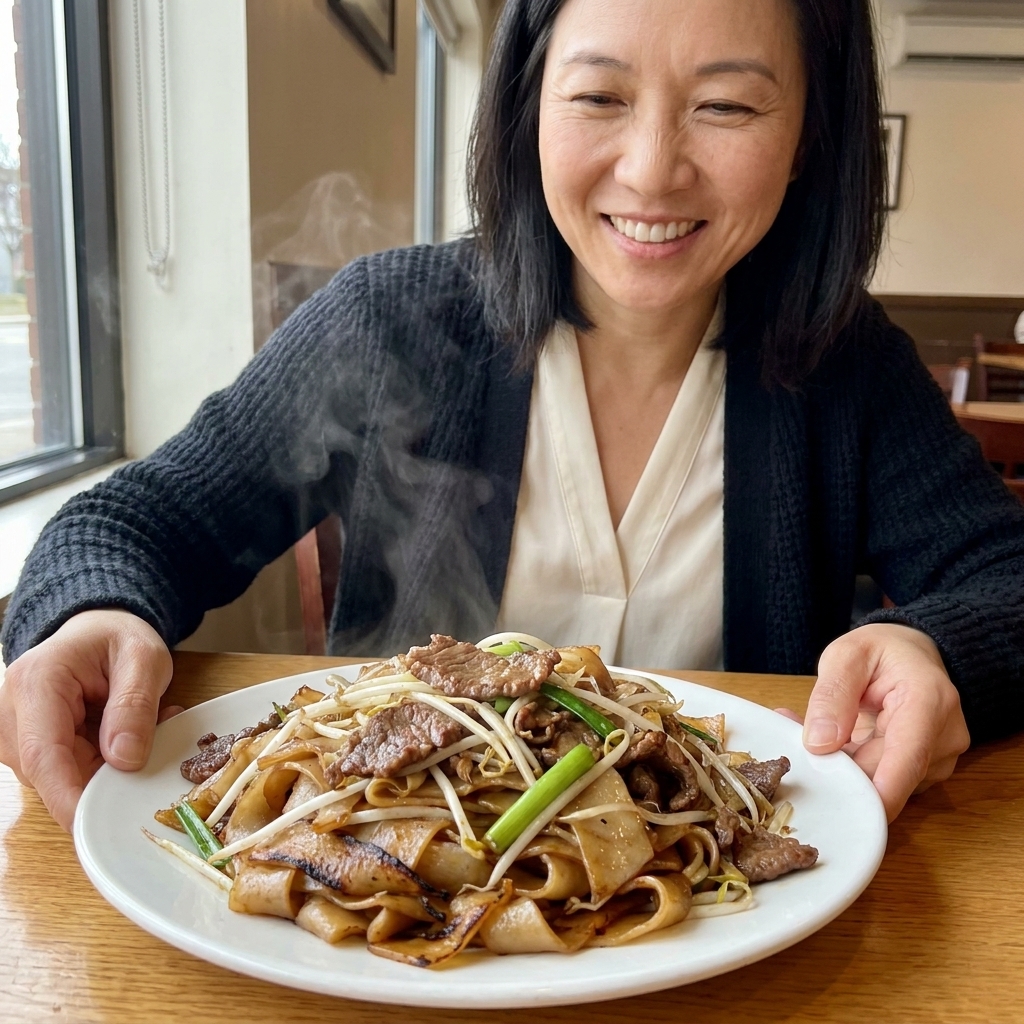
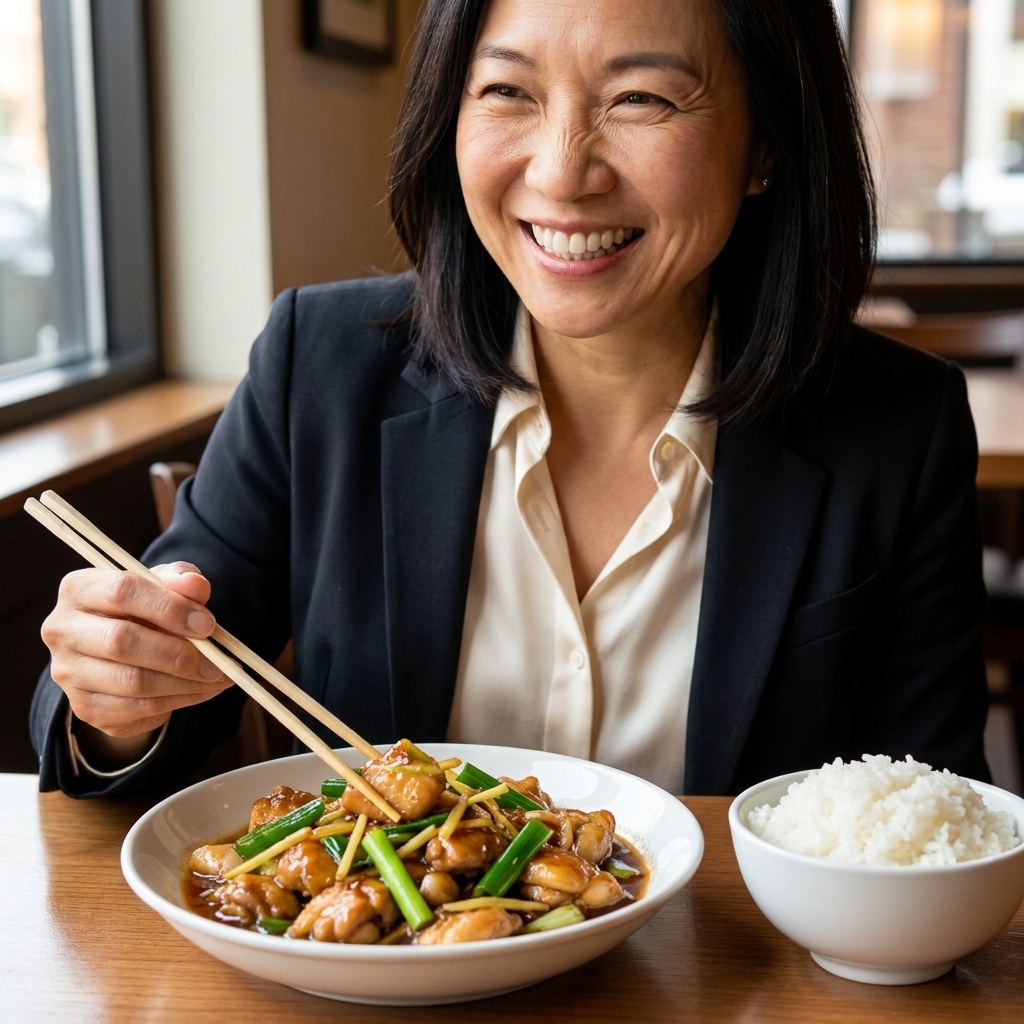
Recipe 2: Ginger-scallion chicken
This is my weeknight comfort stir-fry. It tastes bright and savory, and it is very forgiving. The trick is velveting the chicken so it stays juicy even over high heat.
Ingredients (serves 4)
- 1 lb boneless skinless chicken thighs (or breast), sliced thin
- 2 teaspoons cornstarch
- 1 tablespoon light soy sauce
- 1 tablespoon Shaoxing wine (or dry sherry)
- 1 teaspoon neutral oil
- 2 tablespoons neutral oil for stir-frying, divided
- 2 tablespoons ginger, finely sliced or julienned
- 5 scallions, whites and greens separated, cut into 2-inch pieces
- 1 cup snow peas or sliced celery (optional crunch)
- Sauce: 2 tablespoons light soy sauce, 1 tablespoon oyster sauce, 1 teaspoon sugar, 1/3 cup chicken stock or water, 1/2 teaspoon toasted sesame oil
Cook
Velvet chicken: Toss chicken with cornstarch, 1 tablespoon light soy, Shaoxing wine, and 1 teaspoon oil. Rest 10 to 15 minutes.
Preheat wok until very hot. Add 1 tablespoon oil.
Sear chicken in a single layer. Let it sit 30 to 45 seconds, then toss and cook until just done. Remove.
Aromatics: Add remaining 1 tablespoon oil, then ginger and scallion whites. Stir-fry 15 seconds until fragrant.
Veg: Add snow peas or celery and stir-fry 30 seconds.
Sauce around the edge: Stir sauce and pour around the hot sides of the wok. Simmer 15 to 30 seconds to thicken slightly.
Finish: Return chicken, add scallion greens, toss 20 seconds, and serve immediately.
Serve with: steamed rice, or tuck into lettuce cups with extra scallions.
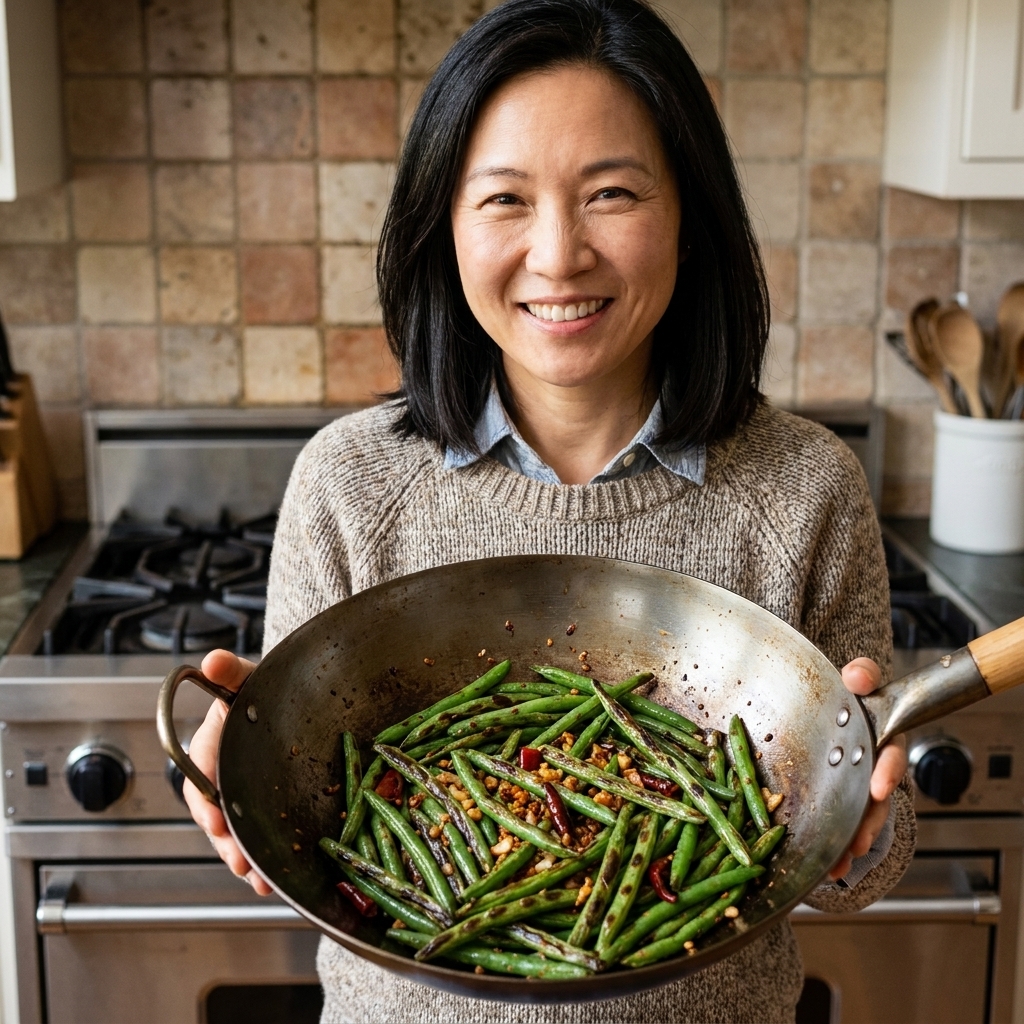
Recipe 3: Dry-fried green beans
This is the dish I make when I want to prove to myself that vegetables can be absolutely addictive. The beans blister, wrinkle, and pick up a smoky edge that tastes like your favorite restaurant.
Ingredients (serves 3 to 4)
- 1 lb green beans, stem ends trimmed and very dry
- 2 to 3 tablespoons neutral oil
- 6 oz ground pork (optional, but traditional and delicious)
- 2 cloves garlic, minced
- 1 tablespoon ginger, minced
- 1 to 2 teaspoons Sichuan chili flakes or crushed red pepper
- 1 tablespoon light soy sauce
- 1 tablespoon Shaoxing wine (or dry sherry)
- 1 teaspoon sugar
- Optional: 1 teaspoon black vinegar for brightness
Cook
Blister the beans: Heat wok until very hot. Add oil, then green beans. Spread them out and let them sit 20 to 30 seconds at a time, tossing between rests, until wrinkled and blistered, 5 to 7 minutes. Remove.
Brown pork (optional): Add ground pork to the hot wok. Break up and cook until browned.
Aromatics: Add garlic, ginger, and chili flakes. Stir-fry 15 seconds.
Sauce: Add soy, Shaoxing, sugar (and vinegar if using) around the edge. Toss.
Finish: Return beans and stir-fry 30 to 60 seconds until coated and glossy.
Wok hei tip: The beans must be dry. If they are wet, they will steam and squeak instead of blistering.
Troubleshooting
- It is watery: wok not hot enough, pan crowded, or ingredients too wet. Cook in batches and dry everything.
- It is salty but not flavorful: add a touch of sugar, Shaoxing wine, or oyster sauce for depth. Finish with a tiny drizzle of sesame oil.
- Meat is tough: slice against the grain, velvet with cornstarch, and do not overcook. Remove early and return at the end.
- Garlic tastes bitter: add it after the protein is removed, and stir constantly. High heat is fast heat.
- Nothing browns: preheat longer and let food sit for a few seconds before tossing.
Weeknight checklist
- Window open, fan on
- Everything prepped and sauces mixed
- Wok preheated until faintly smoking
- Oil first, then food quickly
- Cook in batches if needed
- Sauce poured around the edge
- One final 10-second sear before serving
If you take nothing else from this page, take this: hot wok, dry ingredients, small batches. That is the home-cook recipe for wok hei.
FAQ
Do I need a wok burner?
No. A wok burner makes it easier, but on a home stove you can get a convincing smoky sear by preheating well and cooking in smaller batches.
Gas vs electric vs induction?
Gas is easiest for high heat and quick recovery, but electric and induction can still make great stir-fries. Use a flat-bottom wok or a wide skillet and avoid crowding. Induction is powerful, but it tends to heat where the pan contacts the surface, so good contact matters.
Is that smoke safe?
In normal cooking amounts, yes. Use refined neutral oils with a higher smoke point (peanut, canola, avocado). Ventilate well and avoid overheating empty nonstick pans.
What oil is best?
Neutral oils with higher smoke points are best, like peanut, canola, grapeseed, or avocado. Save toasted sesame oil for finishing.