A friendly, practical breakdown of olive oil vs. avocado oil for roasting: heat, health, flavor, and when each one shines on your sheet pan.
recipes
Updated September 21, 2026
Sheet Pan Dinners

Maya Chen
Maya Chen is a passionate home cook, recipe developer, and mother of two who believes that great food doesn't have to be complicated. Drawing from her multicultural upbringing and time spent in professional test kitchens, she creates approachable, flavor-packed recipes designed for real life.
Sizzlea
recipes
If you have ever stared into the fridge at 5:47 pm and wished dinner could just… happen, sheet pan dinners are your new best friend. One pan. One oven. A pile of veggies that actually tastes exciting. And the kind of cleanup that makes you feel like you cheated the system.
This is my everything-I-know guide to building sheet pan meals that come out deeply browned, juicy, and perfectly seasoned, not sad and steamed. I am talking real-life, weeknight-friendly food with big flavor and almost no dishes.
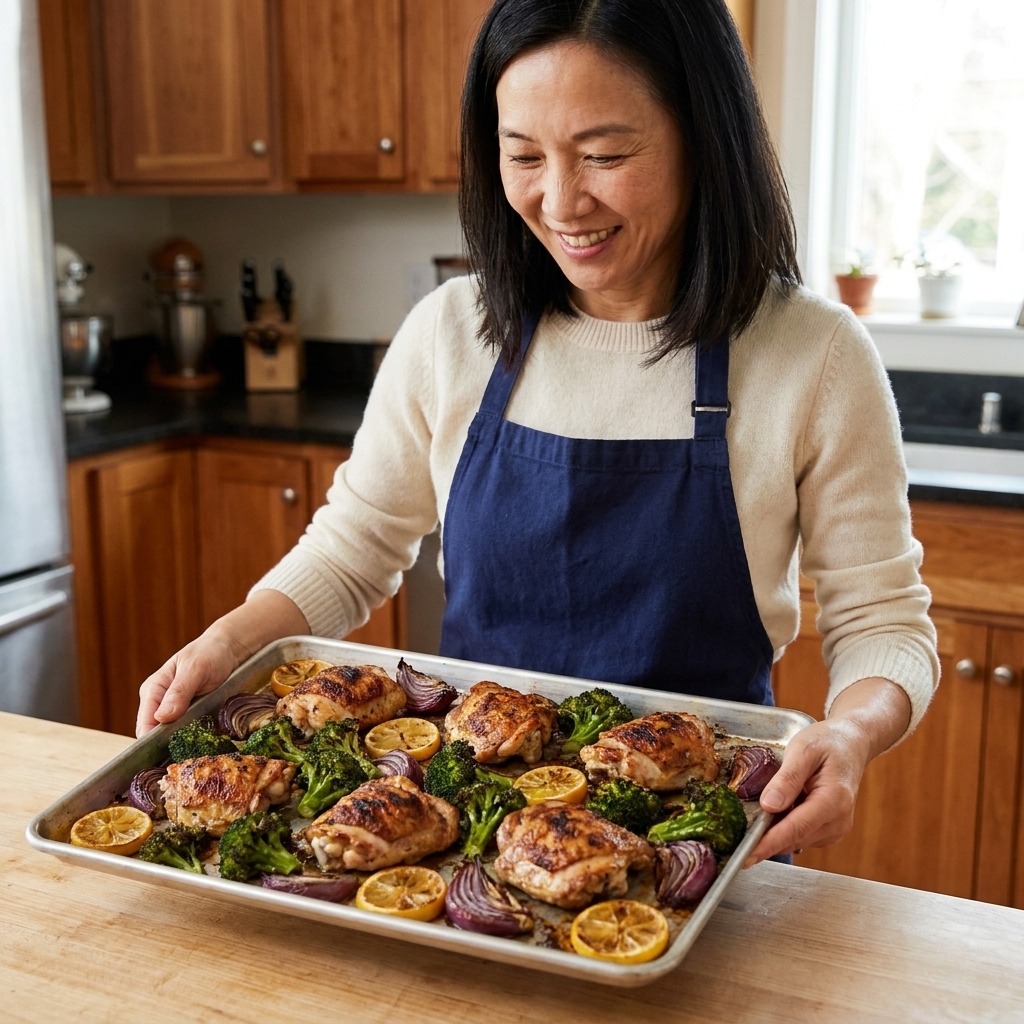
The sheet pan dinner formula
Think of a sheet pan dinner as three moving parts plus heat:
- Protein: chicken thighs, salmon, sausages, tofu, chickpeas, pork chops, shrimp
- Vegetables: a mix of quick-cooking and sturdy vegetables for contrast
- Flavor builder: a marinade, seasoning paste, or sauce plus something bright at the end (lemon, herbs, yogurt sauce)
- High heat: usually 425°F to 450°F for color and crisp edges
The goal is browning, which is where the flavor lives (think Maillard reaction plus caramelization). If your pan is crowded or your oven is too cool, you get steaming. We are not here for steaming.
Set yourself up for golden edges
1) Use the right pan
Grab a sturdy, rimmed half sheet pan (about 18 x 13 inches). Thin, flimsy pans warp and make hot spots. If you cook for 4 to 6 often, having two pans is a lifesaver.
2) Preheat the oven, and the pan if you want extra crisp
Preheat at least 15 minutes. For maximum sizzle, slide the empty pan into the oven while it heats, then carefully add your oiled ingredients. It is the same trick as preheating a skillet.
3) Do not crowd the pan
Leave a little breathing room between pieces. Crowding traps moisture, and moisture is the enemy of browning. If it looks like a packed subway car, split it onto two pans.
4) Oil is not optional
Oil carries flavor and helps browning. Toss vegetables with enough oil to lightly coat, not drown. For a full half sheet pan of vegetables, that is usually 1 to 3 tbsp oil, depending on how full the pan is and how thirsty the vegetables are.
5) Salt in layers
Season your protein. Season your veggies. Then finish with something bright. When everything is seasoned only at the end, the meal tastes flat.
6) Convection note
If you use convection (fan), either drop the temperature by about 25°F or start checking a few minutes early. Convection browns fast, which is great, but it can sneak up on you.
Vegetable timing chart
Timing is the whole game. Pair vegetables by how fast they cook, or stagger when you add them. This cheat sheet assumes a 425°F oven, roughly 1-inch-ish pieces, and vegetables spread in a single layer with space.
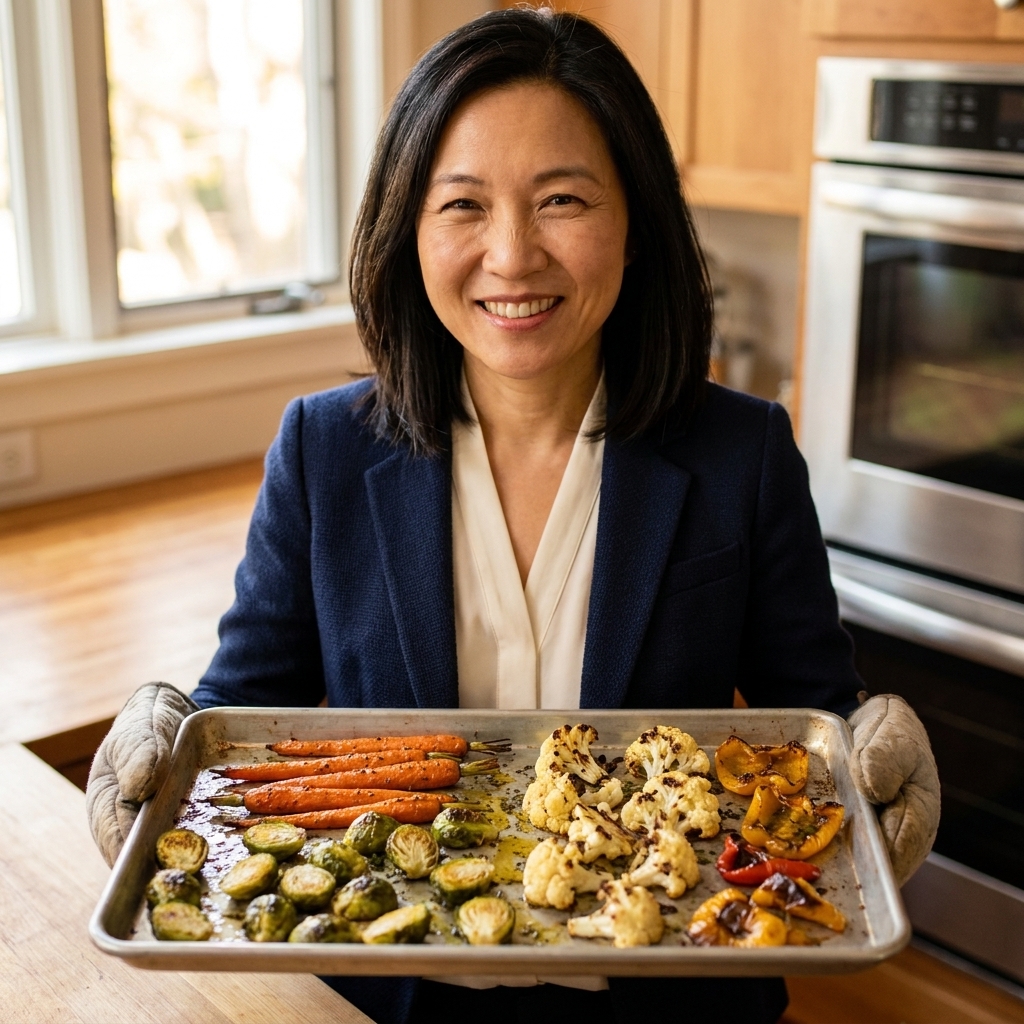
Fast (10 to 15 minutes)
- Zucchini or summer squash (cut into thick half-moons)
- Asparagus (trimmed)
- Green beans
- Bell peppers (thick strips)
- Cherry tomatoes (add at the end so they burst, not collapse)
- Spinach or kale (toss on for the last 3 to 8 minutes to wilt, depending on how sturdy and how big the pieces are)
Medium (18 to 25 minutes)
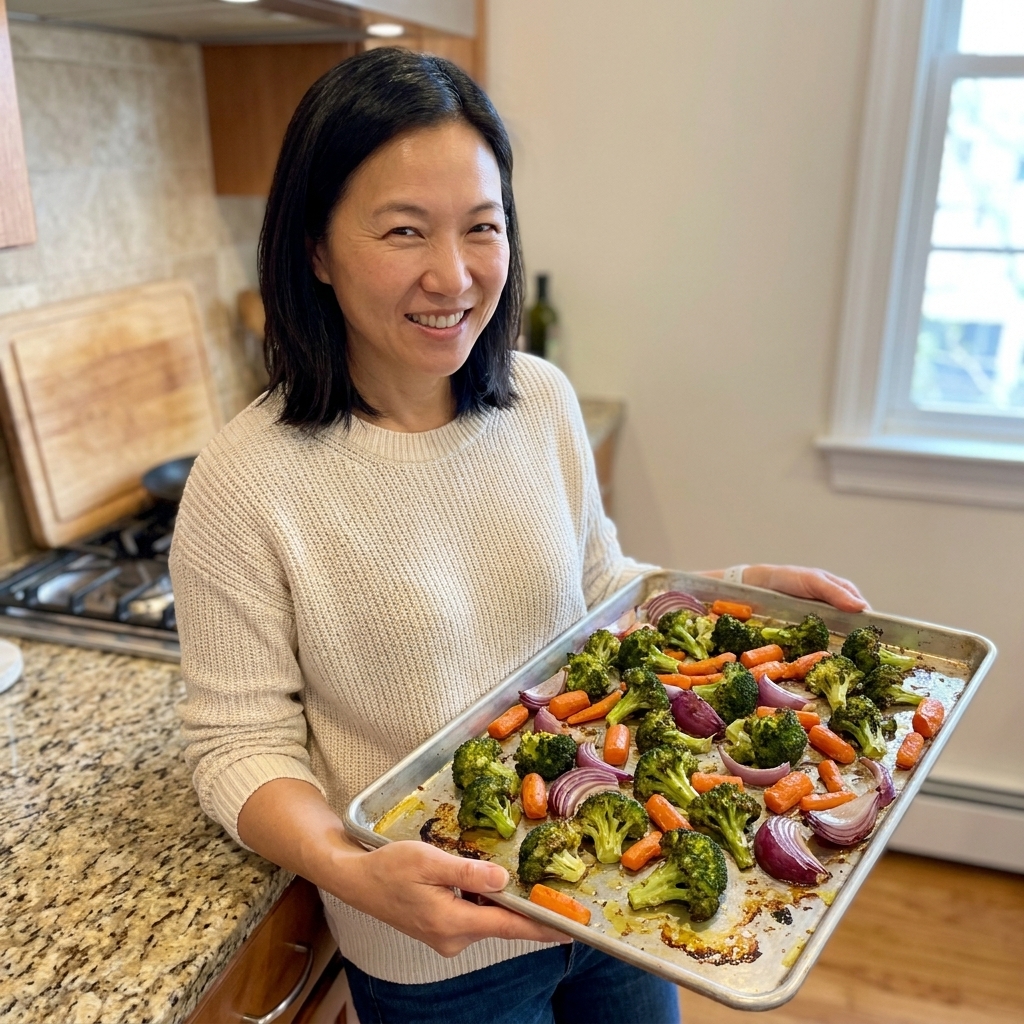
- Broccoli florets
- Cauliflower florets
- Brussels sprouts (halved)
- Mushrooms (halve or quarter, and give them lots of space; they steam easily and may take longer to truly brown)
- Red onion wedges
- Eggplant (1-inch cubes)
Slow (30 to 45 minutes)
- Potatoes (small cubes, or parboil for speed)
- Sweet potatoes
- Carrots (coins or batons)
- Beets (small wedges)
- Winter squash (1-inch cubes)
Easy pairing ideas
- Chicken + broccoli + red onion: medium cooks together, minimal fuss
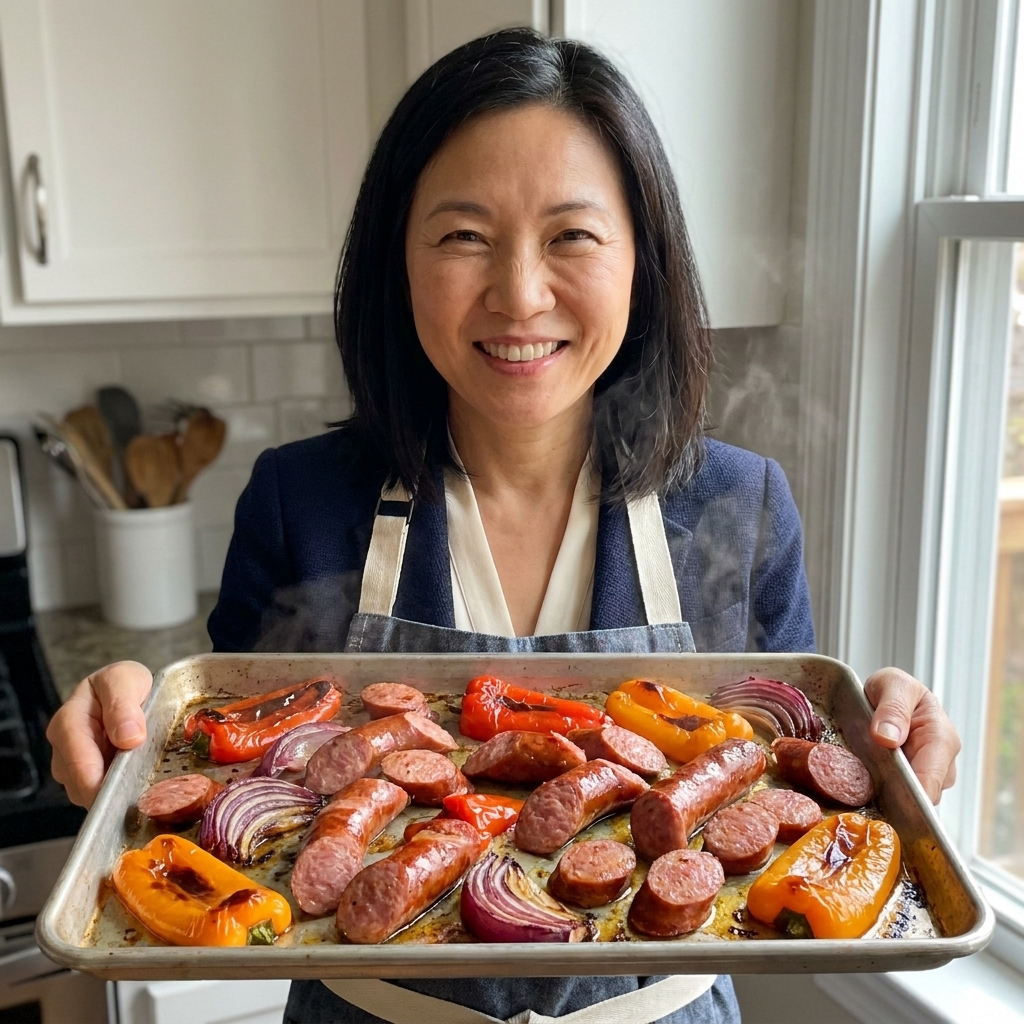
- Sausage + peppers + onions: fast and medium, add peppers after onions if you want more char
- Salmon + asparagus: add salmon later so it stays juicy
- Tofu + Brussels sprouts: roast sprouts first, add tofu for the last 15 to 18 minutes
- Pork chops + sweet potato + green beans: start potatoes early, add pork and beans later
My weeknight move: start the slow vegetables first (10 to 15 minutes), then add the protein and medium vegetables, then add fast vegetables near the end. One pan, staged timing, everything perfect.
Quick marinades
These are designed for real life. If you can marinate for 30 minutes, amazing. If you can only do 10 while the oven preheats, still worth it. Each recipe makes enough for about 1 to 1 1/2 pounds of protein plus some drizzle for veggies.
1) Lemon garlic oregano
- 3 tbsp olive oil
- 2 tbsp lemon juice
- 2 garlic cloves, grated
- 1 tsp dried oregano
- 1 tsp Dijon mustard
- 3/4 tsp kosher salt
- Black pepper
Best with: chicken thighs, shrimp, chickpeas, potatoes, zucchini, broccoli.
2) Soy ginger sesame
- 3 tbsp soy sauce
- 1 1/2 tbsp honey or brown sugar
- 1 tbsp toasted sesame oil
- 1 tbsp neutral oil
- 1 tbsp rice vinegar or lime juice
- 1 tbsp grated fresh ginger
- 1 garlic clove, grated
- Optional: pinch of chili flakes
Best with: salmon, chicken, tofu, broccoli, green beans, mushrooms.
3) Smoky paprika lime
- 2 tbsp olive oil
- 1 1/2 tbsp lime juice
- 1 tsp smoked paprika
- 1 tsp ground cumin
- 1/2 tsp chili powder
- 1/2 tsp kosher salt
- Optional: 1 tsp maple syrup
Best with: shrimp, chicken, pork, sweet potatoes, peppers, red onion.
4) Dijon herb
- 2 tbsp olive oil
- 1 1/2 tbsp Dijon mustard
- 1 tbsp lemon juice or white wine vinegar
- 1 tsp honey
- 1 tsp dried thyme (or Italian seasoning)
- 3/4 tsp kosher salt
- Black pepper
Best with: pork chops, chicken breasts, potatoes, Brussels sprouts, green beans.
5) Harissa yogurt
- 1/2 cup plain Greek yogurt
- 1 to 2 tbsp harissa paste
- 1 tbsp olive oil
- 1 tbsp lemon juice
- 1/2 tsp kosher salt
Best with: chicken, cauliflower, chickpeas. Note: yogurt marinades brown quickly, so keep an eye on them at high heat.
Protein timing
Different proteins want different treatment. Use this as a guide, then rely on doneness cues.
Chicken thighs (bone-in or boneless)
- Temp: 425°F
- Time: 25 to 35 minutes depending on size
- Tip: thighs are forgiving and love high heat. Put them skin-side up for crisp. They are safe at 165°F, but often get even more tender closer to 175 to 190°F.
Chicken breasts
- Temp: 425°F
- Time: 18 to 25 minutes
- Tip: pound to even thickness so they cook evenly. Pull around 155 to 160°F and rest until 165°F (carryover varies with thickness).
Sausage (fully cooked)
- Temp: 425°F
- Time: 15 to 20 minutes
- Tip: slice into big chunks for more browned edges, or leave whole for juicier bites.
Salmon
- Temp: 425°F
- Time: 10 to 14 minutes depending on thickness
- Tip: roast veggies first, then add salmon for the last stretch. It is done when it flakes easily and looks opaque on the outside. For temperature folks: about 120 to 130°F is medium, 135 to 140°F is more well-done.
Shrimp
- Temp: 425°F
- Time: 6 to 10 minutes
- Tip: add shrimp at the very end. Overcooked shrimp is a tragedy we can prevent.
Tofu (extra-firm)
- Temp: 425°F
- Time: 20 to 30 minutes
- Tip: press or pat dry, then toss with oil and cornstarch for crisp edges.
Chickpeas (canned, drained and dried)
- Temp: 425°F
- Time: 20 to 35 minutes
- Tip: dry them well so they roast instead of pop and steam. More time equals more crunch.
Get it in the oven fast
Here is the exact rhythm I use when I am hungry and slightly chaotic:
Heat oven to 425°F. Line the pan with parchment if you want easier cleanup. If you want maximum browning, skip the parchment and oil the pan lightly instead.
Start slow vegetables first. Toss potatoes, carrots, sweet potatoes, or squash with oil, salt, and pepper. Roast 10 to 15 minutes.
Meanwhile, toss protein with a quick marinade. Even 10 minutes helps.
Add medium vegetables and protein. Give everything space. Roast until the protein is nearly done.
Add fast vegetables last. Zucchini, asparagus, green beans, or tomatoes go in at the end so they stay vibrant.
Finish with brightness. Lemon zest, fresh herbs, a dollop of yogurt sauce, crumbled feta, or a drizzle of chili crisp.
My biggest flavor tip: add a finishing ingredient that is not cooked. Heat is wonderful, but contrast is what makes people say, “Wait, what did you put on this?”
Quick food safety note
- Toss and season vegetables first, then handle raw protein.
- Wash hands, knife, and cutting board after prepping raw meat or fish.
- If you want to use leftover marinade as a sauce, boil it first. Otherwise, make a little extra on the side.
3 dinner combos
If you just want someone to tell you what to do tonight, I got you.
Greek-ish chicken, broccoli, and potatoes
- Protein: 1 1/2 lb chicken thighs
- Veg: 1 lb baby potatoes (halved), 1 large head broccoli (florets)
- Marinade: Lemon garlic oregano
- Finish: crumbled feta + lemon wedges
Timing: roast potatoes 15 minutes, add chicken 15 minutes, add broccoli for last 15 minutes (approx).
Soy-ginger salmon with green beans and mushrooms
- Protein: 4 salmon fillets
- Veg: green beans + mushrooms + red onion
- Marinade: Soy ginger sesame
- Finish: sesame seeds + lime
Timing: roast veg 15 minutes (give mushrooms space), add salmon for 10 to 12 minutes.
Smoky sausage and peppers with sweet potatoes
- Protein: 12 to 16 oz smoked sausage (sliced)
- Veg: sweet potato cubes + bell peppers + onion
- Seasoning: Smoky paprika lime (or just paprika, cumin, salt)
- Finish: cilantro + a squeeze of lime
Timing: roast sweet potatoes 15 minutes, add sausage + peppers + onion for 15 to 20 minutes.
Common problems
“My vegetables are mushy.”
- Use higher heat: 425°F to 450°F.
- Cut larger. Small pieces overcook fast.
- Do not crowd the pan. Split onto two pans if needed.
- Dry watery veggies (zucchini, mushrooms) well before tossing with oil.
“Everything tastes bland.”
- Add enough salt, then add acid at the end (lemon, vinegar).
- Use a sauce or finishing drizzle: tahini, pesto, chimichurri, yogurt sauce.
- Roast with aromatics: garlic cloves, onion wedges, scallions.
“My chicken is done but my potatoes are not.”
- Start potatoes earlier.
- Cut potatoes smaller or parboil 5 to 7 minutes.
- Use chicken thighs instead of breasts for more flexibility.
“My pan smokes.”
- Use an oil with a higher smoke point if roasting at 450°F (avocado, grapeseed).
- Wipe off excess sugary marinade before roasting, then brush on more near the end.
- If your oven runs hot, drop to 425°F and roast a few minutes longer.
Cleanup
I love parchment for quick weeknights, but here is the honest truth: parchment can slightly reduce browning. So choose your adventure:
- Maximum browning: oil the bare pan lightly, then soak it right after dinner.
- Maximum ease: parchment paper.
- Sticky glazes: foil (sprayed with oil) can be easiest for sugars and sauces.
My pro tip: if anything bakes on, fill the pan with hot water and a squirt of dish soap while you eat. By the time you come back, it usually wipes clean.
FAQ
What temperature is best?
Most sheet pan dinners do best at 425°F. It is hot enough to brown without scorching too quickly. If you want extra char on sturdy vegetables, go to 450°F and keep an eye on sugary sauces.
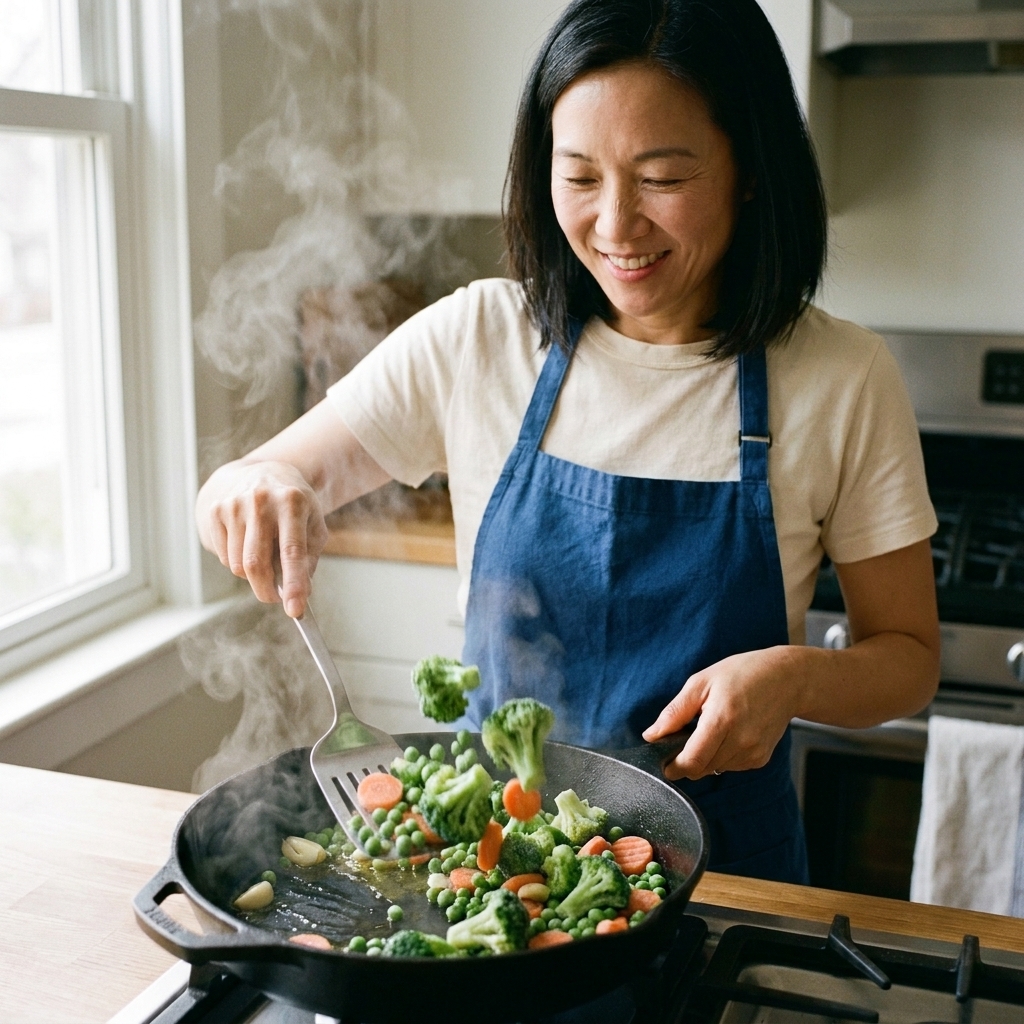
Can I use frozen vegetables?
Yes, with one tweak: frozen vegetables release water. Roast them on a separate pan or give them extra space, and expect less browning. Broccoli and green beans tend to work best from frozen.
How do I keep everything from sticking?
Use enough oil, and make sure your pan is truly hot before ingredients go in. If you are using a sticky marinade, line with parchment or lightly oiled foil.
How do I make it feel like a full meal?
Add one of these at the end: warmed pita, cooked rice, crusty bread, a bagged salad, or a quick yogurt sauce. The sheet pan does the heavy lifting, and the add-on makes it feel “done.”
Your weeknight challenge
The next time you are tempted to order takeout, try this instead: pick one protein, two vegetables from the chart, and one marinade from above. Roast hot, leave space, finish with lemon or herbs.
That is the whole magic. One pan. Big flavor. And a sink that stays suspiciously empty.