A friendly, practical breakdown of olive oil vs. avocado oil for roasting: heat, health, flavor, and when each one shines on your sheet pan.
recipes
Updated September 21, 2026
Perfect Spanish Seafood Paella

Maya Chen
Maya Chen is a passionate home cook, recipe developer, and mother of two who believes that great food doesn't have to be complicated. Drawing from her multicultural upbringing and time spent in professional test kitchens, she creates approachable, flavor-packed recipes designed for real life.
Sizzlea
recipes
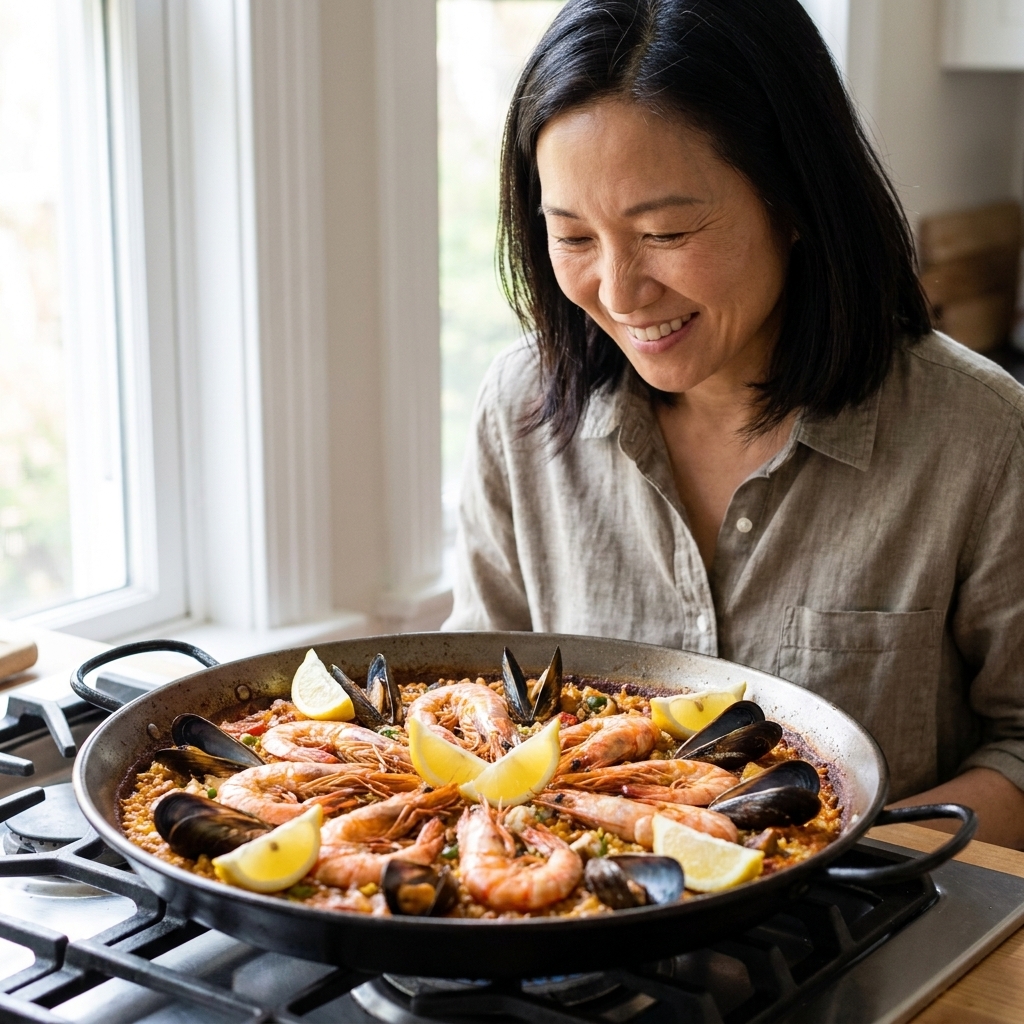
Paella is one of those dishes that looks like a restaurant flex but is secretly a very doable home-cook project if you understand three things: the pan, the rice, and the heat. Everything else is just good ingredients and a little confidence.
Today we are making a classic Spanish seafood paella (paella de marisco) and chasing the holy grail: socarrat, that crispy, deeply flavorful rice layer at the bottom. I am going to walk you through the why, not just the how, so you can repeat it on a random Tuesday without breaking a sweat.
What makes paella authentic
Paella is from Valencia, and traditional versions often feature rabbit, chicken, and local beans. Seafood paella is a beloved coastal style and the one most of us crave at home. Authenticity here is less about copying one exact version and more about honoring the technique:
- Short-grain Spanish rice that absorbs broth while staying distinct
- Saffron, traditional and strongly recommended for the signature aroma and color
- One even layer of rice in a wide pan
- No stirring once the rice goes in
- Socarrat developed at the end with controlled heat
If you follow those rules, your paella will taste like it belongs at a long table with a pitcher of sangria and very loud laughter.
Meet socarrat
Socarrat is the caramelized layer of rice that forms where the grains meet the pan. It tastes toasty, a little nutty, and intensely savory, like the best part of a pot of rice and a good sear had a baby.
How you know you are getting it
- You hear a gentle crackling near the end of cooking.
- You smell a warm, toasted aroma (not a sharp burnt smell).
- When you scoop, the bottom releases in golden sheets or crunchy bits.
Two big socarrat mistakes
- Stirring the rice. Stirring releases starch and turns paella into risotto. Delicious, but not paella.
- Too much liquid. If there is broth pooling on top late in cooking, the bottom cannot crisp.
The pan
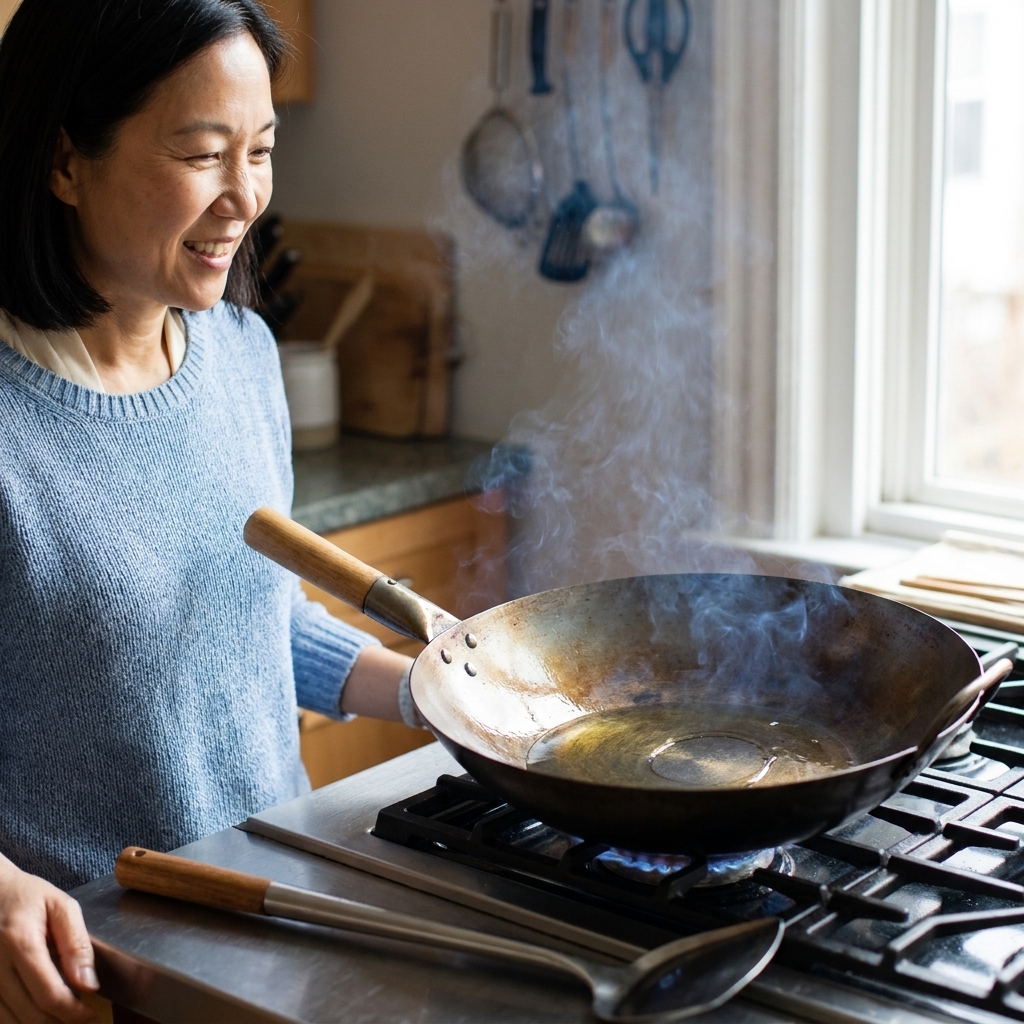
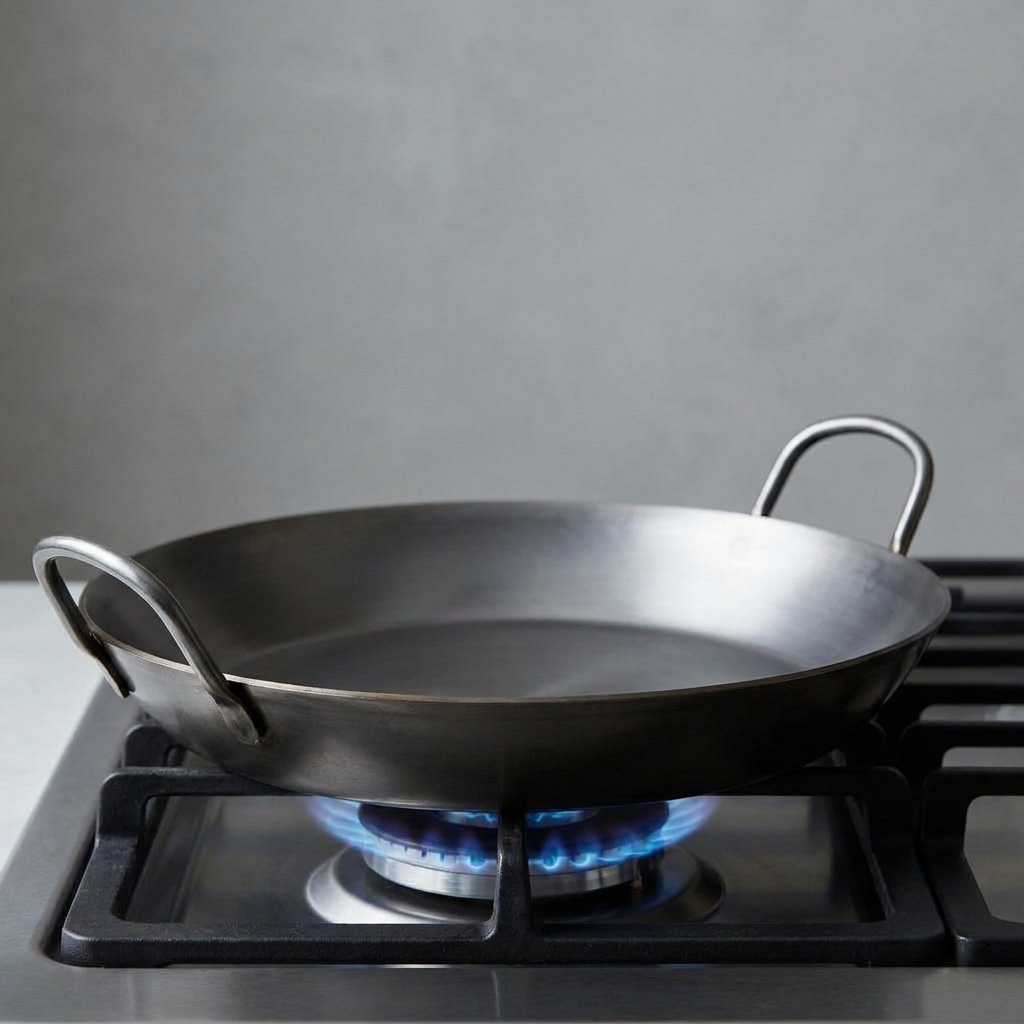
A paella pan is wide and shallow so the rice cooks in a thin, even layer. That is how you get tender grains without a mushy center and how you set yourself up for socarrat.
Best choice: carbon steel paella pan
- Heats quickly and develops great browning
- Encourages crisping at the bottom
- Lightweight for its size
Reality check: carbon steel is not magically even on every stove. Burner size and pan thickness matter. If your heat is stronger in one spot, rotate the pan during simmering.
Care tip: carbon steel can rust if left wet. Dry it well and rub with a tiny bit of oil after washing.
Also works: stainless skillet or wide saute pan
If you do not own a paella pan, use the widest, shallowest pan you have, ideally 12 to 14 inches. Stainless works fine, and you can still get socarrat.
What I avoid
- Nonstick: it fights browning and crisping.
- Deep pots: the rice layer becomes too thick, which leads to uneven cooking.
The rice
Paella rice is not just any short grain. You want rice that absorbs a lot of flavorful liquid without collapsing into mush.
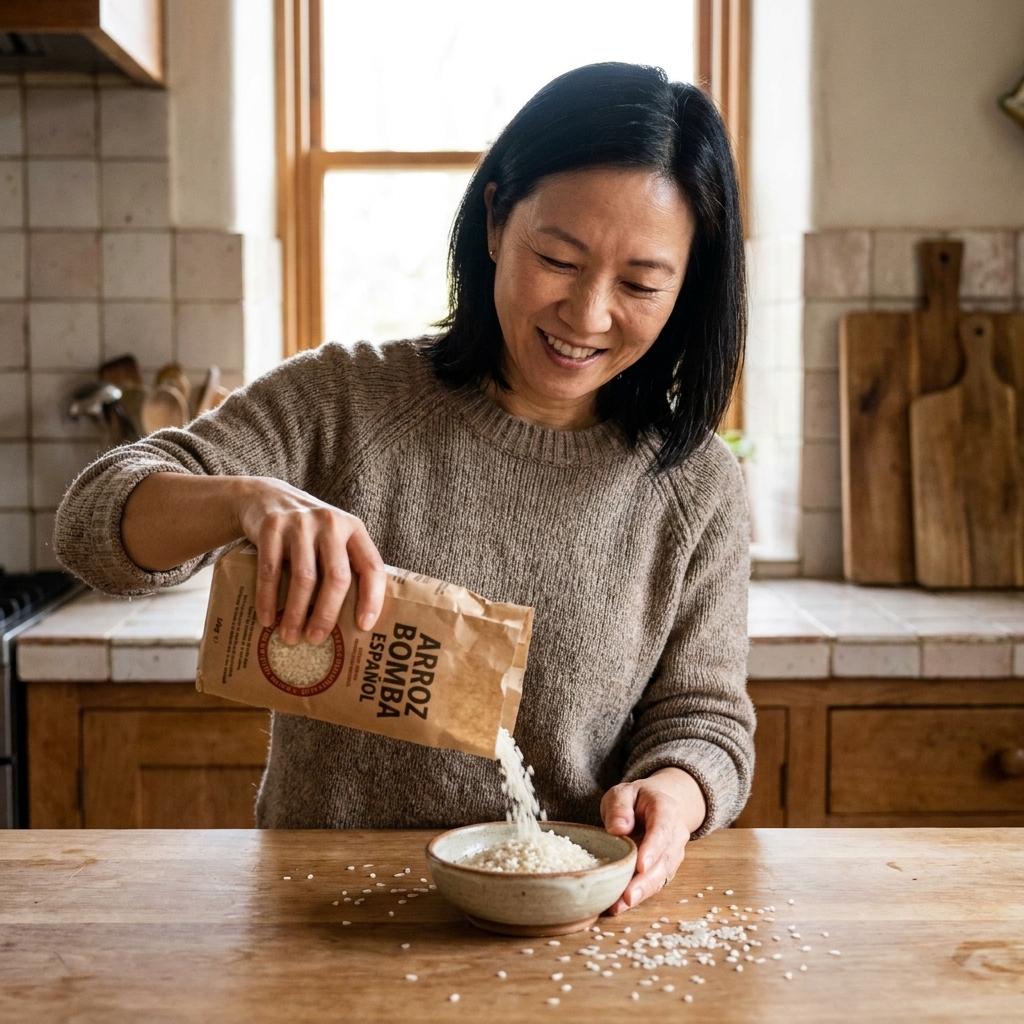
Best: bomba rice
Bomba is the gold standard. It can absorb more liquid than many other rices and stays pleasantly firm. It is forgiving, which is perfect when you are learning.
Great: Calasparra rice
Also excellent for paella, widely used in Spain, and behaves similarly to bomba.
If you cannot find Spanish rice
- Arborio is the most common substitute. It absorbs well but releases more starch, so be extra committed to not stirring.
- Do not use basmati, jasmine, or long-grain rice. The texture will be wrong and the absorption is off.
Saffron
Saffron is expensive, yes. It is also the soul of classic paella. A little goes a long way, and when you use it correctly, it perfumes the whole pan with that unmistakable floral, honeyed warmth.
What to look for
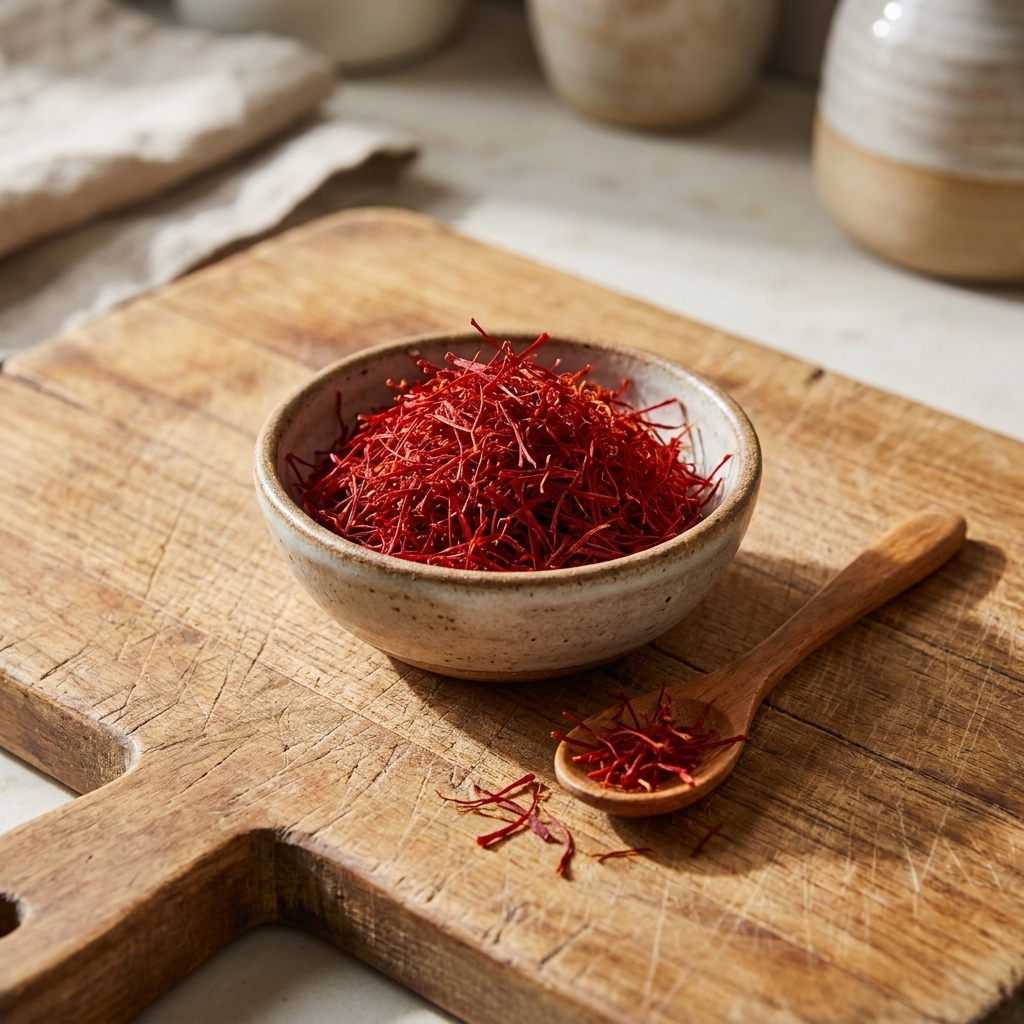
- Threads, not powder (powder is often diluted).
- Deep red threads with minimal yellow bits.
- A strong aroma even through the container.
How to bloom it
Pinch the threads between your fingers (or lightly crush in a mortar), then steep them in a few tablespoons of warm broth for 5 to 10 minutes. Add that saffron tea to your cooking liquid.
Little home-kitchen confession: when I am juggling dinner and two kids asking for snacks, I bloom saffron right in the measuring cup with hot broth. It is not fancy, but it works beautifully.
Color note: saffron gives a warm golden hue, not neon yellow. You do not need food coloring to make great paella.
Ingredients and smart swaps
This is the part where you can make it your own, as long as you keep the technique steady.
Seafood
- Shrimp (shell-on is best for flavor)
- Mussels and/or clams (for briny depth and that gorgeous presentation)
- Calamari (optional, cooks fast, adds sweet chew)
Shellfish tip: scrub mussels and clams and discard any that are cracked. If any stay open after a firm tap, discard them. After cooking, discard any that do not open.
Aromatics and seasoning
- Sofrito: onion, garlic, and grated tomato (or crushed tomatoes in a pinch)
- Smoked paprika (pimenton) for that Spanish warmth
- Olive oil
- Salt (start modest, seafood and broth vary)
Broth
Use a good seafood stock if you have it. If not, chicken stock plus the juices from your shellfish gets you close. Just strain those juices first and taste before you add them, since mussels and clams can be salty, sandy, or both.
You can also boost store-bought stock with shrimp shells by simmering them for 15 minutes, then straining.
Baseline recipe
If you want a reliable starting point before you start riffing, here is the framework that works in a 13 to 15 inch pan.
- Serves: 4 to 6
- Rice: 2 cups (about 400 g) bomba or Calasparra
- Broth: 5 cups (1.2 L) hot broth to start, plus more as needed
- Saffron: generous pinch (about 1/2 teaspoon threads), bloomed
- Olive oil: 3 tablespoons
- Onion: 1 small, finely chopped
- Garlic: 4 cloves, minced
- Tomato: 2 medium, grated (or 1 cup crushed tomato)
- Smoked paprika: 1 teaspoon
- Shrimp: 12 to 16 large, shell-on
- Mussels and/or clams: 1 to 2 pounds total
- Calamari (optional): 6 to 8 ounces, rings and tentacles
- Lemon: wedges for serving
Arborio note: If using arborio, start with about 4 to 4 1/2 cups broth and adjust as you go. It can go creamy if you push it too far, so keep your simmer steady and your spoon out of the pan.
Step by step
This is the flow I use when I want paella that feels special but still fits into real life.
1) Warm the broth and bloom the saffron
Heat your broth until hot but not boiling. Bloom saffron in a small splash of that broth and set aside.
2) Build flavor with sofrito
Heat olive oil in the pan over medium heat. Saute onion until soft, then add garlic. Stir in grated tomato and cook until thick and jammy. Sprinkle in smoked paprika at the end so it does not burn.
3) Add rice and coat it
Add rice and stir for 30 to 60 seconds, just to coat the grains in that flavorful base.
4) Add broth, then stop stirring
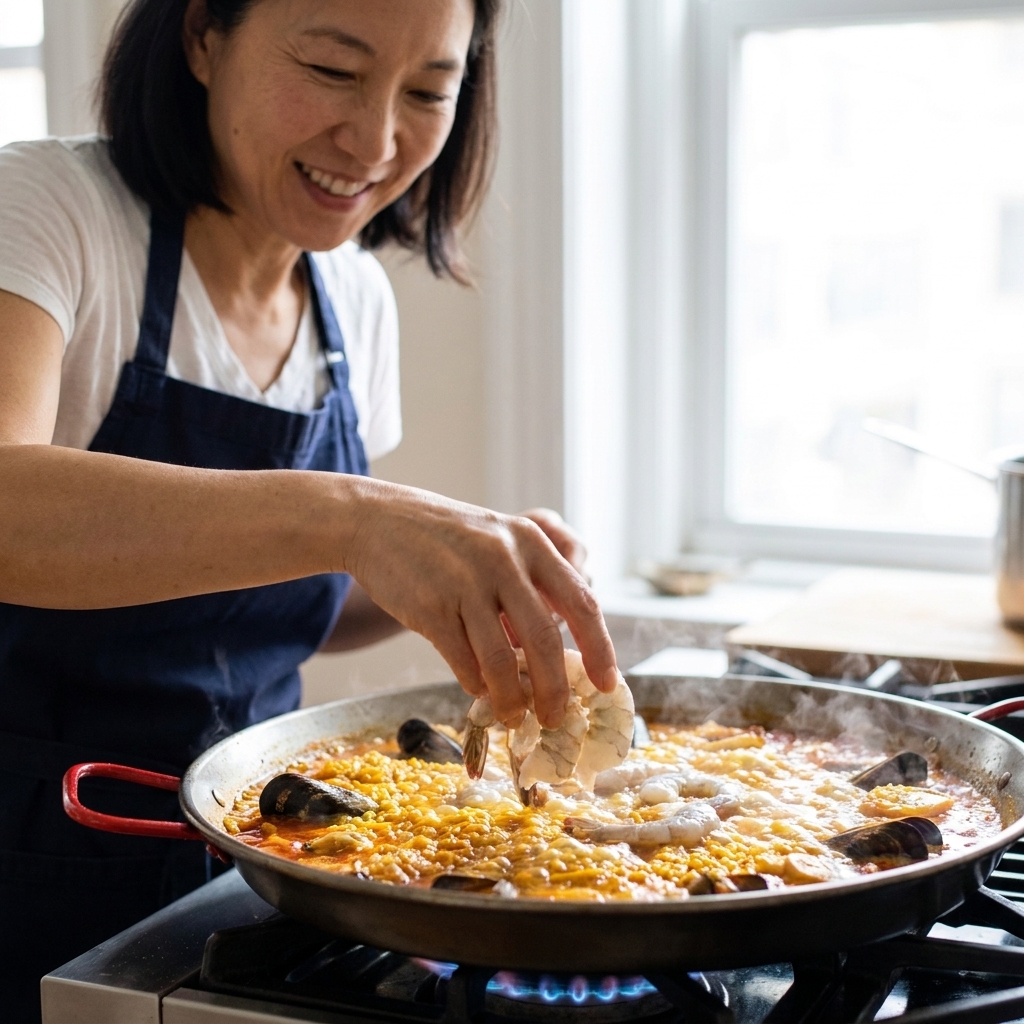
Pour in hot broth plus the bloomed saffron. Shake the pan gently to level the rice into an even layer. From this moment on, do not stir.
5) Simmer, then add seafood
Keep a steady simmer, uncovered. For most pans, you will simmer about 18 to 22 minutes total, plus a rest.
- After about 8 to 10 minutes, when the rice surface is mostly visible and the liquid is just below the surface, nestle in mussels or clams hinge-side down.
- With about 5 minutes left, add shrimp so they stay juicy.
- In the final 2 to 3 minutes, add calamari (if using).
If your burner is smaller than your pan, rotate the pan a quarter turn every few minutes during the simmer so the rice cooks evenly.
6) Rest
Once the rice is tender and the liquid is absorbed, remove from heat, cover loosely with foil, and rest 5 to 10 minutes. This is not traditional cooking time, it is a texture and timing gift that keeps the seafood from overcooking while the rice settles.
Socarrat on purpose
Socarrat is not luck. It is a short, controlled step at the end.
My gentle method
- When most of the liquid is absorbed and the rice is nearly done, increase heat to medium-high for 1 to 3 minutes.
- Listen for a soft crackle and smell for toastiness.
- If your burner has a hot spot, rotate the pan slowly so one area does not go from golden to tragic.
- Stop immediately if you smell anything sharp or burnt.
Pro tip: If you are nervous, slide a thin spoon down the edge and peek at the bottom. You are looking for golden-brown, not black.
Heat sources
Stovetop
Most accessible. The trick is even heat. If your burner is smaller than your pan, rotate the pan every few minutes during the simmer stage for more even cooking.
Oven finish
You can start on the stovetop and move to a hot oven (around 400°F / 205°C) to finish cooking evenly, then return to the stovetop for the final socarrat step.
Grill
Fantastic for a crowd. Set up for medium heat. Keep the simmer steady, and watch the end stage closely since grills can brown fast.
Common problems
The rice is crunchy but the pan is dry
Your heat was too high or liquid too low. Add a small splash of hot broth around the edges (not cold liquid) and continue simmering a few minutes.
The rice is mushy
Usually from stirring, too much liquid, or cooking too long at low heat. Next time: measure carefully, keep a lively simmer, and let the pan do its thing.
The seafood is rubbery
It went in too early. Add shrimp late, calamari very late, and pull the pan off the heat as soon as shellfish open. Discard any shellfish that do not open.
No socarrat
Either the pan was nonstick, there was too much liquid at the end, or you did not raise the heat briefly. Next time: make sure the top looks dry-ish and the liquid is below the rice surface before the final crisping step.
What to serve
- Lemon wedges for squeezing at the table
- A simple tomato salad with olive oil and flaky salt
- Alioli (garlicky mayo) if you love a creamy contrast
- Something bubbly or citrusy to drink, even if it is sparkling water with orange slices
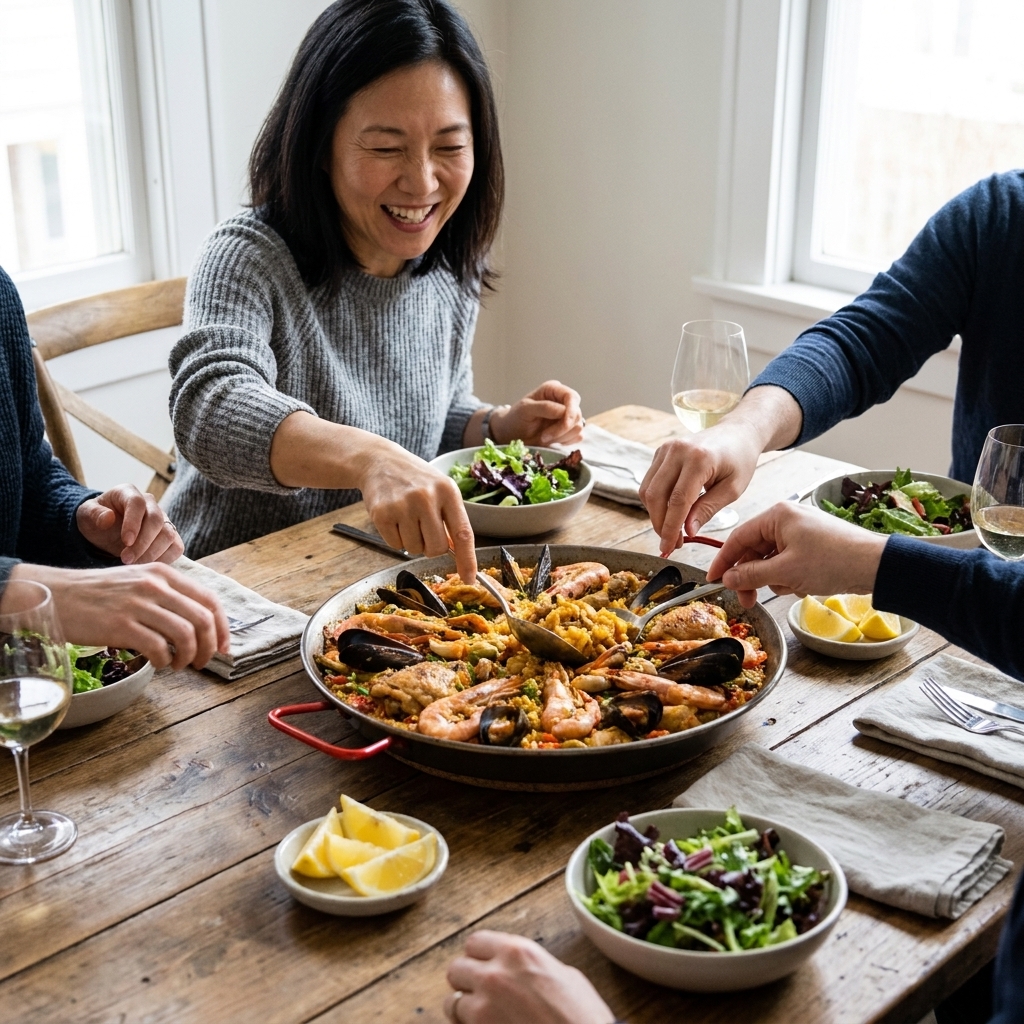
Paella is a communal dish. Put the pan in the center and let everyone scoop from the crispy edges first. That is the love language.
Quick FAQ
Can I make paella ahead of time?
Paella is best fresh. If you need to prep, make the sofrito and measure everything in advance. Reheated paella can still taste good, but the rice texture and socarrat will soften.
How much liquid do I need?
It depends on the rice. Bomba typically takes more liquid than many other rices. Follow the package guidance, then adjust by watching the pan: you want an even simmer and gradual absorption, not a soupy top layer late in cooking.
Do I have to use wine?
No. Many home cooks add a splash of white wine to the sofrito, but it is not required. If you do, let it cook off before adding broth.
Is chorizo authentic in seafood paella?
In Spain, chorizo is generally not part of paella de marisco. It can overpower delicate seafood. If you love it, save it for a mixed paella or serve it as a tapa on the side.
Your game plan
If you remember nothing else, remember this: use the right rice, bloom the saffron, keep your rice in an even layer, do not stir, and give yourself a short, brave socarrat moment at the end. Once you nail it once, you will start finding excuses to make paella for absolutely no reason. Which is exactly as it should be.